

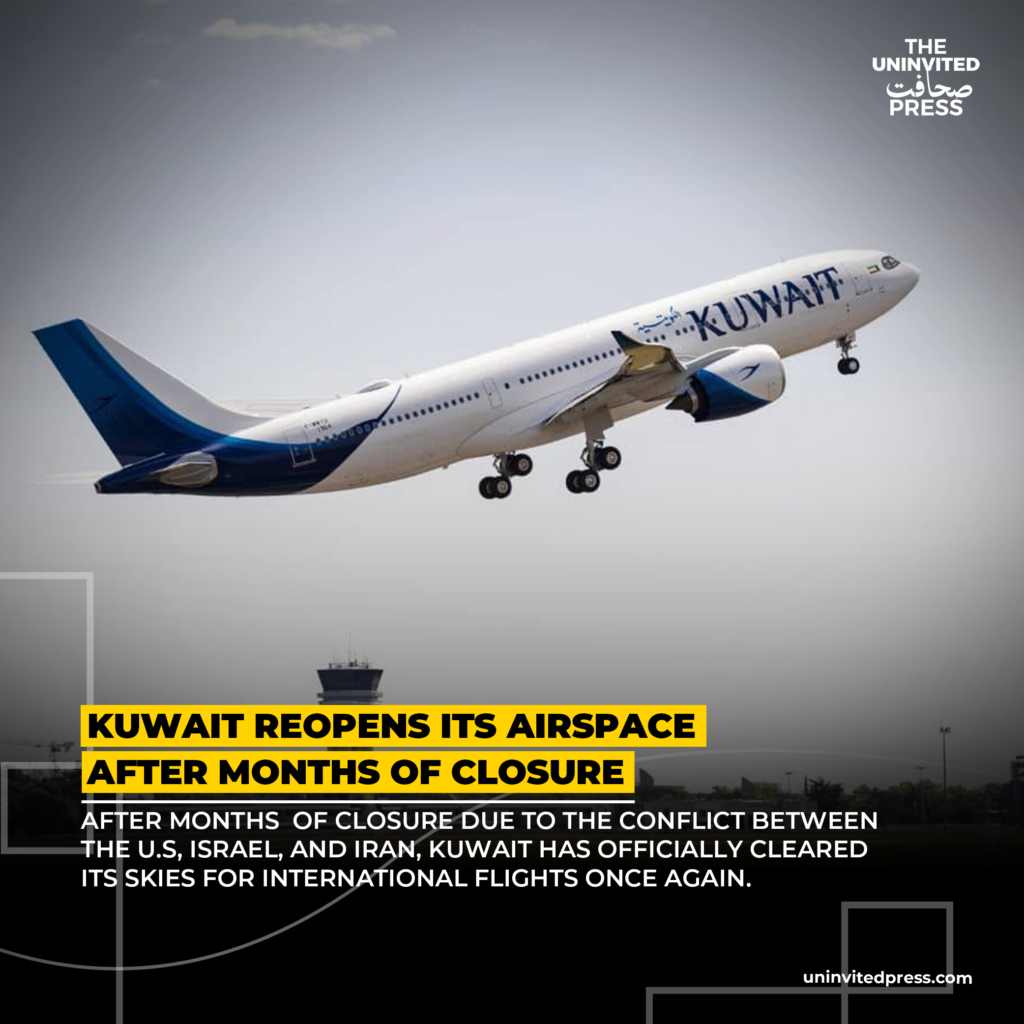
Gulf state resumes international flights as tensions between US, Israel and Iran ease slightly, but aviation experts warn of lingering risks in one of the world’s busiest flight corridors.
Kuwait has officially reopened its airspace to international commercial flights after several months of closure triggered by the escalating conflict involving the United States, Israel and Iran, Kuwait’s Civil Aviation Authority announced on Friday.
The decision comes as a welcome relief to airlines and travellers across the region, restoring a key aviation hub that had been forced to divert or cancel hundreds of flights since the outbreak of hostilities earlier this year.
Kuwait’s Directorate General of Civil Aviation (DGCA) stated that the skies above the country are now “fully operational for all civil aviation traffic,” following a comprehensive risk assessment and coordination with international partners.
Positioned at a key strategic location amid ongoing regional tensions:
Kuwait, which sits at the northern tip of the Gulf and shares a border with both Iraq and Saudi Arabia, found itself directly in the path of potential escalations as Iran and Israel traded strikes and the US increased its military presence in the region.
The closure was imposed as a precautionary measure after reports of missile and drone activity, heightened air defence alerts, and concerns over possible spillover from Iranian responses to Israeli and American actions.
“Safety of passengers and crew remains our top priority,” a senior DGCA official told Al Jazeera. “We monitored the situation hour by hour. With the recent de-escalation signals, including the Lebanon ceasefire extension, we determined that conditions now permit safe resumption of operations.”
Kuwait Airspace Reopening Eases Regional Aviation Disruption:
The prolonged closure had strained Kuwait’s aviation sector and affected connectivity for millions of passengers, including expatriate workers and Gulf travellers. Kuwait International Airport serves as an important gateway for flights between Europe, Asia and the Middle East.
Airlines such as Kuwait Airways, Qatar Airways, Emirates and Turkish Airlines had rerouted flights, adding hours and costs to journeys. Industry sources estimate losses in the tens of millions of dollars for carriers operating in the region.
Aviation analyst Mohammed Al-Sabah, based in Dubai, described the reopening as “a positive but cautious step.”
“The Gulf airspace is critical for global aviation. Even short closures create massive disruptions. While today’s announcement is encouraging, airlines will be watching closely for any renewed flare-ups between Iran and its adversaries,” he said.
Kuwait Reopens Airspace With Ongoing Security Concerns:
Kuwaiti authorities emphasised that certain restrictions and heightened security protocols remain in place. Flight paths over sensitive areas continue to be monitored, and emergency diversion plans have been updated.
Iran has not issued an immediate reaction to Kuwait’s move, but Tehran has repeatedly accused the US and Israel of destabilising the entire Gulf region. Kuwait, which maintains diplomatic relations with all parties, has called for restraint and dialogue to prevent further escalation.
Residents in Kuwait expressed mixed feelings. “It’s good for business and families, but everyone is still worried,” said Fatima Al-Mutawa, a Kuwaiti teacher whose relatives frequently travel to Europe. “One spark and it could close again.”
As regional diplomacy continues-particularly following US President Donald Trump’s recent warnings to Iran and the fragile Lebanon truce-Kuwait’s decision reflects a broader Gulf hope for gradual stabilisation.