

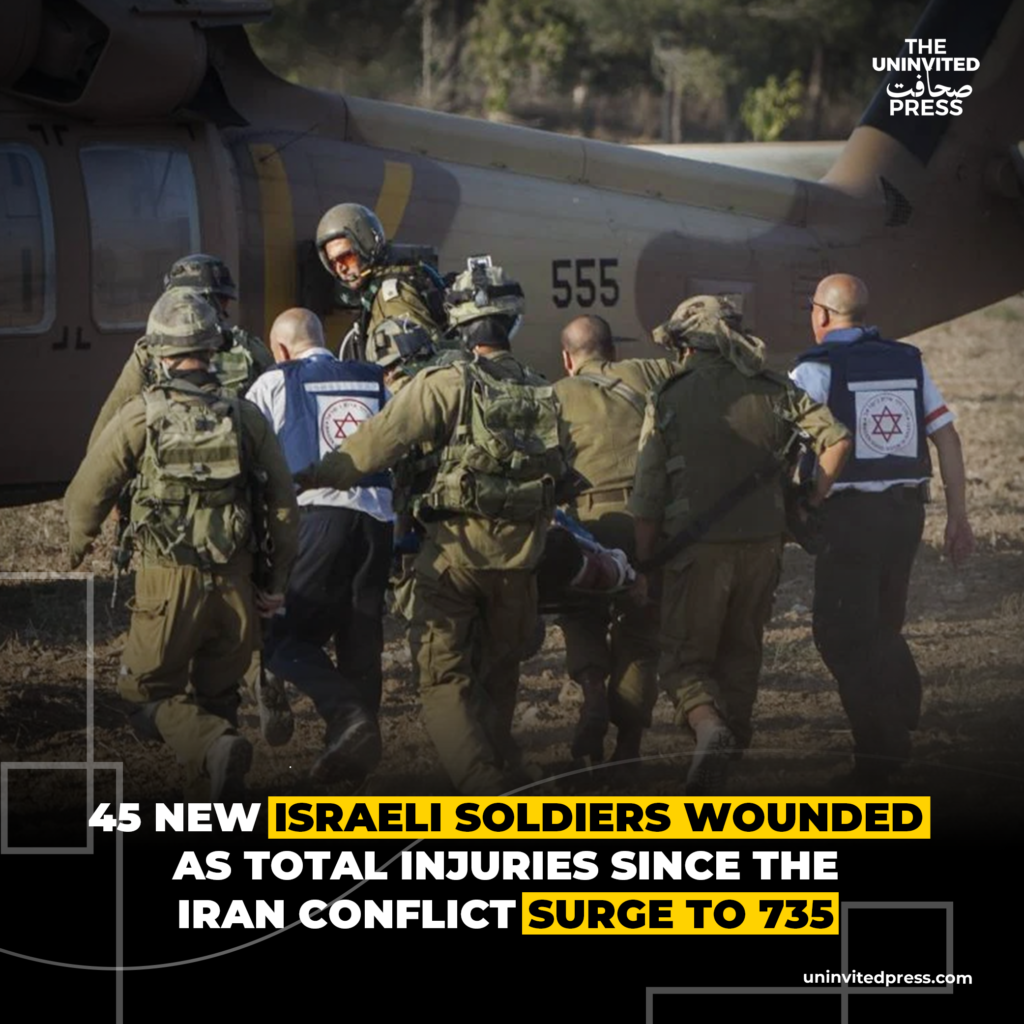
45 soldiers wounded in past 72 hours, pushing total military casualties to 735 since escalation with Iran and its allies began.
The Israeli military has announced that 45 soldiers were injured over the past 72 hours, bringing the total number of wounded troops to 735 since the start of the broader conflict involving Iran and its regional allies, according to official statements.
The latest figures come as tensions persist across multiple fronts, including reported exchanges with Hezbollah in southern Lebanon, even as a fragile calm holds in direct Iran-Israel confrontations following weeks of intense aerial and missile campaigns.
Israel Reports Rising Military and Civilian Injuries in Ongoing Conflict:
Israeli media and military sources reported the new injuries on Friday, with many of the latest cases linked to ground operations and cross-border incidents near the Lebanon border. Among the total 735 wounded soldiers, dozens are said to be in serious or moderate condition, though exact breakdowns for the most recent casualties were not immediately detailed.
The announcement highlights the human cost borne by Israeli forces amid a multi-front war that erupted in late February 2026. Israel’s Health Ministry has separately reported thousands of civilian injuries across the country from missile barrages and rocket attacks, with the overall national injury toll exceeding 7,000.
Regional Conflict Intensifies Amid Israel-Iran Tensions:
The surge in Israeli military casualties coincides with continued activity by Hezbollah and other Iran-aligned groups. Reports from Lebanese sources and monitoring groups indicate ongoing strikes on Israeli positions in the north, contributing to the steady rise in troop injuries.
Iran and its partners have framed their actions as defensive responses to Israeli and US strikes on Iranian territory and infrastructure, which caused significant damage and high civilian casualties on the Iranian side. Tehran has reported thousands killed in the US-Israel campaign, while accusing Israel of aggression across the region.
For its part, Israel maintains that its operations target militant infrastructure and aim to degrade the capabilities of Iran and Hezbollah. However, critics in the region argue that the prolonged engagements have failed to achieve decisive victories while exacting a heavy price on both military personnel and civilians.