

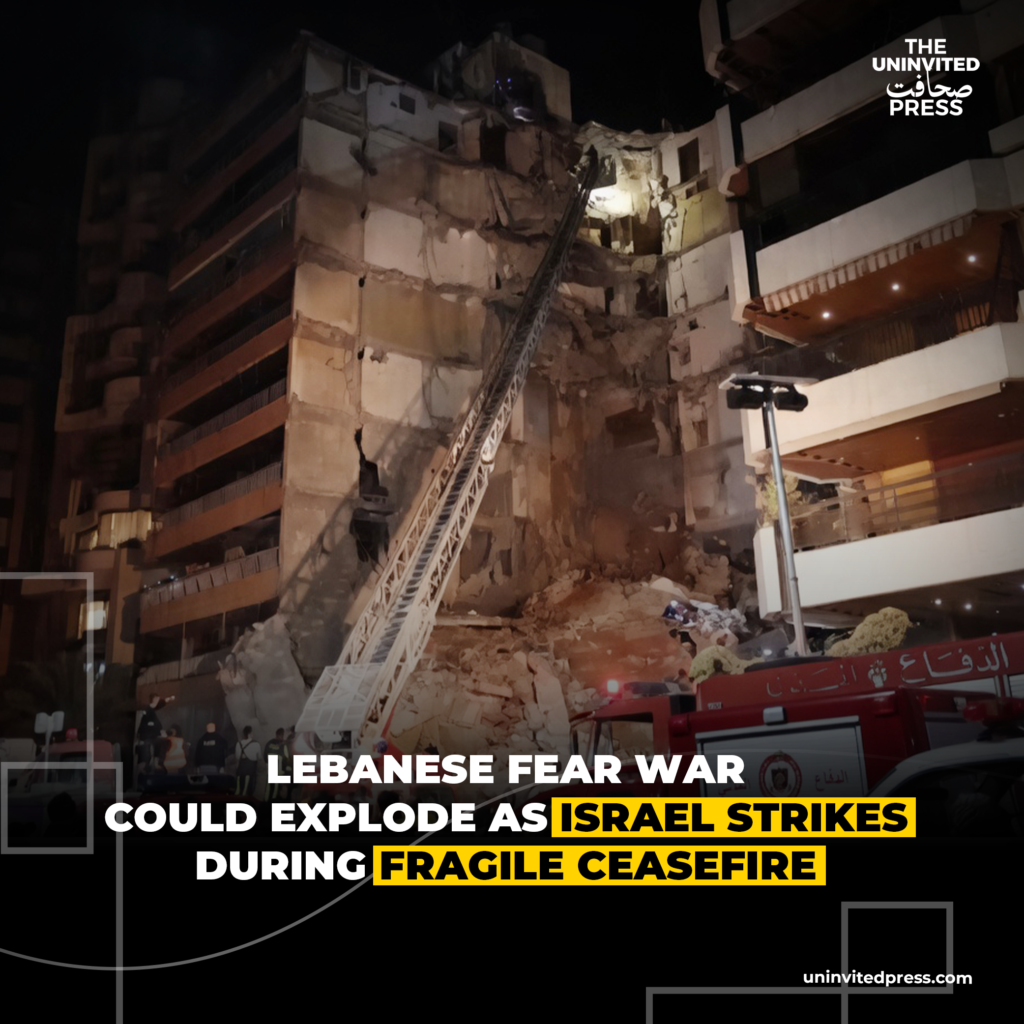
Massive Israeli bombardment across Beirut and other areas raises alarms that the conflict could spiral out of control, undermining the newly announced US-Iran truce and deepening the humanitarian crisis in Lebanon.
Residents of Lebanon expressed deep fear and despair on Thursday as Israeli air strikes killed at least 182 to 254 people and wounded hundreds more in what officials described as the deadliest single day of bombing in the ongoing conflict with Hezbollah.
The attacks, which hit densely populated residential and commercial neighbourhoods in central and southern Beirut, southern Lebanon, and the Bekaa Valley, came just hours after a two-week ceasefire was announced between the United States and Iran. Israel carried out more than 100 strikes in a span of about 10 minutes, according to the Israeli military, targeting what it called Hezbollah infrastructure.
Lebanese civil defence and health officials reported significant civilian casualties, with rescue teams searching through rubble for survivors trapped under collapsed buildings. Hospitals appealed for blood donations and additional medical staff as they struggled to cope with the influx of wounded.
Dispute Over Ceasefire Terms Increases Risks:
Israeli Prime Minister Benjamin Netanyahu stated that the ceasefire with Iran does not apply to Israel’s operations against Hezbollah in Lebanon, describing the fighting there as a “separate skirmish.” The US administration echoed this position.
However, Iran and the Pakistani mediators who helped broker the deal insisted that the truce should encompass broader regional de-escalation, including Lebanon. Hezbollah reportedly halted its attacks initially in line with the understanding that it was covered, but later fired rockets into northern Israel in response to what it called ceasefire violations.
The strikes have sparked widespread panic in Beirut, with residents describing scenes of chaos during rush hour as missiles struck without prior warning. Many expressed concern that the violence could draw the entire region back into full-scale war, especially as Iran responded by temporarily closing the Strait of Hormuz.
UN Human Rights Chief Volker Türk condemned the attacks as “horrific,” warning that the scale of killing and destruction places enormous pressure on the fragile peace. The UN secretary-general also expressed alarm, urging all parties to prevent further escalation.
Lebanon Crisis Deepens Amid Israel-Hezbollah Conflict and Regional Ceasefire Gaps:
The latest violence comes against the backdrop of a protracted Israel-Hezbollah confrontation that has already caused thousands of deaths and displaced over a million people in Lebanon. Despite a previous ceasefire agreement in late 2024, near-daily violations and continued Israeli operations have kept tensions high.
Lebanese officials, including Prime Minister Nawaf Salam, have mobilised diplomatic efforts to halt the “Israeli killing machine” and called for international intervention to include Lebanon in any regional peace arrangements. A national day of mourning has been declared, with public institutions shuttered and flags lowered.
Residents in affected areas voiced frustration and fear over repeated cycles of destruction. Many families, already exhausted by years of economic crisis and displacement, are now seeking safer locations outside major cities or preparing for further escalation.
Analysts warn that the exclusion of Lebanon from the US-Iran ceasefire risks derailing the broader truce, with potential ripple effects on global energy markets and regional stability. Iran’s actions regarding the Strait of Hormuz have already contributed to volatility in oil prices.