

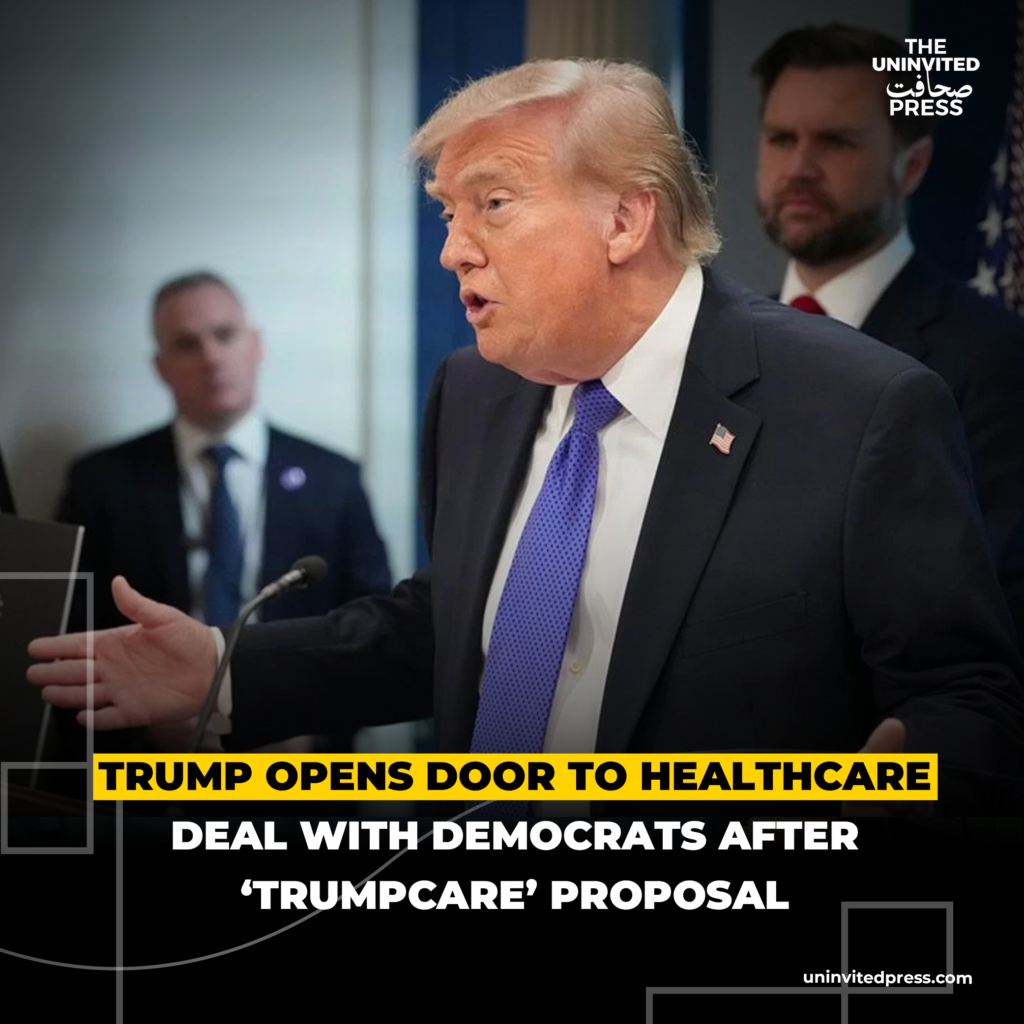
President signals possible compromise on universal coverage as progressive senator-elect brands Medicare expansion with his name, raising hopes amid deep policy divides.
US President Donald Trump has indicated he is open to negotiating a healthcare deal with incoming Democratic majorities in Congress, following a high-profile pitch from Michigan Senator-elect Abdul El-Sayed to rebrand a universal coverage plan as “TrumpCare.”
In recent comments, Trump said he could work with Democrats on the issue after their midterm gains shifted control of both chambers of Congress. “I’m open to great health care,” Trump told reporters. “Can it be what they want? No. But it can be a combination of what we all want. We could end up with great healthcare in our country. We could end up better than dealing with just the Republicans.”
The opening came after El-Sayed, a progressive Democrat and former public health official who made Medicare for All a centrepiece of his successful Senate campaign, publicly floated the idea of attaching Trump’s name to a guaranteed coverage programme. In a social media post featuring mock-ups of gold-coloured “TrumpCare” insurance cards, El-Sayed wrote: “Donald, this is on the table. Guarantee healthcare for every American, from cradle to grave.”
Trump Signals Openness to New Healthcare Deal with Democrats:
Trump shared a screenshot of the post on his Truth Social platform without adding commentary. He later described El-Sayed’s approach as “very smart” and confirmed he plans to meet the incoming senator, suggesting “maybe there’s some place in the middle that we could go.”
El-Sayed has framed the proposal as a pragmatic path to expand public insurance while allowing private options to remain, comparing it to public education systems. He has said he is prepared to work with progressive Senate figures including Bernie Sanders, Ron Wyden, Elizabeth Warren and Chris Van Hollen if Trump engages seriously. Other incoming Democrats have echoed willingness to accept the “TrumpCare” branding if it helps deliver broader coverage.
The signals mark a notable shift in tone. Trump’s second-term agenda has included significant Medicaid reductions projected to cut hundreds of billions in federal spending and new work requirements that critics warn could leave millions uninsured. His administration has also overseen the cancellation of coverage for hundreds of thousands of Affordable Care Act enrollees. Democrats entering the new Congress have prioritised restoring enhanced ACA subsidies, reversing cuts and lowering costs for patients.
Tens of millions of Americans remain uninsured or underinsured, facing high deductibles and barriers to care. Progressive lawmakers and advocates argue that a public guarantee of coverage from “cradle to grave” would address long-standing failures of the private-dominated system. Trump’s history of criticising “Obamacare” while floating alternative approaches has left many sceptical that any deal would deliver the transformative expansion Democrats seek.
Trump’s Healthcare Deal Faces Political Hurdles:
Trump has simultaneously emphasised his veto power, saying he would reject Democratic bills initially before negotiating. House Democratic leader Hakeem Jeffries and other party figures have listed healthcare cost relief among their top priorities once they assume majority control in January.
Whether the “TrumpCare” branding succeeds in bridging the gap remains uncertain. The proposal has drawn attention precisely because it plays to the president’s well-known preference for attaching his name to major initiatives. For advocates of universal healthcare, the moment represents a rare opening after years of Republican efforts to scale back public programmes. For critics of Trump’s record, it is a test of whether rhetorical openness will translate into policy that expands, rather than restricts, access to care.
As talks are floated, the stakes are high for patients navigating a system still marked by high costs, coverage gaps and unequal outcomes. Any eventual compromise would need to navigate deep ideological differences over the role of government, private insurers and individual mandates. For now, the door Trump has cracked open has injected new uncertainty-and cautious hope-into the US healthcare debate.