

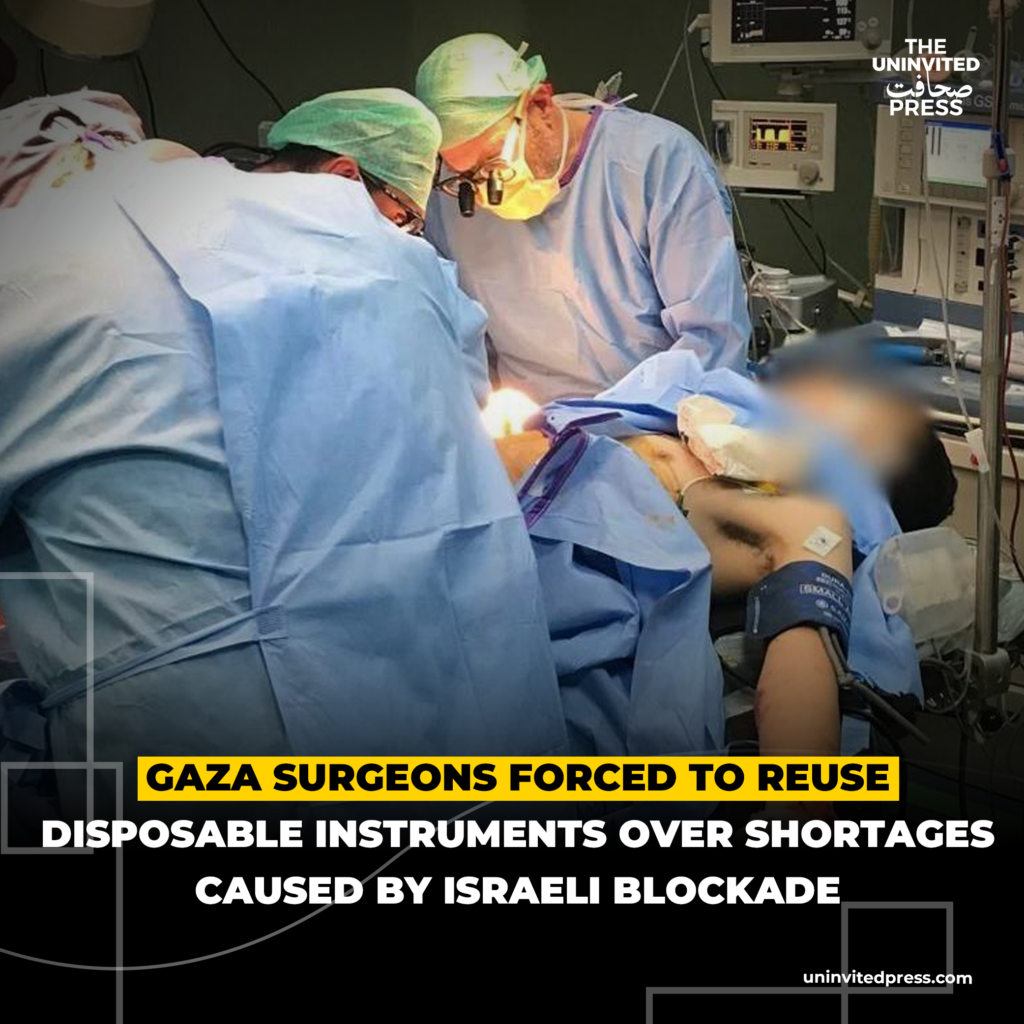
Hospitals sterilise and recycle single-use tools, gowns and drapes amid acute shortages that threaten surgical care and raise infection risks.
Surgeons across Gaza’s remaining hospitals are being compelled to reuse disposable surgical instruments, scalpels, gloves and other single-use equipment after sterilisation, as Israel’s long-running blockade continues to restrict the entry of vital medical supplies. The practice, once an emergency measure during the height of the war, has become routine, health officials and doctors say, even as infection risks climb and operations are delayed or cancelled.
Gaza’s Ministry of Health has issued repeated warnings in recent days about the near-total depletion of medical fabrics-including sterile surgical gowns, drapes, sheets, masks and protective clothing-which Israel has largely barred from entering the territory for approximately two years. Hospitals have been forced to re-sterilise and re-use existing stocks that have deteriorated through repeated processing. Officials state that specialised procurement committees submitted multiple requests and contacted local suppliers, but suitable materials meeting medical standards are unavailable because of the import restrictions.
Gaza Hospitals Face Critical Medical Supply Shortages:
Directors at major facilities, including Al-Shifa Hospital, have described the situation as critical. Existing materials have become worn and less effective after prolonged reuse; without replacements, surgical schedules face disruption and the quality of care is compromised. Medical teams report sterilising disposable instruments and implants in some cases, and improvising with available materials when standard supplies run out. Earlier accounts from doctors working in Gaza documented the reuse of scalpel blades (which quickly become blunt), titanium plates and other hardware recovered and re-sterilised from previous patients, as well as procedures carried out with limited or no anaesthesia.
The shortages form part of a wider collapse in the health system. Ministry figures cited in recent reporting indicate hundreds of essential medicines and medical consumables at zero stock, with particularly severe gaps in emergency, intensive-care, orthopaedic and oncology supplies. Fuel, spare parts for generators and equipment, and laboratory materials remain tightly constrained. Only a fraction of the trucks needed to meet daily medical requirements have been allowed in, according to health authorities and international organisations monitoring the situation. Many hospitals continue to operate at reduced capacity or have suspended non-emergency procedures.
Gaza's Surgical Care on the Brink of Collapse:
Doctors describe operating under conditions that would be unacceptable in any other context: instruments that fail mid-procedure, waterlogged equipment after sterilisation, and patients exposed to higher risks of infection because sterile barriers cannot be maintained to standard. Orthopaedic and trauma cases-still numerous after years of conflict-are especially affected, with limb-salvage surgery sometimes impossible and amputations performed for lack of plates, screws or external fixators. Local initiatives, including attempts to 3D-print certain devices from recycled materials, have provided limited relief but cannot replace systematic supply.
Gaza health officials place primary responsibility on Israeli restrictions, which they say treat many medical items as dual-use and therefore subject to stringent controls or outright denial. They have appealed to the United Nations, donor governments and humanitarian organisations for urgent intervention to secure the entry of fabrics, instruments, medicines and the equipment needed to restore basic surgical capacity. International agencies, including the WHO and UNRWA, have repeatedly documented critically low stocks, damaged infrastructure and the cumulative effect of restricted access on civilian health.
The human cost is measured in postponed operations, preventable complications and the daily decisions forced on exhausted medical staff. In operating theatres that once relied on single-use sterility protocols, surgeons continue to work with what they have, sterilising and reusing what was never designed for multiple patients. Without a sustained increase in the volume and range of medical supplies allowed into Gaza, officials warn that the ability to perform even essential surgery will continue to erode.