

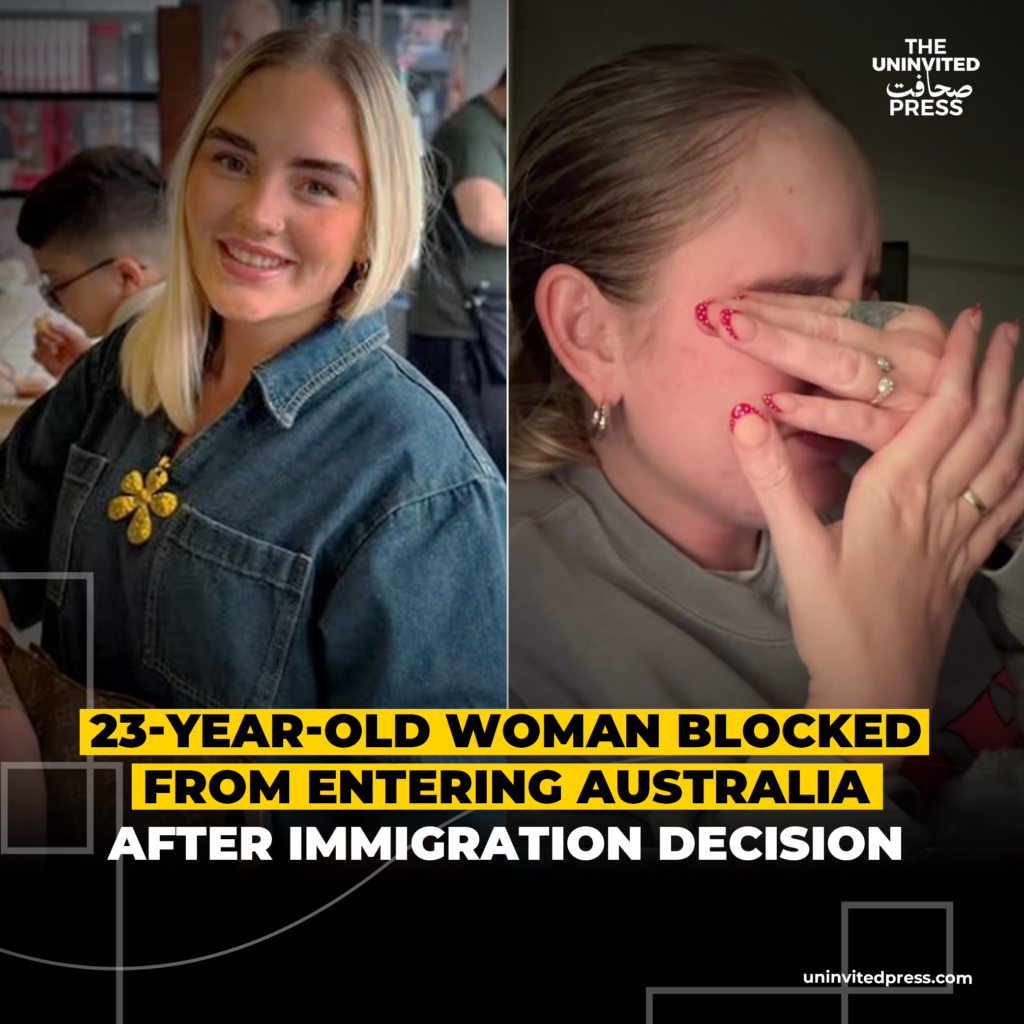
An Australian immigration ruling has denied entry to a 23‑year‑old woman, sparking debate over visa policies and border enforcement. Officials cite legal grounds, while advocates express concern over fairness and humanitarian considerations.
Immigration Decision Sparks Debate Over Border Policies:
A 23‑year‑old woman was recently denied entry into Australia after an immigration decision that has drawn public attention to the nation’s border policies. Immigration authorities say the refusal was based on legal eligibility criteria, while advocates argue the case highlights broader concerns over fairness, transparency, and humanitarian considerations in visa processing.
Young Woman Denied Entry at Sydney Airport:
A young woman, 23‑year‑old Sara, was prevented from entering Australia at Sydney Airport last week following a routine immigration check, immigration officials confirmed on Tuesday. Sara, who holds a passport from a foreign country and was reportedly traveling on a temporary visitor visa, was informed on arrival that she did not meet certain visa conditions and was barred from entry.
According to the Department of Home Affairs, the decision was made after authorities determined that Sara had not sufficiently demonstrated her intention to comply with Australian visa requirements, including proof of funds, return travel plans, and genuine temporary stay intentions-criteria commonly evaluated for tourist or temporary visas.
“Our border protection framework is designed to ensure that those entering Australia meet all legal requirements,” said a spokesperson for the Department. “When an applicant fails to meet these criteria upon arrival, officers are required under law to refuse entry.”
Sara’s representatives have said she intended to visit family in Australia and had valid travel documentation before departure. Her family expressed shock and disappointment at the decision, describing it as “devastating and unfair.” They also claimed she was not properly informed of the specific grounds for refusal until she arrived at the airport.
Legal experts and immigration advocates have weighed in on the case, noting that decisions at the border can occasionally lead to refusal even when a visa was previously granted. “Border officers have discretionary powers,” explained Melbourne immigration attorney Lauren Matthews. “But there are often communication gaps that can leave travelers unprepared for such outcomes.”
The Department of Home Affairs confirmed that Sara has been issued return travel arrangements and will be departing Australia in the coming days, though her family may appeal parts of the decision.
Strict Australian Border Policies and Entry Refusals:
Australia is known for enforcing some of the world’s strictest immigration and border control policies, particularly with regard to temporary and visitor visas. While many travelers receive electronic travel authorities or tourist visas prior to arrival, final admission into the country is always subject to a border official’s assessment at the port of entry.
Under Australian law, even visa holders can be denied entry if they fail to satisfy certain criteria on arrival-such as evidence of sufficient funds, intent to return to their home country, and adherence to the visa’s purpose. These border decisions are made on a case‑by‑case basis and can be swift. Immigration authorities argue that such measures help prevent unlawful work, overstays, and misuse of the visa system, but critics say they can result in unexpected refusals that disrupt travel plans and cause emotional distress.
Recent years have seen several high‑profile cases where students, tourists, and temporary workers have been barred from entry-sometimes due to incomplete documentation or misunderstandings about visa conditions. Advocacy groups continue to call for clearer communication, better traveler guidance, and mechanisms to ensure fair treatment at borders.