

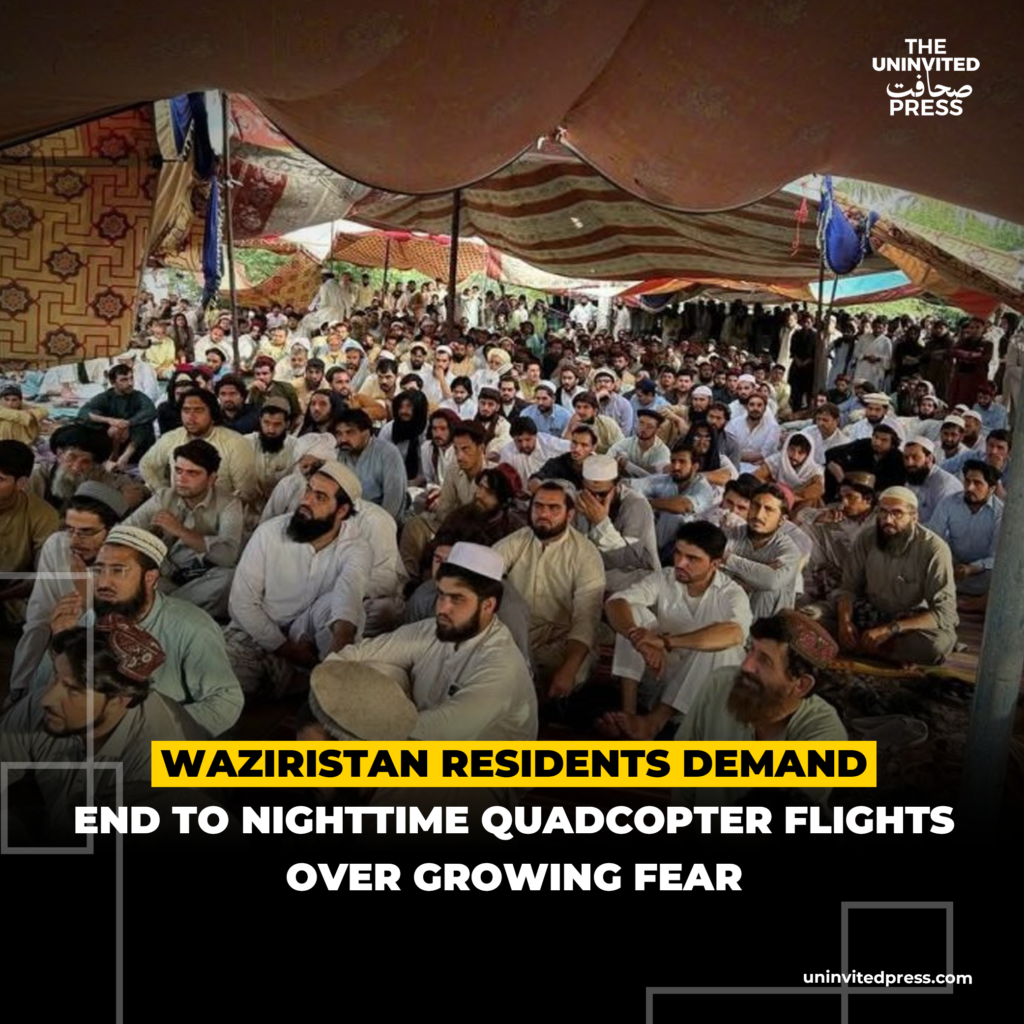
Locals in Lower South Waziristan say persistent drone activity, gunfire and explosions near homes are disrupting daily life and harming mental health, particularly among women and children.
Residents of Birmal tehsil in Pakistan’s Lower South Waziristan have called on authorities to halt nighttime quadcopter flights and accompanying gunfire, describing a climate of fear that has taken hold in their communities.
Villagers from Kalosha, Azam Warsak and Paley Chowk told local media that on the night between 4 and 5 August they heard continuous quadcopter activity, gunfire and multiple blasts. The disturbances, they said, caused widespread panic and left many unable to sleep. Similar incidents have been occurring for several months, residents added, and are beginning to affect the mental well-being of families, especially women and children.
Fear Grows as Quadcopter Flights Continue in Waziristan:
Several explosions were reported near residential areas, heightening the sense of insecurity. “These flights and the sounds of firing and blasts have become a regular feature of our nights,” one resident said. “People, particularly the elderly, women and children, live in constant anxiety.”
Neither the security forces, police nor the district administration have issued an official statement addressing the residents’ claims. A senior district official, however, said militants had attacked a security forces checkpost on the Azam Warsak Road in Birmal late that night and that troops had responded and repulsed the assault.
The complaint comes against a backdrop of intensifying use of small commercial and modified quadcopters across Khyber Pakhtunkhwa’s former tribal districts. Both militant groups, including the Tehreek-e-Taliban Pakistan (TTP) and affiliated factions, and state security forces have employed the devices for surveillance and attacks. In recent years, similar incidents have resulted in civilian deaths and injuries, prompting protests, sit-ins and demands for independent investigations.
In Lower South Waziristan and neighbouring North Waziristan, communities have repeatedly reported quadcopter strikes that killed or wounded civilians, including children. Local leaders and rights advocates have long argued that the lack of transparent accountability-combined with competing claims over who is responsible-leaves ordinary people trapped between armed groups and counter-terrorism operations.
Night Drone Activity Sparks Fear in Waziristan:
Residents say the constant presence of drones overhead, especially after dark, has altered everyday routines. Families report keeping children indoors, avoiding outdoor gatherings at night, and living with chronic stress. The psychological toll, they stress, is cumulative and largely unaddressed by official channels.
While Pakistani authorities attribute many attacks to militants operating from across the border and insist security operations target only armed fighters, local accounts frequently describe explosions and flights occurring close to homes and civilian areas. The absence of clear official communication after such nights only deepens mistrust.
For the people of Birmal and surrounding villages, the demand is straightforward: an end to the nighttime flights and gunfire that have turned ordinary evenings into periods of fear. Without concrete measures to restore a sense of safety, they say, the cycle of anxiety and disruption will continue.