

Tribal communities in Madhya Pradesh demand better compensation and rehabilitation as first phase of ambitious interlinking scheme submerges ancestral lands and sacred sites.
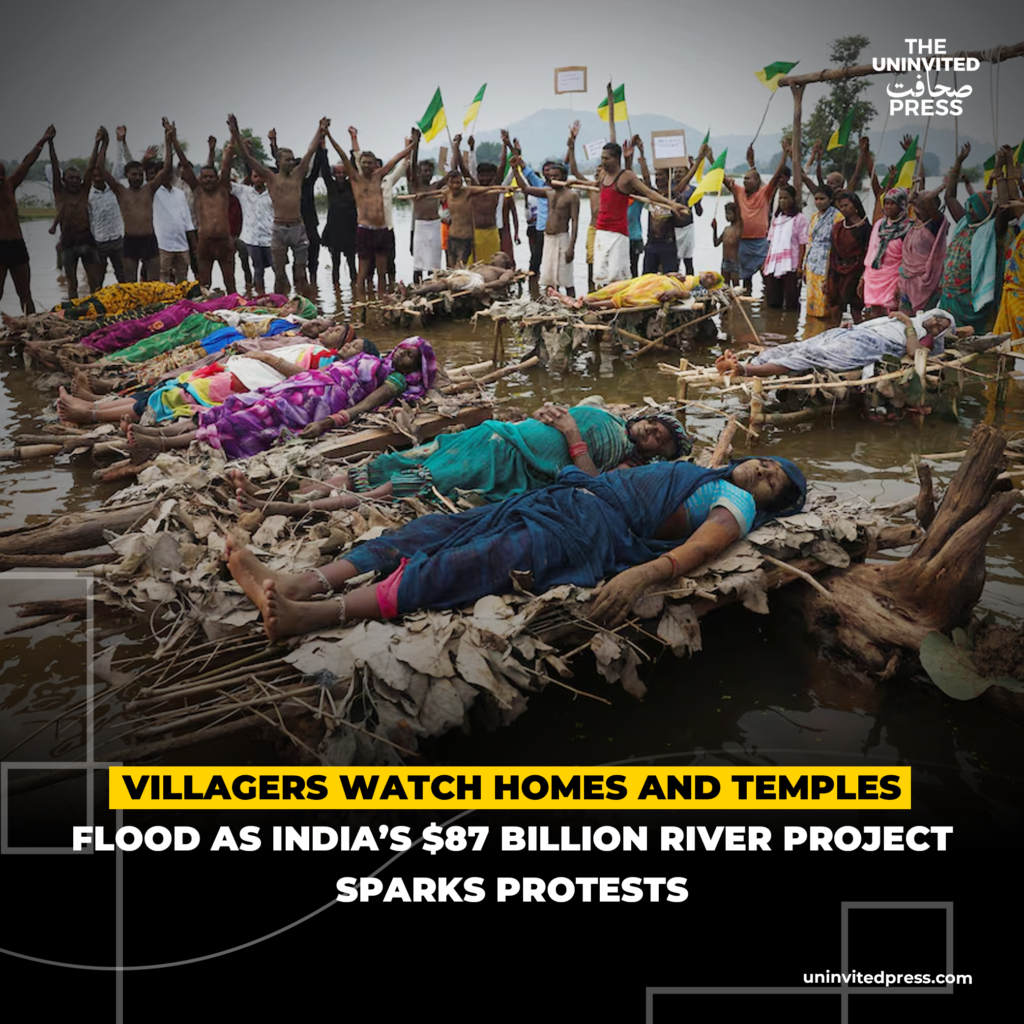
In the shallow waters of the Ken River in central India’s Madhya Pradesh, tribal villagers stand knee-deep, some with mud smeared across their faces in a symbolic gesture of attachment to the land their families have farmed for generations. Rising waters from the construction of a major dam are already inundating homes, fields and temples, fuelling protests against the first phase of India’s vast and long-debated river-linking programme.
India’s River Project Sparks Protests Over Flooded Villages:
The $87 billion national initiative aims to connect dozens of rivers across the country to transfer water from surplus to drought-prone regions, boost irrigation, improve drinking water supply and generate hydropower. Its opening project, the Ken-Betwa Link, carries an estimated price tag of about $4.6 billion. It involves building the Daudhan Dam on the Ken River to channel water through canals and tunnels into the Betwa River in neighbouring Uttar Pradesh. Officials say the scheme will eventually irrigate more than a million hectares, supply drinking water to millions of people in the arid Bundelkhand region, and produce electricity.
For residents of villages in Panna and Chhatarpur districts, however, the project has brought immediate loss. As reservoir waters rise, homes and temples have been submerged. “The temple was my only source of income and now it is gone,” said local priest Dhaniram Bhatnagar. “The compensation offered by the government is only for my home, and that is not enough.” Tribal residents like Bitti Bai Kondar, whose family has cultivated the same land for more than a century, have joined hundreds of others in demonstrating against what they describe as inadequate rehabilitation.
The government has raised compensation offers to at least 1.25 million Indian rupees (about $13,000) per hectare in affected areas of Panna district-more than double the initial figure. District officials report that payments have reached over 90 percent of eligible people. Yet many villagers argue the packages fail to account for the full value of ancestral farmland, forest-based livelihoods, community temples and cultural ties to the land. Earlier waves of protest included symbolic “water funerals,” hunger strikes and demonstrations in which residents lay beside mock funeral pyres, demanding land-for-land rehabilitation, higher compensation and proper recognition of forest rights.
India’s River Project Faces Environmental Backlash:
Environmental concerns compound the social grievances. Critics warn that the Daudhan Dam will inundate roughly 9,000 hectares of land, including significant portions of the Panna Tiger Reserve, one of India’s notable conservation success stories. Large areas of forest are expected to be submerged, threatening wildlife habitats and biodiversity. Environmentalists have long argued that the ecological costs of large-scale river interlinking may outweigh the promised benefits, particularly when alternative water-management approaches exist.
The Ken-Betwa project is the first to move forward under India’s National Perspective Plan for interlinking rivers, a concept decades in the making that gained fresh momentum under Prime Minister Narendra Modi’s government. Supporters present it as a transformative solution to chronic water scarcity, agricultural distress and uneven rainfall patterns in parts of the country. Opponents, including affected tribal communities and conservation groups, see it as a classic case of development that prioritises distant beneficiaries while uprooting those living in the path of the infrastructure.
As waters continue to rise and construction advances, the protests in Madhya Pradesh have become an early test of the broader river-linking vision. Villagers insist they are not opposed to progress but demand justice in the form of fair compensation, meaningful rehabilitation and respect for their homes, temples and ancestral lands. For now, many remain in the river itself-watching their world slowly disappear beneath the water that the project is designed to control.