

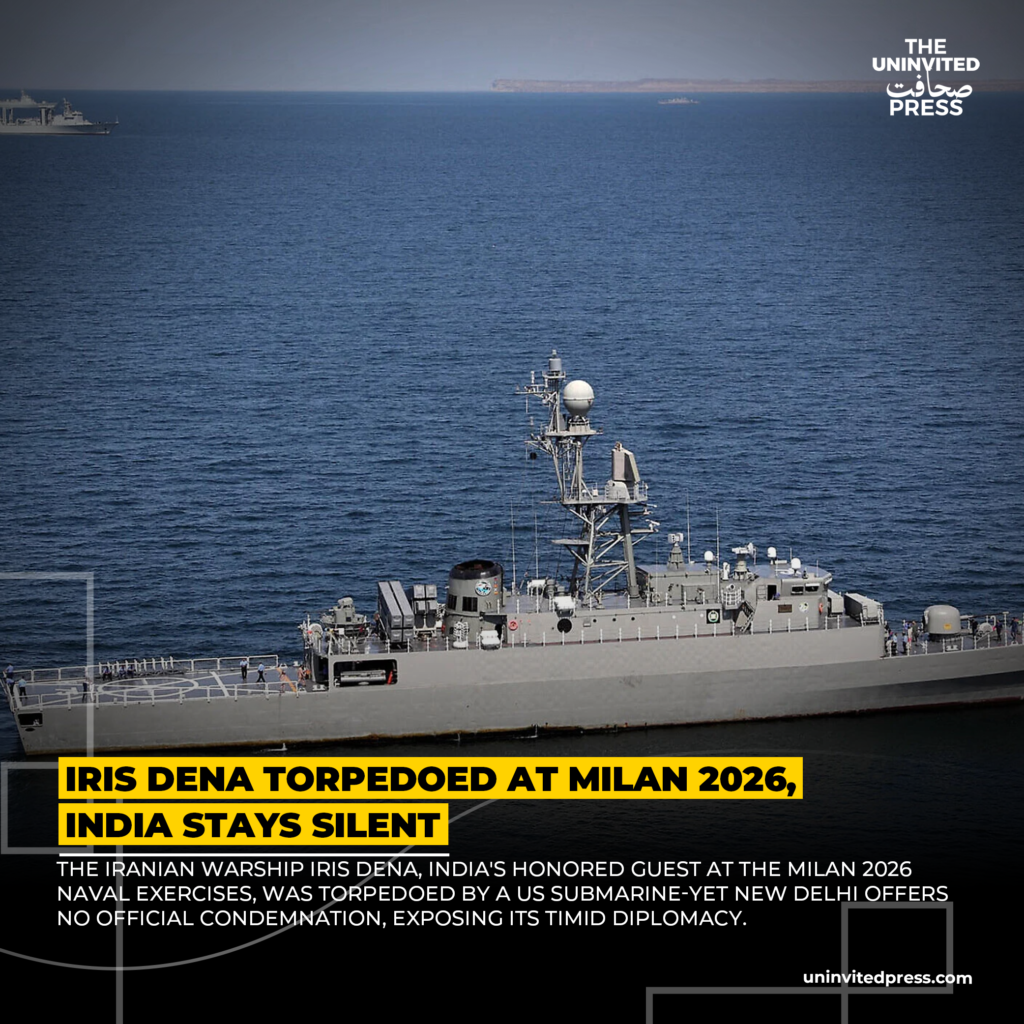
US submarine torpedoes Iranian warship IRIS Dena after MILAN 2026 in India, killing 87; New Delhi silent amid escalating US-Iran conflict in Indian Ocean.
US Sub Sinks IRIS Dena, 87 Dead:
A US Navy submarine has sunk the Iranian frigate IRIS Dena with a torpedo in the Indian Ocean, just days after the vessel participated as an honored guest in India’s MILAN 2026 naval exercise. The strike, which killed 87 sailors and left 32 rescued, escalates the US-Iran conflict into India’s strategic backyard, raising questions about regional stability and New Delhi’s muted response.
This incident, the first torpedo sinking of a warship by a US sub since World War II, underscores the broadening scope of the war and potential risks to India’s energy security and diplomatic ties.
IRIS Dena's MILAN Visit to Deadly Torpedo Strike:
The IRIS Dena arrived in Visakhapatnam, India, on February 16, 2026, to participate in the International Fleet Review and MILAN 2026, a multinational naval exercise hosted by the Indian Navy involving over 50 countries. The frigate, one of Iran’s newest warships armed with guns, missiles, and torpedoes during normal operations, joined parades and live-fire drills, with its crew saluting Indian President Droupadi Murmu.
The ship departed Indian waters on February 25, heading back to Iran via the Indian Ocean. On March 4, around 5:08 a.m., a US submarine-possibly a Virginia-class or Ohio-class vessel-fired a single Mark 48 torpedo, striking the Dena’s hull and causing a catastrophic explosion that broke the ship’s keel. Pentagon-released periscope footage showed the ship lifting from the water before sinking stern-first in deep waters over a 4,000-meter abyssal plain.
Sri Lanka’s Maritime Rescue Coordination Centre received the distress signal and dispatched vessels, recovering 32 survivors and 87 bodies. The Indian Navy assisted with a P-8I maritime patrol aircraft launched at 10:00 a.m. on March 4, coordinating humanitarian efforts. No further survivors were found.
US Defense Secretary Pete Hegseth confirmed the strike on March 5, describing it as a “quiet death” and vowing sustained pressure on Iran. The attack occurred amid the US-Iran war, following US-Israeli strikes on Iran starting February 28.
As of March 6, the incident remains under international scrutiny, with no reported retaliation from Iran in the region.
From Multinational Exercise to Geopolitical Risk:
MILAN (Multilateral Naval Exercise), hosted biennially by India since 1995, promotes interoperability among navies. The 2026 edition in Visakhapatnam included 50 nations, with IRIS Dena representing Iran amid warming Indo-Iranian ties, including Chabahar port development. The US withdrew its scheduled destroyer but sent a P-8A aircraft.
The strike fits into the US-Iran war, ignited by US-Israeli attacks on February 28 killing Iran’s Supreme Leader Ali Khamenei and targeting nuclear sites. Iran retaliated by closing the Strait of Hormuz and firing missiles, disrupting global shipping. Iranian warships had attacked oil tankers, prompting US actions.
Historically, US subs last sank a warship in combat during WWII against Japan. The incident’s location near India highlights New Delhi’s balancing act between US alliances (via Quad) and Iran ties for energy and Central Asia access. It risks India’s oil imports-15% from Iran pre-sanctions-and could strain relations if perceived as US overreach in India’s sphere.
This expands the conflict geographically, potentially disrupting Indian Ocean trade routes vital for 80% of India’s energy needs, and tests Modi’s foreign policy of strategic autonomy.