

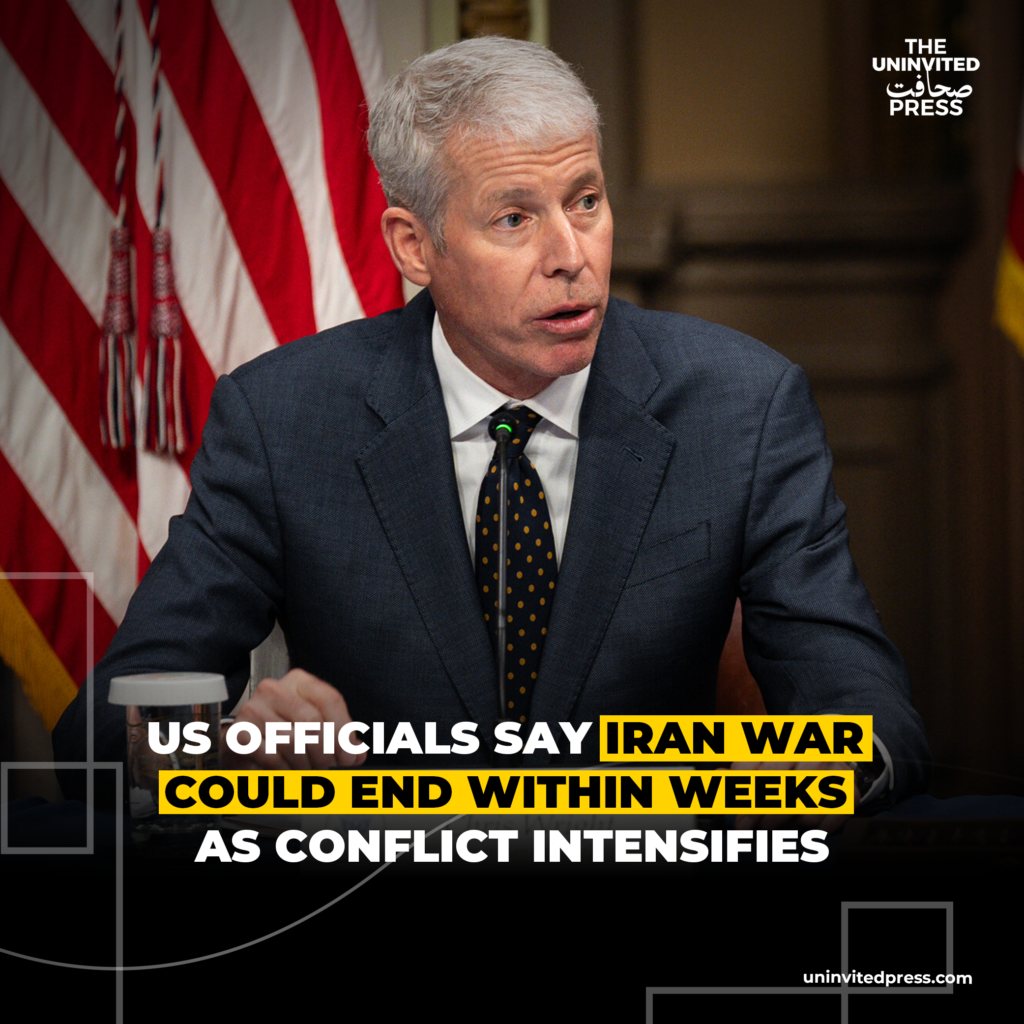
US officials estimate Iran war ending in 4-6 weeks amid intensified strikes, Trump threats, and oil chaos, while Tehran vows endurance in 2026 conflict.
US Predicts Quick End to Iran War Amid Escalating Strikes and Oil Chaos:
Senior U.S. officials are projecting a swift conclusion to the ongoing war with Iran, estimating the conflict could wrap up in four to six weeks, even as strikes intensify and Iran vows prolonged resistance. This optimism emerges amid soaring oil prices and mounting pressure on global markets, with President Donald Trump rejecting immediate deals and threatening further hits on key Iranian oil infrastructure.
The statements highlight a U.S. strategy focused on rapid degradation of Iran’s military capabilities, but they contrast sharply with Tehran’s defiance and warnings from allies about a potentially drawn-out fight. As the war enters its third week, the human and economic toll is escalating, with disruptions in the Strait of Hormuz threatening energy supplies worldwide and fueling fears of broader instability.
US Projects 4-6 Week End as Strikes and Economic Strain Mount:
The U.S.-led war against Iran, now in its third week as of March 16, 2026, is intensifying despite American projections of a quick end. On March 15, White House National Economic Council Director Kevin Hassett said the Pentagon expects the conflict to conclude in four to six weeks, predicting a positive shock to the global economy.
Economic uncertainty persists as oil prices surge due to disruptions in the Strait of Hormuz. President Trump threatened further strikes on Iran’s Kharg Island and stated the U.S. is holding out for better terms in any deal.
The conflict began on February 28 with joint U.S.-Israeli airstrikes targeting Iran’s nuclear sites, missile facilities, and leadership, including Supreme Leader Ali Khamenei. Iran responded with “Operation True Promise,” striking Israel and U.S. bases across the Middle East.
By March 16, Defense Secretary Hegseth reported over 15,000 Iranian targets destroyed, while Israel has thousands of remaining targets, signaling expanded operations. Iran’s continuous strikes have disrupted the Strait of Hormuz and prompted evacuations in UAE ports. Civilian casualties include at least 15 deaths in Israel, and environmental damage in Iran has been labeled “ecocide.”
US Optimism vs. Iranian Defiance: Diverging Views on War's Duration:
This war stems from longstanding U.S.-Iran hostilities, intensified by Iran’s nuclear ambitions and backing of proxies like Hezbollah and the Houthis. The 2018 U.S. exit from the JCPOA under Trump’s first term eroded diplomatic avenues, paving the way for confrontation. Israel’s perception of Iran as an existential threat, combined with U.S. support in Trump’s second administration, triggered the February assault.
Khamenei’s assassination represents a unprecedented U.S. direct strike on a foreign nuclear program. The conflict has engulfed the “Axis of Resistance,” with expansions into Lebanon where Israel contemplates ground incursions to the Litani River. Over 230,000 displaced regionally, per U.N. estimates, with crises in Lebanon and Iran.