

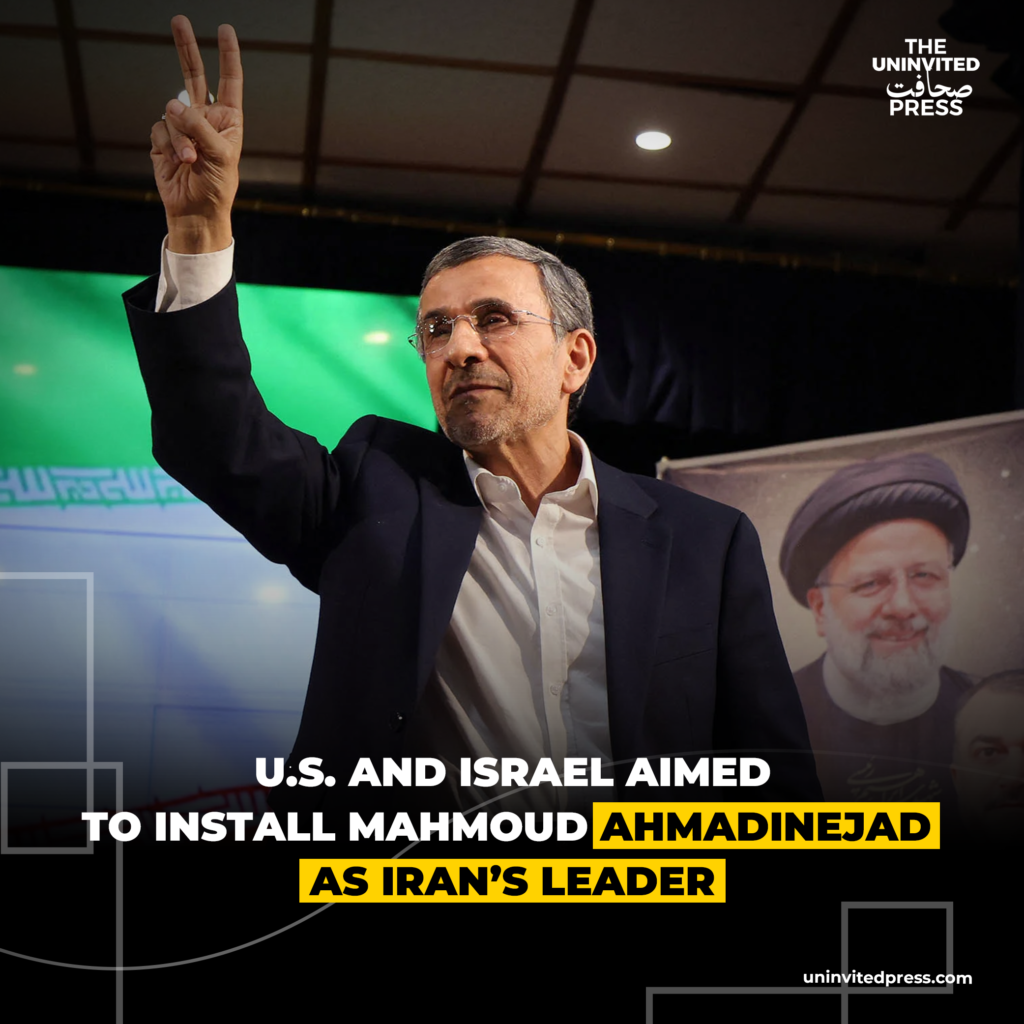
Controversial regime-change scheme highlights miscalculations in early stages of Iran war.
The United States and Israel entered their military campaign against Iran with a audacious plan to replace the Islamic Republic’s leadership with former President Mahmoud Ahmadinejad, a hardline populist known for his fiery anti-Western rhetoric and Holocaust denial, according to a report by The New York Times.
Citing US officials briefed on the matter, the newspaper revealed that an Israeli-developed strategy envisioned a multi-phase collapse of the Iranian regime, beginning with airstrikes that killed Supreme Leader Ali Khamenei and other top officials on February 28. A key element was a precision strike on Ahmadinejad’s home in Tehran, intended not to assassinate him but to free him from house arrest and position him as a transitional figurehead.
The revelation has sparked widespread astonishment and criticism across the Middle East, raising fresh questions about the strategic foresight of Washington and Tel Aviv in one of the region’s most volatile conflicts.
NYT: Ahmadinejad Backed US-Israel Post-Khamenei Plan Before Disappearing:
According to the NYT, Ahmadinejad had been consulted about the plan and was reportedly on board. The former president, who served from 2005 to 2013 and built a reputation as a champion of the poor while pursuing a confrontational nuclear policy, was seen by some planners as having enough populist appeal to help stabilise a post-Khamenei Iran.
However, the operation quickly unravelled. Ahmadinejad was injured in the strike on his residence, after which he reportedly cut ties with his would-be backers and disappeared from public view. His current whereabouts remain unknown, with Iranian state-aligned media disputing aspects of the report.
Analysts have described the scheme as a stark illustration of how little the US and Israel understood Iranian domestic politics. Ahmadinejad’s tenure was marked by economic mismanagement, disputed elections, and massive protests in 2009, which were violently suppressed. His return as a Western-backed leader would likely have been rejected by large segments of Iranian society.
Failed Ahmadinejad Plan Exposes Flaws in US-Israel Iran Strategy:
The reported plan emerged amid escalating tensions over Iran’s nuclear programme and its support for regional allies. The US-Israeli aerial campaign, which included strikes on key military and nuclear sites, aimed at degrading Iran’s capabilities but also carried hopes of internal regime change. The conflict, which saw a ceasefire in early April but continues with sporadic skirmishes, has already reshaped the Middle East’s security landscape. Critics argue that betting on a figure like Ahmadinejad-long a symbol of Iranian defiance against Israel and the US-exposed deep flaws in war planning.
In Tehran, state media has used the report to rally domestic support, portraying it as further evidence of foreign meddling. Opposition voices and exiled Iranians have expressed mixed reactions, with some decrying any collaboration with Ahmadinejad as a betrayal of democratic aspirations. The episode underscores the complexities of imposing leadership from outside in a country with deep nationalist sentiments and a history of resisting foreign intervention. As the dust settles on the latest chapter of Iran’s turbulent politics, questions linger about accountability for the strategic missteps that prolonged instability in the region.