

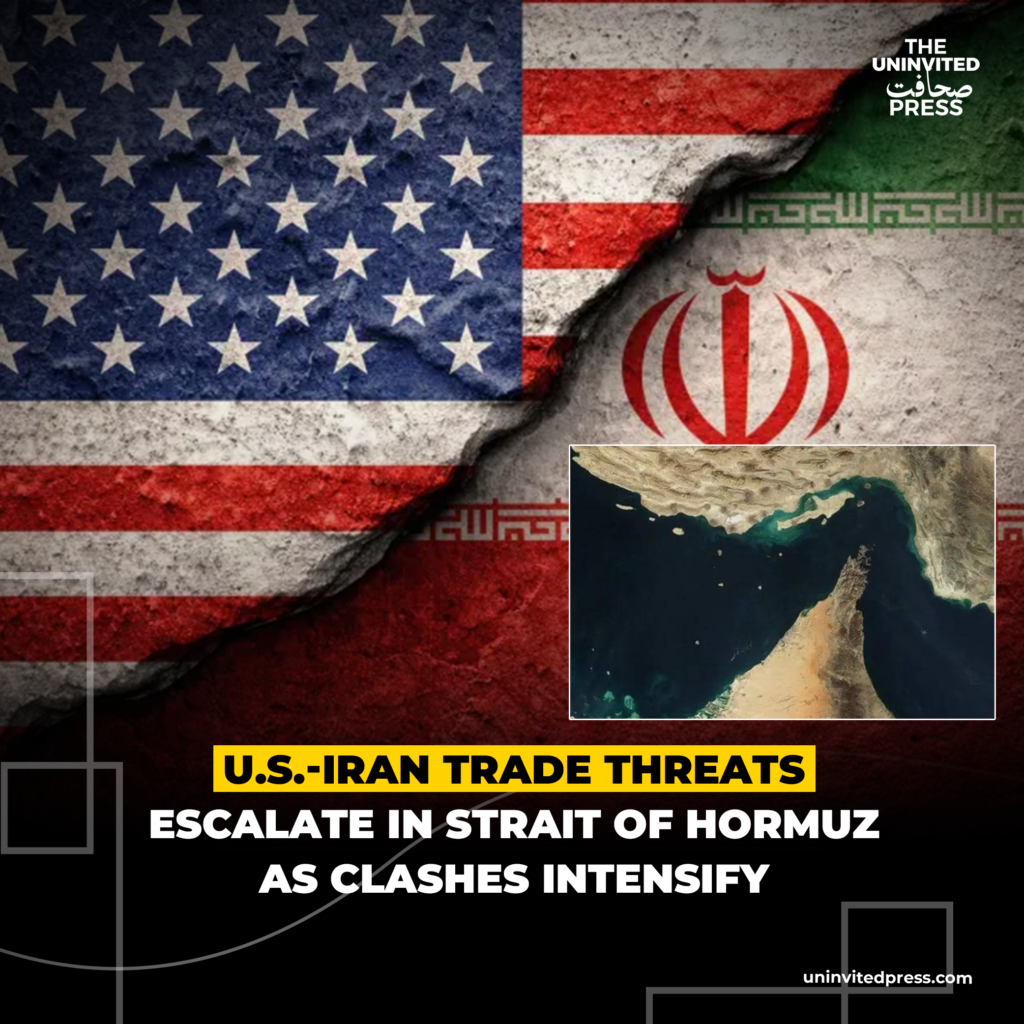
Washington’s naval blockade and new sanctions deepen economic pressure on Tehran, raising fears of wider disruption to global oil supplies.
Tensions between the United States and Iran have sharply intensified in the strategic Strait of Hormuz, with both sides exchanging threats and reports of direct naval clashes, raising fears of a wider resumption of hostilities just weeks after a fragile ceasefire took hold.
The narrow waterway, through which roughly one-fifth of the world’s oil and liquefied natural gas passes, has become the focal point of a dangerous standoff. Iran has asserted control over the strait in response to US military actions, while Washington has launched operations to escort commercial vessels and enforce a counter-blockade on Iranian ports.
Fresh US-Iran Maritime Clashes Raise Fears of Wider Gulf Conflict:
According to Iranian state media and military sources, Iranian forces engaged US naval assets attempting to navigate the strait as part of what the Trump administration calls “Project Freedom.” Tehran claims its navy forced back US warships and targeted vessels ignoring warnings, while the US Central Command (CENTCOM) reports sinking Iranian fast-attack boats that posed threats to commercial shipping.
Casualties have been reported on both sides, including civilian crew members on vessels caught in the crossfire. A fire also broke out at a petroleum facility in the UAE port city of Fujairah following alleged Iranian missile activity, further inflaming regional concerns.
US President Donald Trump has issued stern warnings, stating that any attacks on American vessels or attempts to close the strait would be met with overwhelming force. Iranian officials, including Revolutionary Guard commanders, have vowed “long and painful strikes” on US positions in the region if provocations continue.
Hormuz Dispute Fuels Energy Crisis and Global Market Shock:
The current escalation stems from a broader conflict that erupted earlier in 2026, involving US and Israeli strikes on Iranian targets aimed at curtailing its nuclear and missile programmes. Iran retaliated by attempting to close the Strait of Hormuz, disrupting global energy markets and prompting a US naval response.
A conditional ceasefire, brokered with involvement from Pakistan and China, took effect in early April. However, disputes over freedom of navigation through the strait have prevented a lasting agreement. Iran insists on maintaining oversight of the waterway, while the US demands unrestricted passage for international shipping.
Oil prices have surged in response to the uncertainty, with Brent crude rising above $110 per barrel in recent sessions. Energy-dependent economies in Asia and Europe are already feeling the pinch, with some nations implementing rationing measures.
US-Iran Tensions Threaten Gulf Stability and Global Economy:
Analysts warn that a full breakdown of the ceasefire could have catastrophic consequences for the Middle East and the global economy.
“The Strait of Hormuz is the jugular vein of the global energy trade,” said one regional expert. “Any prolonged disruption risks not only higher fuel prices but also broader military escalation involving multiple regional actors.”
Gulf Arab states, particularly those reliant on the strait for exports, have expressed alarm. The United Arab Emirates has reported intercepting projectiles, while other countries continue to closely monitor the situation.
Talks mediated in Islamabad have so far failed to bridge the gap, with Iran demanding sanctions relief and a US withdrawal from the region, while Washington is pressing for verifiable limits on Iran’s military activities and nuclear programme.
As naval forces from both sides remain on high alert in the Gulf, diplomats are racing to prevent further incidents. For now, the world watches anxiously as the US–Iran standoff risks spilling into open confrontation once again in one of the planet’s most vital maritime chokepoints.