

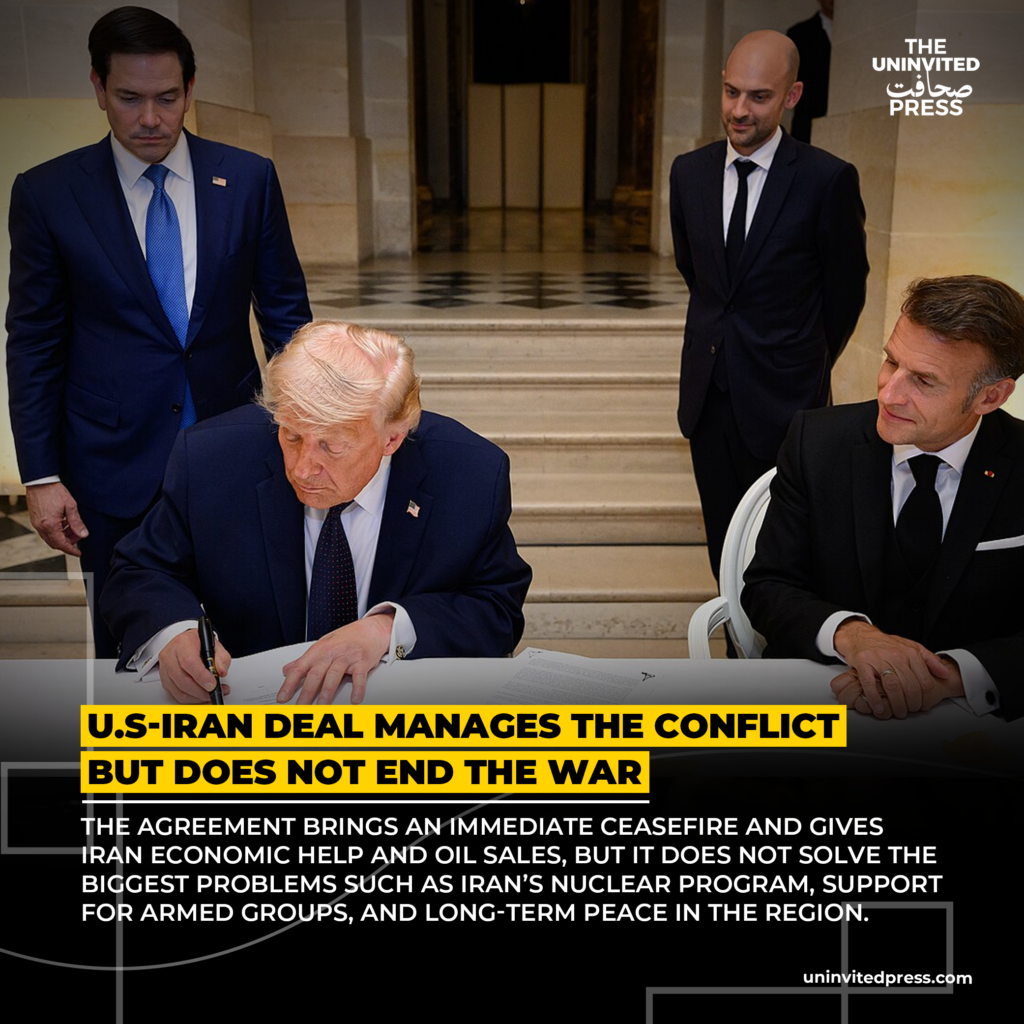
Temporary relief for Tehran comes at the cost of unresolved nuclear ambitions, proxy conflicts and long-term stability in the Middle East.
The United States and Iran have reached a preliminary agreement to halt direct hostilities following months of devastating conflict, but analysts and regional observers warn that the deal primarily manages the immediate crisis rather than resolving the underlying drivers of instability in the Middle East.
Signed remotely by US President Donald Trump-during a G7-related event in France alongside French President Emmanuel Macron-and Iranian officials, the memorandum of understanding (MoU) establishes an immediate ceasefire, reopens the Strait of Hormuz to international shipping, and provides limited economic relief to Iran, including the ability to resume oil sales.
The agreement, often described as a 14-point framework, stops short of addressing Iran’s nuclear programme in a comprehensive manner, its support for regional armed groups, or the path to lasting peace involving key players like Israel.
Iran Secures Relief as Nuclear Disputes Persist:
Under the terms, Iran gains immediate sanctions relief on oil exports, allowing it to generate much-needed revenue after the crippling effects of the war that closed the strategic waterway and disrupted global energy markets. Tehran also stands to benefit from the unfreezing of certain assets and potential reconstruction support.
For the Iranian leadership, this represents a survival pact. The Islamic Republic has weathered intense military pressure, including strikes that reportedly killed senior figures, yet it has emerged with its core governance structure intact. Critics in the region, however, see the deal as rewarding aggression and proxy warfare rather than curbing it.
A senior US official described the pact as a starting point for 60 days of further negotiations on more contentious issues, including uranium enrichment levels and the fate of Iran’s highly enriched stockpile, which is to be “downblended” under IAEA supervision.
One of the most glaring omissions, according to non-proliferation experts, is a definitive cap on Iran’s enrichment activities or a robust mechanism to dismantle its nuclear infrastructure. While Iran has reaffirmed it will not pursue nuclear weapons, the agreement leaves significant ambiguity on enrichment capabilities-a long-standing point of contention that triggered the latest escalation.
This mirrors past diplomatic efforts, such as the 2015 JCPOA, but with far less ambition. Regional powers, particularly Israel and Gulf states, have expressed deep scepticism, fearing that the breathing room provided to Tehran will simply allow it to regroup and advance its programme covertly.
War Ends, But Tensions Continue:
The deal does little to tackle Iran’s extensive network of allied armed groups across Lebanon, Yemen, Iraq and Syria. Hostilities involving these proxies, which have drawn in multiple countries, are paused but not dismantled. This leaves the door open for renewed flare-ups that could undermine the fragile truce.
Humanitarian costs of the conflict have been immense: thousands killed, widespread infrastructure damage in Iran, and ripple effects on global oil prices that have strained economies from Europe to South Asia.
In Tehran, state media has portrayed the agreement as a victory for resistance against US-Israeli pressure. US officials, including Trump, have hailed it as a pragmatic step that prioritises de-escalation and economic reopening over prolonged warfare.
However, voices across the Middle East, including analysts in the Gulf and voices critical of both sides, caution that this is a tactical pause rather than a strategic breakthrough. “The war has ended, but the conflict continues,” one regional diplomat told Media on condition of anonymity.
As the 60-day negotiation clock ticks, the stakes remain high. Success could pave the way for a more durable framework addressing nuclear concerns, regional security and economic integration. Failure risks a return to open confrontation, with even greater consequences for the people of the region and global stability.