

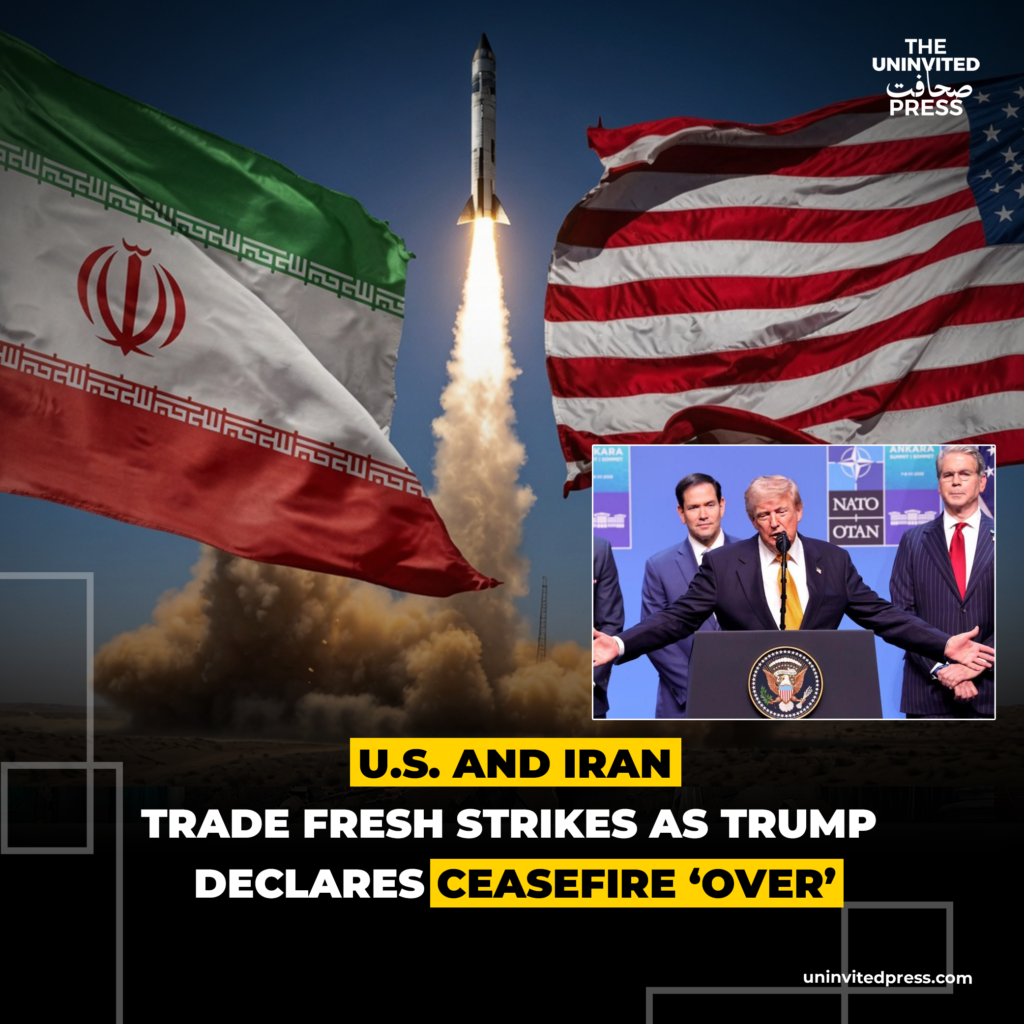
Escalating tensions around the Strait of Hormuz have intensified concerns over global energy security and the potential for wider military confrontation. As leaders convene at the NATO Summit, diplomats are urging restraint amid fears that any further escalation could draw additional regional and international powers into the crisis.
The United States and Iran traded new military strikes on Wednesday, shattering a tenuous ceasefire and raising fears of a wider war in the Middle East, as President Donald Trump publicly announced the end of the agreement during a NATO summit in Ankara.
The latest exchanges come just hours after Iranian forces reportedly targeted commercial shipping in the Strait of Hormuz, prompting a swift US response. Trump, speaking to reporters, declared the ceasefire “over” and signalled that further US action could intensify if Tehran continued disrupting vital oil routes.
“Iran hit ships. We hit them hard. And it will get much worse if they don’t stop,” Trump said, according to multiple reports from the summit. US Central Command confirmed additional strikes on Iranian military targets, marking the second consecutive day of direct confrontation.
Ceasefire collapse:
The brief ceasefire, mediated earlier in the year, had offered a fragile pause in hostilities that erupted following Israeli-US strikes on Iran earlier in 2026. Analysts describe the agreement as always precarious, undermined by ongoing disputes over nuclear issues, regional influence, and freedom of navigation in the Gulf.
Iranian officials vowed retaliation, with one senior negotiator stating that the Strait of Hormuz “will only open with Iranian arrangements, not American threats.” Tehran has threatened to close the critical waterway-through which about one-fifth of global oil passes-and warned that any country aiding US operations would face consequences.
The escalation unfolds against a backdrop of heightened regional instability. Oil prices surged past $80 per barrel on fears of supply disruptions, while missile alerts sounded across parts of the Middle East.
Conflict Escalation Sparks Fears of Broader War:
Media could not independently verify casualty figures from the latest strikes, but previous rounds in the conflict have resulted in significant civilian and military deaths. Humanitarian organisations have repeatedly warned of the devastating impact on Iranian civilians, already strained by years of sanctions and conflict.
Regional powers, including Gulf states and European allies, have urged restraint. At the NATO summit, discussions reportedly focused not only on Ukraine but also on containing the fallout from the US-Iran confrontation.
Trump’s announcement came as he appeared alongside officials at a podium, projecting resolve amid the crisis. Critics, however, question whether the hardline approach will yield long-term stability or merely fuel further cycles of violence.
The collapse of the ceasefire highlights the deep-seated mistrust between Washington and Tehran, compounded by unresolved nuclear concerns and competing visions for Middle East security. Iran has suspended nuclear talks and hinted at withdrawing from the Nuclear Non-Proliferation Treaty (NPT) in response to the strikes.
As the dust settles from the latest barrage, the world watches closely. A return to full-scale war could reshape alliances, spike global energy prices, and trigger a humanitarian catastrophe far beyond the immediate battlefield.
US Strikes Hit Strategic Iranian Targets:
US Central Command (CENTCOM) conducted strikes on over 80 Iranian targets, primarily military sites, air defenses, coastal radars, anti-ship missile systems, and IRGC boats. These focused on areas near the Strait of Hormuz in southern Iran.
Main reported strike locations:
- Bandar Abbas (major port city in Hormozgan Province): Multiple explosions reported, including at Shahid Haghani Port and naval facilities. Fires and damage to infrastructure noted.
- Sirik (coastal town east of Bandar Abbas): Strikes on fishing piers and coastal military sites. Shrapnel injuries reported locally.
- Kharg Island: Iran’s key oil export hub. Explosions reported at oil-related and military facilities.
- Qeshm Island: Strategic island in the Strait of Hormuz; radar and military sites targeted.
Other areas with reported activity or related strikes include Bushehr province (home to nuclear facilities, though direct hits on the plant itself are unconfirmed in latest reports) and coastal zones in southern Iran.
These strikes were in direct response to Iranian attacks on commercial ships in the Strait of Hormuz. The focus was on degrading Iran’s ability to threaten shipping, rather than broad infrastructure or population centers (oil facilities were reportedly spared in some cases).