

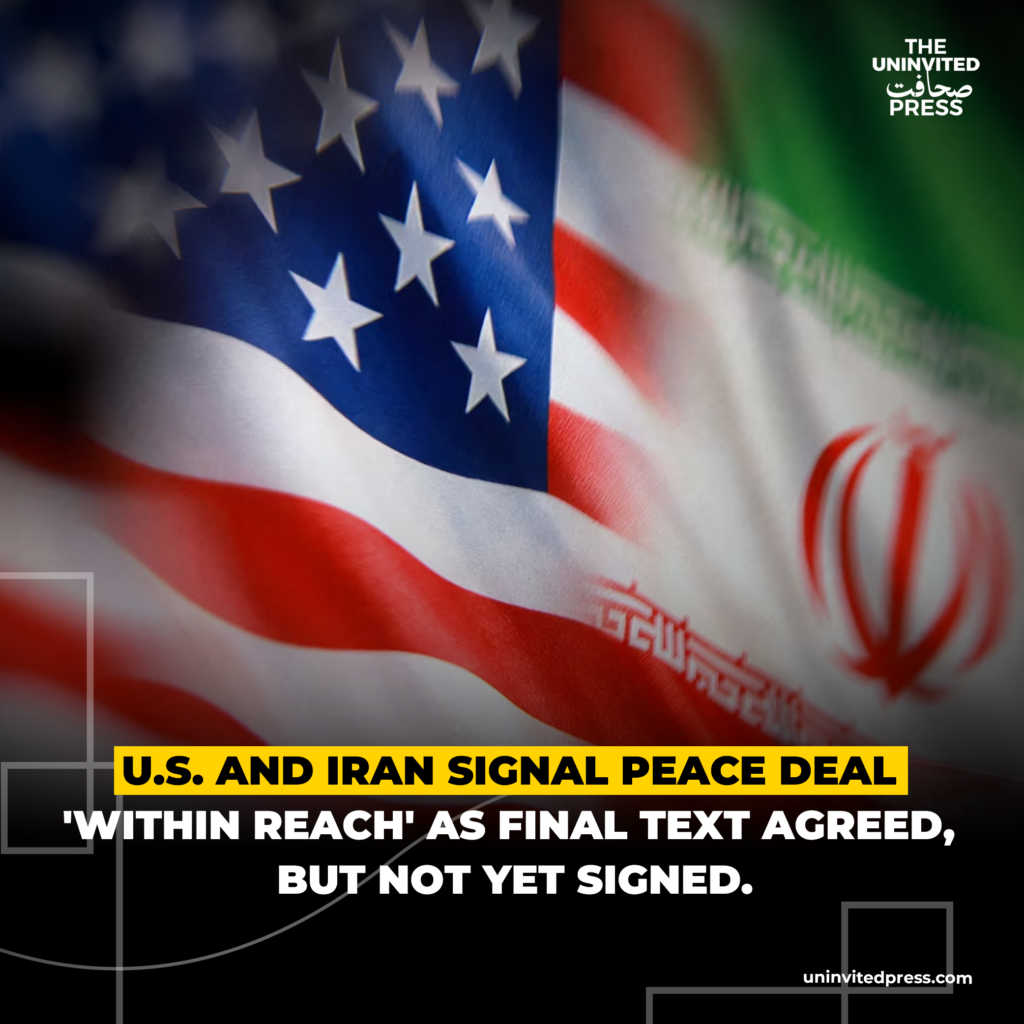
Mediators say breakthrough ‘within reach’ as both sides signal progress on ceasefire extension and Strait of Hormuz reopening amid ongoing tensions.
Negotiators from the United States and Iran have reached agreement on the final text of a memorandum of understanding aimed at ending months of direct conflict, according to Pakistani mediators and officials from both sides, though the deal has not yet been formally signed.
Pakistan’s Prime Minister Shehbaz Sharif announced on Friday that a “final, agreed-upon text” of the peace deal had been reached, with his country working closely with both parties to finalise next steps. The development comes after several rounds of indirect talks, primarily mediated by Pakistan and other regional actors, following a fragile ceasefire earlier in the year.
The proposed agreement, often referred to as the Islamabad Memorandum of Understanding, is expected to extend the current ceasefire for 60 days, facilitate the reopening of the strategically vital Strait of Hormuz to international shipping without tolls, and lay the groundwork for further negotiations on Iran’s nuclear programme and sanctions relief.
US-Iran Peace Deal Nears Completion:
The United States and Iran have been locked in escalating tensions for years, which boiled over into direct military confrontation earlier in 2026. The conflict, involving US and Israeli strikes on Iranian targets and Iranian retaliatory actions, has disrupted global energy markets, threatened shipping lanes in the Gulf, and raised fears of a wider regional war.
A senior US administration official told reporters that both sides had agreed on a text that meets core American objectives, including steps toward dismantling aspects of Iran’s nuclear infrastructure and securing maritime routes. US President Donald Trump has repeatedly described the negotiations as being at an advanced stage, stating that a “great settlement” is close and that a signing could occur in the coming days, possibly in Geneva.
Iranian officials have struck a similarly optimistic but cautious tone. Iran’s Foreign Minister described the prospect of peace as having “never been closer,” while emphasising that no agreement is final until formally endorsed by the country’s leadership. Some Iranian sources have portrayed the emerging terms as a victory for Tehran, claiming significant concessions on sanctions and the lifting of blockades.
Hormuz Reopening Signals Hope for Peace:
While progress has been made on immediate issues such as reopening the Strait of Hormuz-a chokepoint through which a significant portion of the world’s oil passes-deeper disagreements persist over Iran’s nuclear ambitions and ballistic missile programme. The memorandum is seen as a temporary framework rather than a comprehensive resolution, providing a window for more intensive talks.
Analysts warn that the deal’s success hinges on approval from top leaders on both sides, including Trump and Iran’s Supreme Leader. Past rounds of negotiations have faltered over mutual distrust, with each side accusing the other of maximalist demands.
The potential agreement has already influenced global markets, with oil prices fluctuating in response to hopes of restored stability in the Gulf. For the broader Middle East, a de-escalation could ease pressures on Lebanon, Yemen, and other flashpoints where Iran-backed groups have been active.