

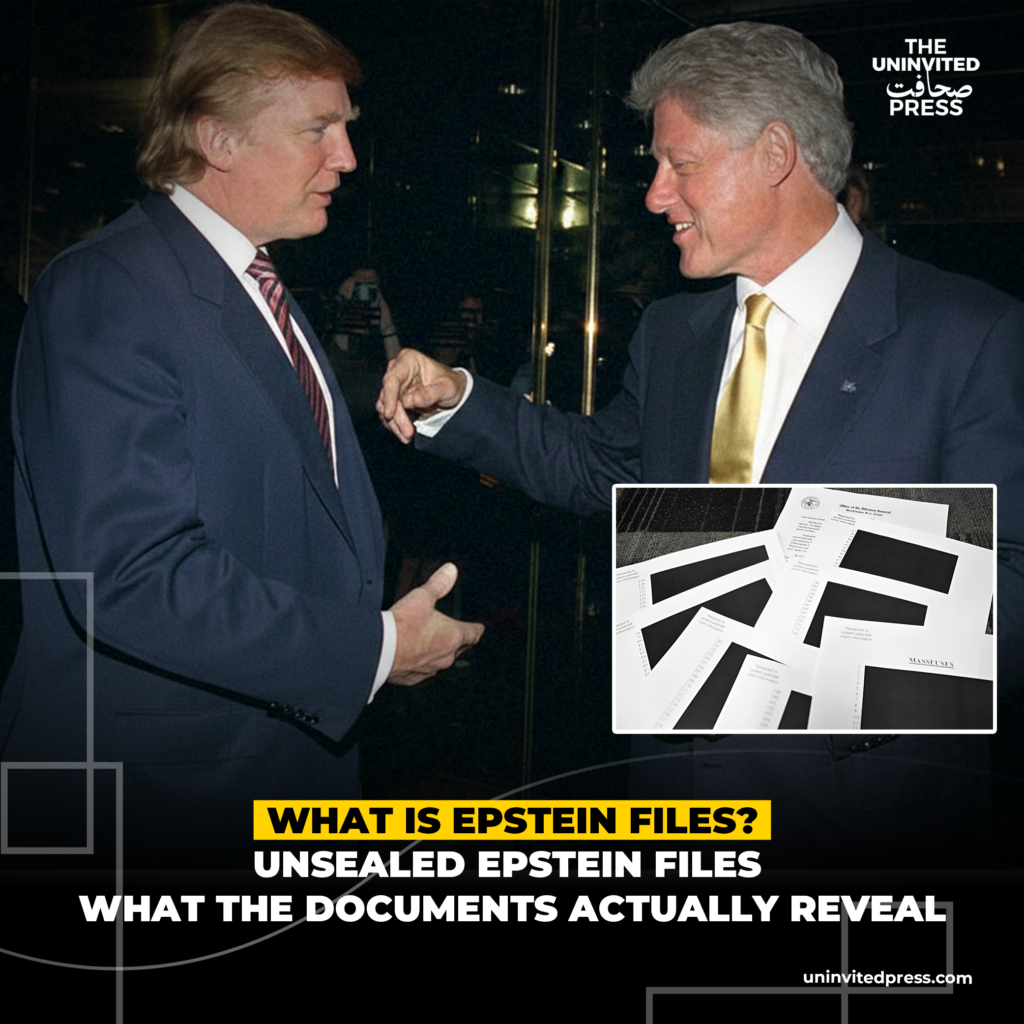
Jeffrey Epstein was a wealthy American financier. He made a lot of money in banking and investments. In 2008, he pleaded guilty to charges involving sex crimes with an underage girl. He received a lenient sentence that many people later criticised. In 2019, federal authorities arrested him again on charges of sex trafficking minors. He died in jail that year while awaiting trial. Officials ruled it a suicide.
The documents now called the “Epstein files” are named after him because they come from investigations and court cases about his criminal activities.
These files are not one single list. They are millions of pages of records. They include court papers, emails, calendars, flight logs from his private plane, witness statements, and FBI investigation notes.
The files first started becoming public in stages. In 2015, a woman named Virginia Giuffre sued Ghislaine Maxwell. Maxwell was Epstein’s close associate. She was later convicted of helping Epstein traffic and abuse girls. The lawsuit produced many documents. A judge ordered most of them unsealed in late 2023 and early 2024. That release was about 950 pages.
More files came later. In 2025, the U.S. Congress passed a law called the Epstein Files Transparency Act. It required the Department of Justice to make public all unclassified records it held about Epstein. In January and February 2026, the Justice Department released over three million additional pages, plus images and videos.
The files became public because of court orders and this new law. The goal was greater transparency in a high-profile case involving serious crimes.
What do the files actually contain? They show details of Epstein’s life and network. There are emails he sent, schedules of meetings, records of flights, and statements from people questioned in the cases. They describe how Epstein recruited and abused young women and girls. They also show who he knew and spent time with.
The files have been called an eye-opener for several reasons. They reveal how one person with money and connections could build relationships with leaders in politics, business, entertainment, and science. This raises questions about power and influence. It shows how secrecy can allow harmful behaviour to continue for years. It also highlights issues of accountability-why Epstein received a light sentence in 2008 and how investigations unfolded over time. The releases remind the public why open records matter in cases that affect trust in institutions.
Many well-known names appear in the documents. These include former U.S. Presidents Bill Clinton and Donald Trump, Britain’s Prince Andrew, businessman Elon Musk, and India’s Prime Minister Narendra Modi.
It is very important to be clear: Simply appearing in the files does not mean anyone is guilty of wrongdoing. There are no charges or proven allegations against most named people. Some are mentioned as social contacts. Others appear in passing references. Victims, staff members, and witnesses are also named.
For example, Prime Minister Modi’s name comes up in an indirect email reference. Indian government officials have rejected any significance to this mention and called it unimportant. No allegations of misconduct have been made against him.
The files focus on Epstein’s crimes and the official responses to them. They do not prove new criminal activity by the famous people mentioned.
These documents are part of an ongoing effort to bring facts into the open. They help people understand a serious case without rumours or exaggeration.