

CENTCOM reports 55 commercial vessels redirected, two disabled and two boarded; Tehran rejects the measures as illegal aggression.
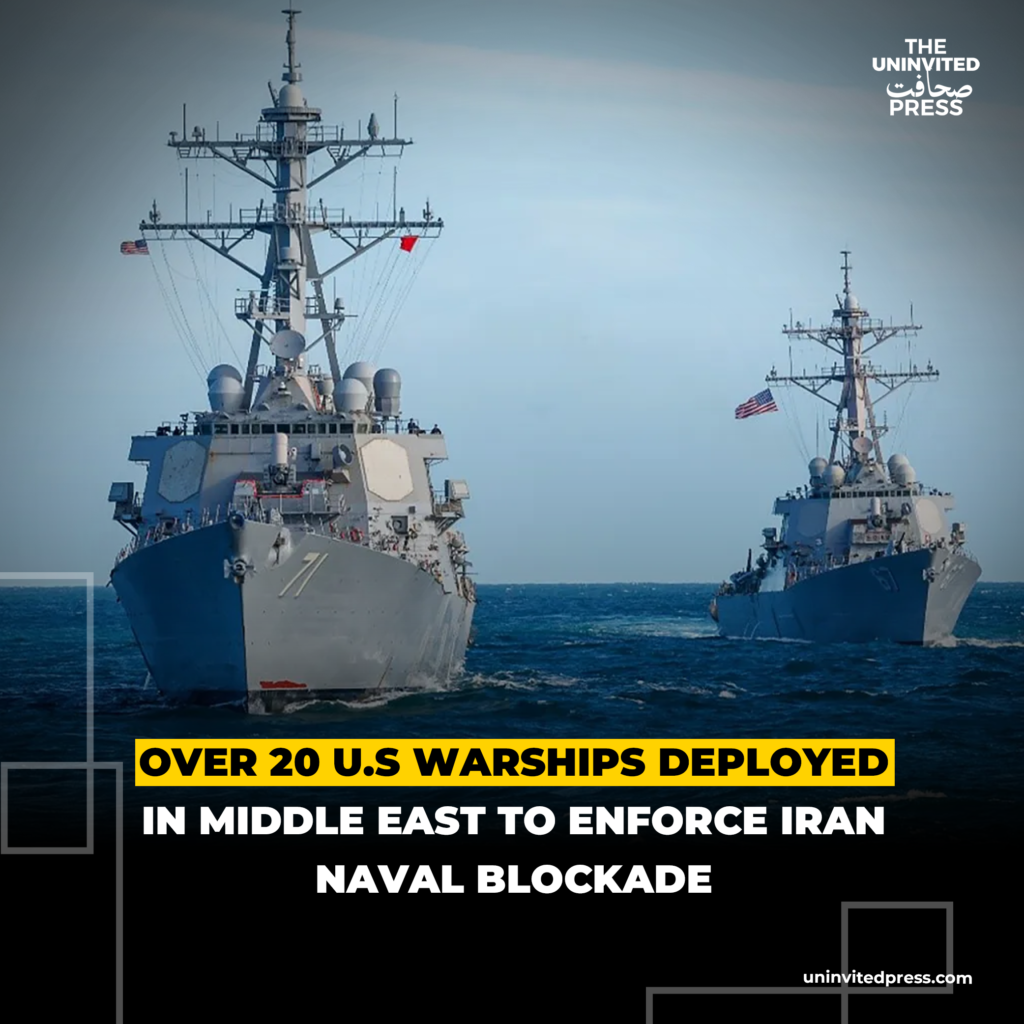
The United States has deployed more than 20 warships across the Middle East to enforce a naval blockade against Iran, the US Central Command (CENTCOM) confirmed in a statement on Sunday, intensifying an already fraught standoff that has disrupted one of the world’s most critical energy corridors.
CENTCOM said sailors aboard the guided-missile destroyer USS Ross (DDG 71) were among the forces operating in the region. “Ross is one of over 20 U.S. warships deployed to the Middle East supporting military missions, including strict enforcement of the U.S. blockade against Iran,” the command stated. As of 9 August, CENTCOM reported that its forces had redirected 55 commercial vessels, disabled two and boarded two others “to ensure compliance.”
US-Iran Tensions Escalate Over Strait of Hormuz:
The figures mark a slight increase from an earlier update citing 53 redirected vessels. CENTCOM has also said it has permitted more than 30 ships carrying humanitarian aid to transit the blockade, while aircraft carrier strike groups, including the USS Abraham Lincoln, continue flight operations and maintenance of F/A-18E Super Hornets to keep assets “mission ready.”
The latest deployment comes as Washington and Tehran remain locked in a tense confrontation over the Strait of Hormuz, the narrow waterway through which roughly one-fifth of the world’s oil supply normally flows. The blockade, first imposed in April and later suspended before being reimposed in mid-July at the direction of the US administration, aims to restrict maritime traffic entering or leaving Iranian ports and coastal areas.
US officials have framed the operation as a response to Iranian actions against commercial shipping and as pressure to curb Tehran’s nuclear programme and regional influence. CENTCOM has repeatedly described the measures as necessary for “regional security and stability” and has insisted that vessels not bound for Iranian ports continue to enjoy freedom of navigation through the strait.
Iranian officials have rejected the blockade as a violation of international law and an act of economic warfare. Tehran has long maintained that any restrictions on its ports constitute illegal aggression and has linked the reopening of the strait to broader political demands. Iranian state media and officials have portrayed the US naval presence as further evidence of Washington’s determination to isolate the Islamic Republic, warning that continued pressure risks further escalation in an already volatile region.
Hormuz Tensions Mount as US Naval Presence Grows:
The presence of multiple carrier strike groups and destroyers in the Gulf of Oman, Arabian Sea and approaches to the Strait of Hormuz has raised the stakes. Military analysts note that operating large surface vessels within range of Iranian missiles and coastal defences carries inherent risks, particularly given the history of direct and proxy confrontations in the area.
Regional observers and shipping industry sources say the cumulative effect of successive US and Iranian restrictions has already forced commercial operators to reroute vessels, delay cargoes and absorb higher insurance and fuel costs. Oil markets have remained sensitive to any interruption in Hormuz traffic, with earlier phases of the blockade contributing to price volatility that affected importers across Asia, Europe and beyond.
Humanitarian organisations have welcomed the limited exemptions for aid ships but continue to express concern about the broader impact on civilian populations dependent on maritime trade for food, medicine and other essentials. Iran has argued that the blockade exacerbates economic hardship for ordinary Iranians already struggling under long-standing sanctions.
Diplomatic efforts to de-escalate have so far yielded little public progress. Intermittent contacts and “semi-negotiations” have been reported, yet core disagreements over the blockade, nuclear issues and regional security remain unresolved. Gulf Arab states, while wary of Iranian influence, have also signalled unease at prolonged disruption to a waterway vital to their own energy exports.
As the US naval force maintains its posture and CENTCOM continues to publish operational tallies, the risk of miscalculation persists. A single incident involving a commercial vessel, a naval intercept or an aerial engagement could rapidly widen the confrontation. For now, more than 20 American warships remain on station, enforcing a blockade that both sides present as a defensive necessity and that the region experiences as another layer of instability in an already conflict-scarred neighbourhood.