

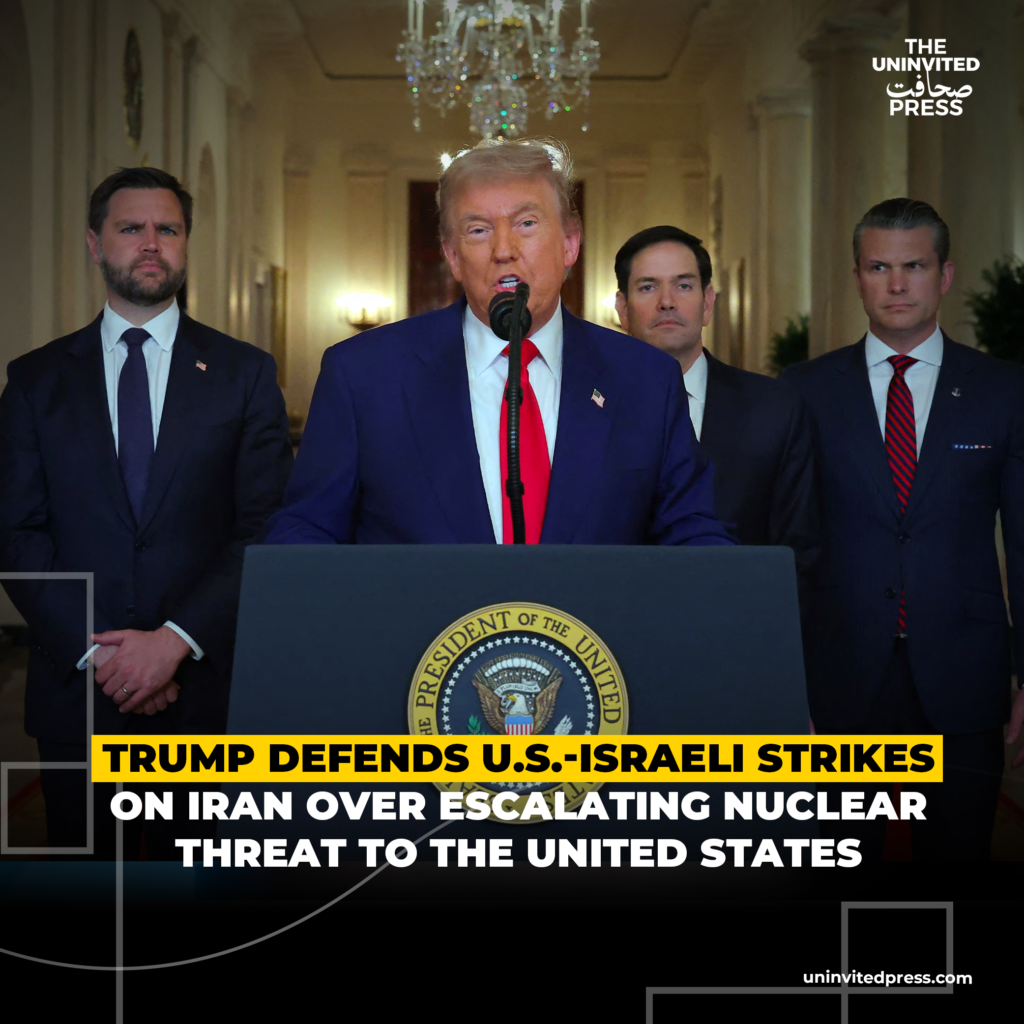
President Trump defends U.S.-Israeli strikes on Iran, citing nuclear threats to America; operation kills Khamenei, targets missiles amid retaliation and oil spikes.
Trump Vows to Stop Iran’s Nuclear Program:
President Donald Trump robustly defended the joint U.S.-Israeli military strikes on Iran, framing them as essential to neutralize an escalating nuclear and ballistic missile threat that could soon reach American soil. Speaking at the White House, Trump detailed four key objectives for the ongoing campaign, which has already killed Iran’s Supreme Leader Ayatollah Ali Khamenei and struck over 1,000 targets. The operation, entering its fourth day, underscores mounting fears of a broader Middle East conflict with direct implications for U.S. security and global energy markets.
Operation Epic Fury Targets Leaders, Closes Strait:
The joint U.S.-Israeli assault, dubbed Operation Epic Fury by the Pentagon, commenced in the early hours of February 28, 2026, with precision strikes on high-value targets in Tehran and other key cities. Initial waves focused on Iranian leadership, resulting in the confirmed death of Supreme Leader Ayatollah Ali Khamenei during a meeting with top military officials. U.S. B-2 stealth bombers and Israeli fighter jets targeted underground ballistic missile facilities, air defenses, drone launch sites, and naval bases, sinking at least 10 Iranian warships.
By March 1, the campaign expanded with additional airstrikes, prompting Iranian retaliation. Tehran launched missiles and drones at Israeli territory, U.S. embassies in the Gulf, and allied bases, including a hit on the U.S. Embassy compound in Kuwait. Hezbollah, an Iranian-backed militia in Lebanon, fired rockets into Israel, drawing further Israeli counterstrikes. On March 2, Trump addressed the nation during a Medal of Honor ceremony, projecting a four-to-five-week timeline but emphasizing flexibility: “Whatever it takes.”
As of March 3, strikes continued unabated, with U.S. forces deploying suicide drones and Tomahawk missiles. Iran closed the Strait of Hormuz, disrupting global oil flows, while protests erupted in Tehran and anti-war demonstrations spread to U.S. cities like Dallas.
From Revolution to Nuclear Standoff: Tracing Iran’s Crisis Roots:
Iran’s nuclear program has been a flashpoint for decades, dating back to the 1979 Islamic Revolution that severed U.S.-Iran ties. Under the 2015 JCPOA, negotiated during the Obama administration, Iran agreed to limit enrichment in exchange for sanctions relief. Trump withdrew from the deal in 2018, reimposing sanctions and labeling Iran the “world’s number one sponsor of terror.”
Tensions escalated in June 2025 with 12-day U.S.-Israeli strikes that Trump claimed “obliterated” Iran’s nuclear capabilities, setting the program back by at least two years per Pentagon assessments. However, by early 2026, intelligence indicated Iran was rebuilding, producing up to 100 ballistic missiles monthly and enriching uranium at levels suggesting nuclear breakout potential. IAEA inspections halted post-2025, with reports of underground stockpiles. The current operation follows failed talks in February 2026, where Iran refused to renounce nuclear ambitions.
Israel’s determination to act unilaterally prompted U.S. involvement to protect American assets from expected reprisals. This marks a shift from Trump’s first term, where he avoided direct conflict, to a more aggressive stance amid regional instability post-Gaza ceasefire in October 2025.