

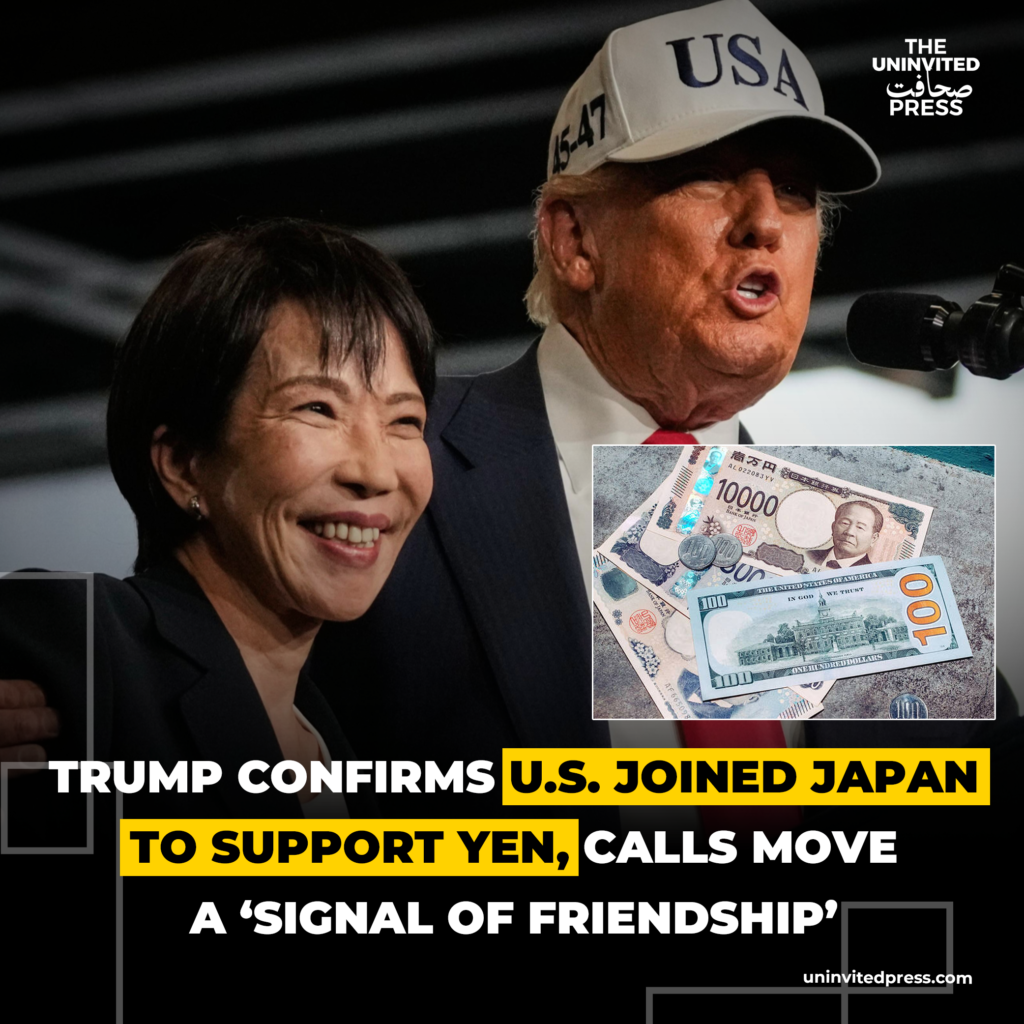
Rare coordinated currency intervention aims to halt yen’s slide to 40-year lows, with both sides signalling readiness for further action.
United States President Donald Trump has confirmed that Washington joined Japan in a coordinated effort to support the Japanese yen, describing the rare intervention as a “signal of friendship” that would also deliver financial benefits to the US and help the global economy.
Speaking to reporters on Sunday, Trump said Japan had sought assistance amid a weakening currency. “They have a weakening yen, and they wanted a little bit of help. And we’re always there for Japan,” he said. “Japan’s been very good to us, with the exception, of course, of Pearl Harbor.” He added that the move was “really more than anything else … a signal of friendship,” while insisting the United States would gain “financial benefit” and that it was “also good for the world economy.”
US and Japan Join Forces to Support Yen:
The US Treasury Department intervened jointly with Japanese authorities on Friday to support the yen, marking the first such coordinated yen-buying action in nearly three decades. Media reported that the Federal Reserve Bank of New York sold euros to buy yen on behalf of the Treasury through major banks.
Japan’s Finance Minister Satsuki Katayama issued a statement on Monday confirming the joint action. The Ministry of Finance said it had purchased yen in coordination with the US Treasury on Friday to counter “excessive volatility and disorderly movements in the Japanese yen in recent months.” The statement added that Tokyo remains in close communication with Washington and “will not hesitate to conduct further joint intervention.”
US Treasury Secretary Scott Bessent also confirmed the Friday effort, stating that Washington “will not hesitate to participate in further joint intervention” and expressing strong support for Japan’s steps to address the yen’s “substantial undervaluation.”
Rising Rates and Energy Costs Put Yen Under Strain:
The intervention came after the yen slid to around 163-164 per dollar last month, its weakest level since 1986. The currency’s prolonged decline has been driven by higher US interest rates, rising oil prices linked in part to regional conflicts, and persistent capital outflows from Japan. A weaker yen has raised import costs for Japanese households and businesses, contributing to inflationary pressures, even as it has benefited exporters.
Analysts estimated Japan’s own intervention may have totalled roughly 6-8.45 trillion yen (about $37-53bn). Market reaction was immediate: the dollar fell following Trump’s remarks and the official confirmations, trading well off its recent 40-year highs against the yen.
The joint action is the first coordinated US-Japan effort to support the yen since 1998. While unilateral Japanese interventions have occurred more frequently in recent years, bilateral cooperation of this kind remains rare and is seen by markets as a stronger signal of official resolve.
Both governments have indicated they stand ready to act again if necessary. The development underscores the close economic and strategic ties between Washington and Tokyo at a time of heightened global financial volatility, even as questions remain over whether intervention alone can reverse longer-term pressures on the Japanese currency.