

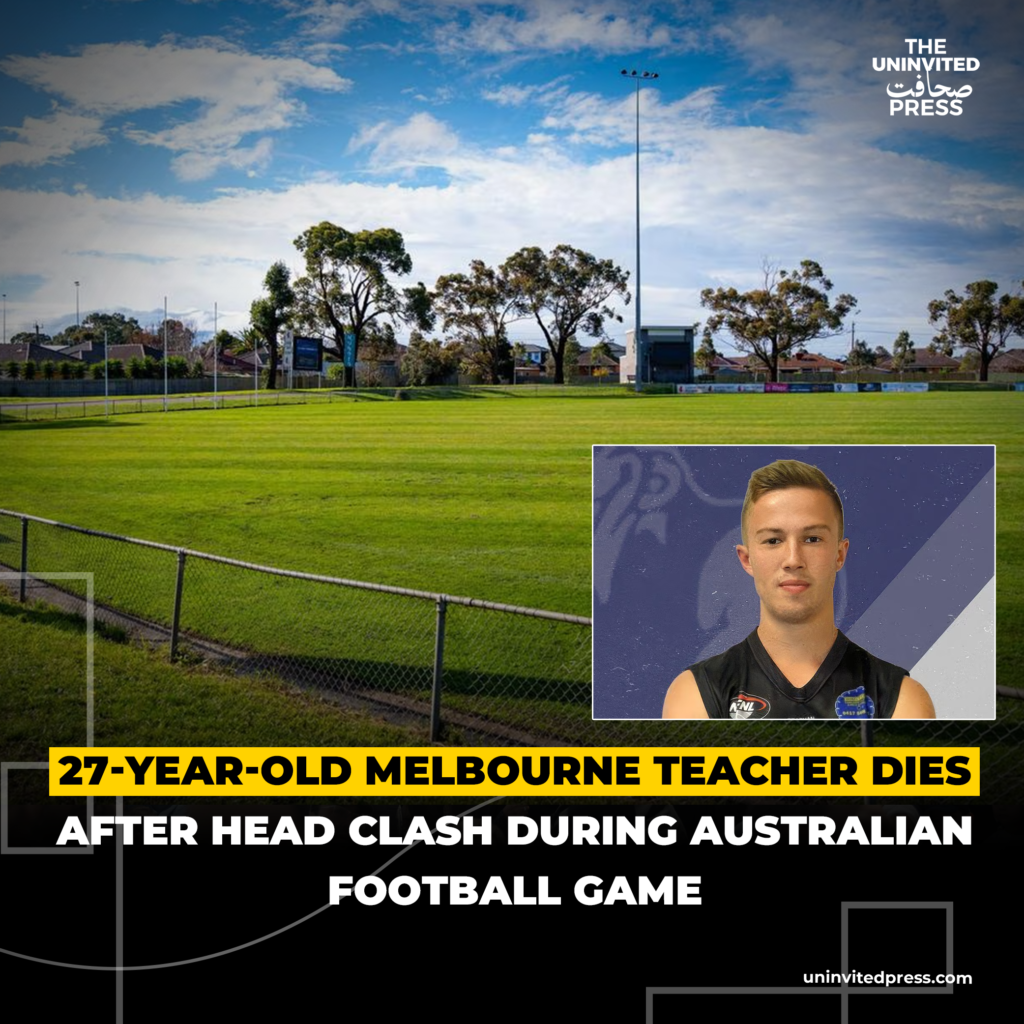
27-year-old Nathan Fitzgerald succumbs to injuries sustained during amateur game, sparking renewed calls for safety reforms in contact sports.
A 27-year-old school teacher from Melbourne has died after suffering a severe head injury during an amateur Australian rules football match, in a tragedy that has shaken his local community and reignited debates over player safety in one of the country’s most popular sports.
Nathan Fitzgerald, a dedicated educator, clashed heads with an opponent during the game, leading to critical injuries that ultimately proved fatal despite medical intervention.
Community Mourns a Passionate Educator and Athlete:
Fitzgerald was remembered by colleagues, students, and teammates as a vibrant young man deeply committed to teaching and his love for football. He had been playing in a local league, a common weekend activity for many amateur athletes across Australia.
The incident occurred on the field in what witnesses described as a routine contest for the ball. Head clashes remain a significant concern in Australian rules football, a high-contact sport known for its physicality, speed, and aerial contests.
Medical staff responded quickly, but Fitzgerald was later pronounced dead. Details surrounding the exact circumstances, including any immediate on-field protocols followed, are still under review by sporting authorities and police.
Calls Grow for Safer Contact Sports:
This latest fatality adds to a growing list of incidents highlighting the risks of repetitive head trauma in contact sports. Australia has seen increased scrutiny over concussion management in rugby, league, and Australian rules football, with calls for stricter rules on returns to play and better protective equipment.
Advocates have long pushed for more research into the long-term effects of repeated concussions, including chronic traumatic encephalopathy (CTE), and for cultural shifts that prioritise player welfare over “toughing it out.”
Football federations have introduced protocols in recent years, such as mandatory concussion assessments and limits on certain high-risk plays, but campaigners argue more needs to be done, particularly at amateur and community levels where resources may be limited.
Fitzgerald’s death has prompted an outpouring of grief on social media and in local media, with many paying tribute to his impact as a teacher who inspired young minds.
Sporting bodies have expressed condolences and stated they are investigating the incident. Health experts are urging players, coaches, and clubs to remain vigilant about concussion symptoms, even in seemingly minor collisions.
As investigations continue, Fitzgerald’s passing serves as a sombre reminder of the human cost behind the passion for sport. His family, friends, and the wider Melbourne community are left mourning a life cut short, while questions linger about how to make the game safer for future generations.