

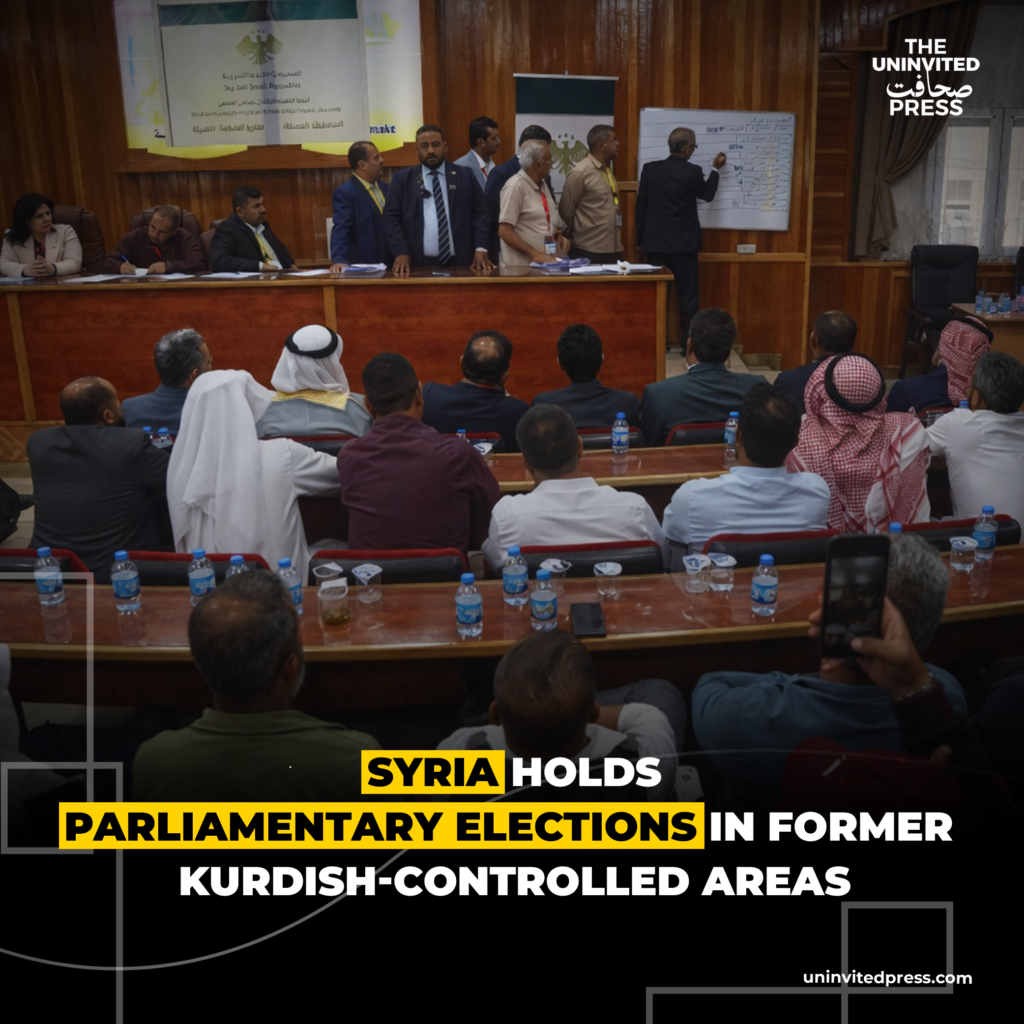
Voting concludes in Hasakah and Kobani as Damascus pushes for national unity after SDF integration.
Syria on Sunday held supplementary parliamentary elections in the northeastern province of Hasakah and the Kurdish-majority town of Kobani (Ayn al-Arab), marking the final phase of the country’s first legislative polls since the fall of Bashar al-Assad.
The vote, which covers 11 remaining seats in the 210-member People’s Assembly, comes months after government forces and the Kurdish-led Syrian Democratic Forces (SDF) reached a US-mediated agreement that brought former autonomous Kurdish areas back under central Damascus control.
Officials from the Higher Elections Committee reported strong voter turnout in several districts, including full participation in Kobani, as residents elected nine representatives from Hasakah and two from Kobani.
Syria’s Transitional Elections Mark End of Kurdish Autonomous Rule:
The elections represent a significant political step for the interim government led by Ahmed al-Sharaa. Following clashes in January 2026, the SDF largely integrated its fighters into the Syrian army and handed over civil institutions, ending more than a decade of de facto Kurdish autonomy in the northeast.
While the process is part of efforts to reunify the country, critics and Kurdish activists have raised concerns about the inclusivity of the polls and the extent of genuine political participation for Kurdish communities.
Under the transitional framework, 140 seats are filled through indirect elections by electoral colleges, while President al-Sharaa is expected to appoint the remaining 70 members directly.
The new parliament is seen as a precursor to drafting a permanent constitution over the next five years. However, analysts note that the electoral process remains limited and is not fully competitive, echoing some of the structural issues of previous Syrian polls.
Syria Faces Pressure After Kurdish Deal:
The move comes amid ongoing challenges for Syria’s transitional authorities, including economic collapse, reconstruction needs, and balancing relations with regional powers. Turkey has long opposed Kurdish autonomy, while the United States had previously supported the SDF in the fight against ISIL.
Granting citizenship to stateless Kurds and recognising the Kurdish language were among the concessions made as part of the integration deal earlier this year.