

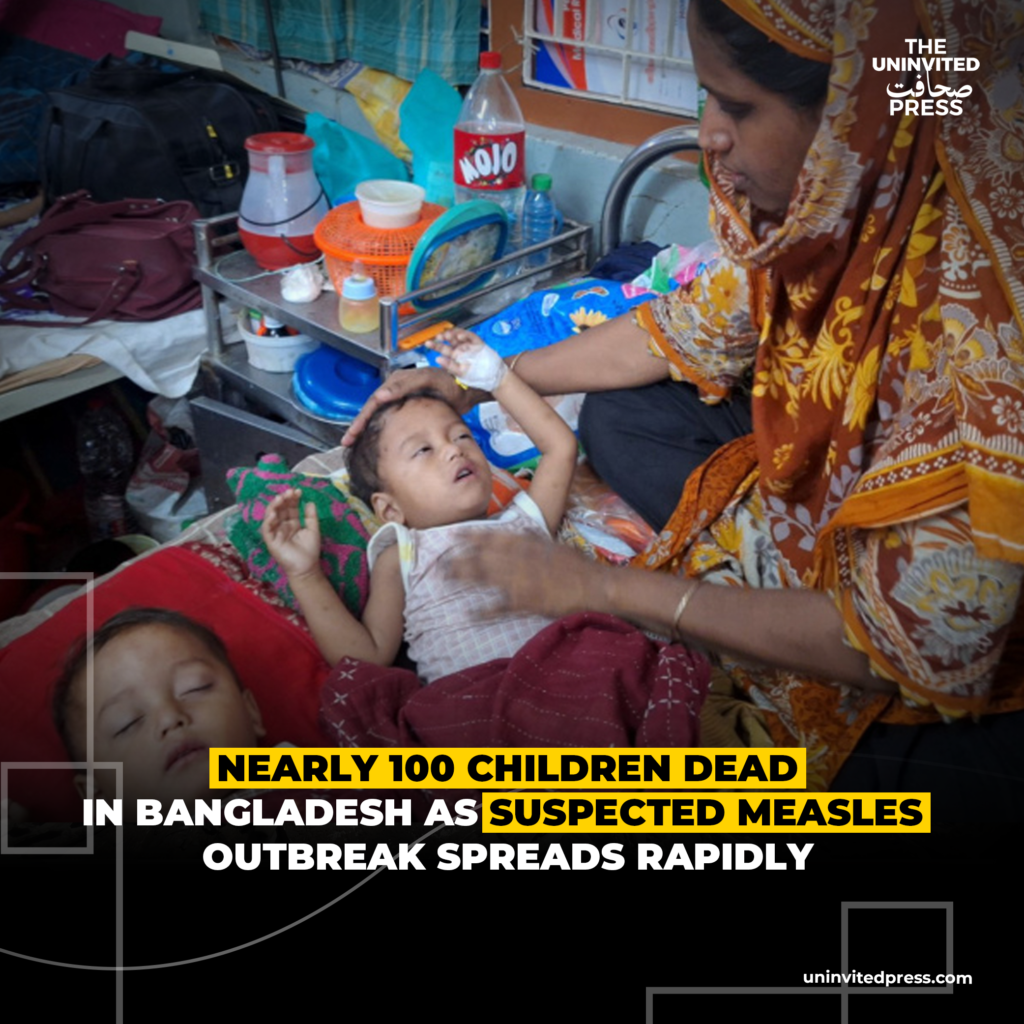
Health authorities launch emergency vaccination campaign as cases surge across 56 districts, with infants and under-vaccinated children hardest hit.
A suspected measles outbreak in Bangladesh has killed at least 98 children in the past three weeks, prompting an emergency nationwide immunisation drive targeting over one million children in high-risk areas.
Health ministry data reports thousands of suspected cases among children aged 6 months to 5 years, with confirmed infections numbering in the hundreds and several deaths officially linked to the virus.
The outbreak has spread across most of the country’s districts, including Dhaka and other major regions, leading to overcrowded hospitals and over 2,300 child admissions since the start of 2026.
Vulnerable children and declining vaccination rates:
Health experts link the surge to gaps in routine immunisation, including vaccine shortages, missed campaigns, and recent disruptions. Although Bangladesh aimed to eliminate measles by 2020 (later extended to 2026), coverage has declined in some areas.
The outbreak began in a Rohingya refugee camp in Cox’s Bazar in January and has since spread to urban and rural communities. Many deaths involve infants under nine months who are not yet fully vaccinated, with complications like pneumonia and dehydration contributing to fatalities. Overcrowded conditions and strained healthcare facilities have added to concerns among families and medical staff.
Emergency response and international support:
The government on Sunday launched an emergency measles-rubella vaccination campaign in 18 high-risk districts, with plans to expand nationwide. The drive, supported by UNICEF, the World Health Organization (WHO) and Gavi, the Vaccine Alliance, aims to reach children as young as six months in the hardest-hit areas.
Dhaka has also ramped up surveillance, contact tracing and awareness efforts. Health officials are urging parents to seek immediate medical care for children showing symptoms such as high fever, cough, runny nose and characteristic red rash.
The WHO has warned that the outbreak is likely to continue spreading in the coming days but could be curtailed once vaccination coverage improves. However, experts caution that underlying issues-including vaccine hesitancy in some communities, logistical challenges in reaching remote and slum areas, and the strain on an already stretched public health system-must be addressed to prevent future surges.
Wider public health implications:
This latest outbreak comes as Bangladesh grapples with multiple health challenges, including the lingering effects of economic pressures and the needs of the large Rohingya refugee population. Analysts say the incident highlights the fragility of immunisation programmes in low- and middle-income countries when routine services are disrupted.
Rights groups and public health advocates have called for stronger real-time disease monitoring, targeted campaigns in high-risk populations, and sustained investment in primary healthcare to protect the country’s youngest citizens from preventable diseases.
As vaccination teams fan out across affected districts, families continue to mourn lost children while hoping the emergency response will stem the tide of infections before more lives are claimed.