

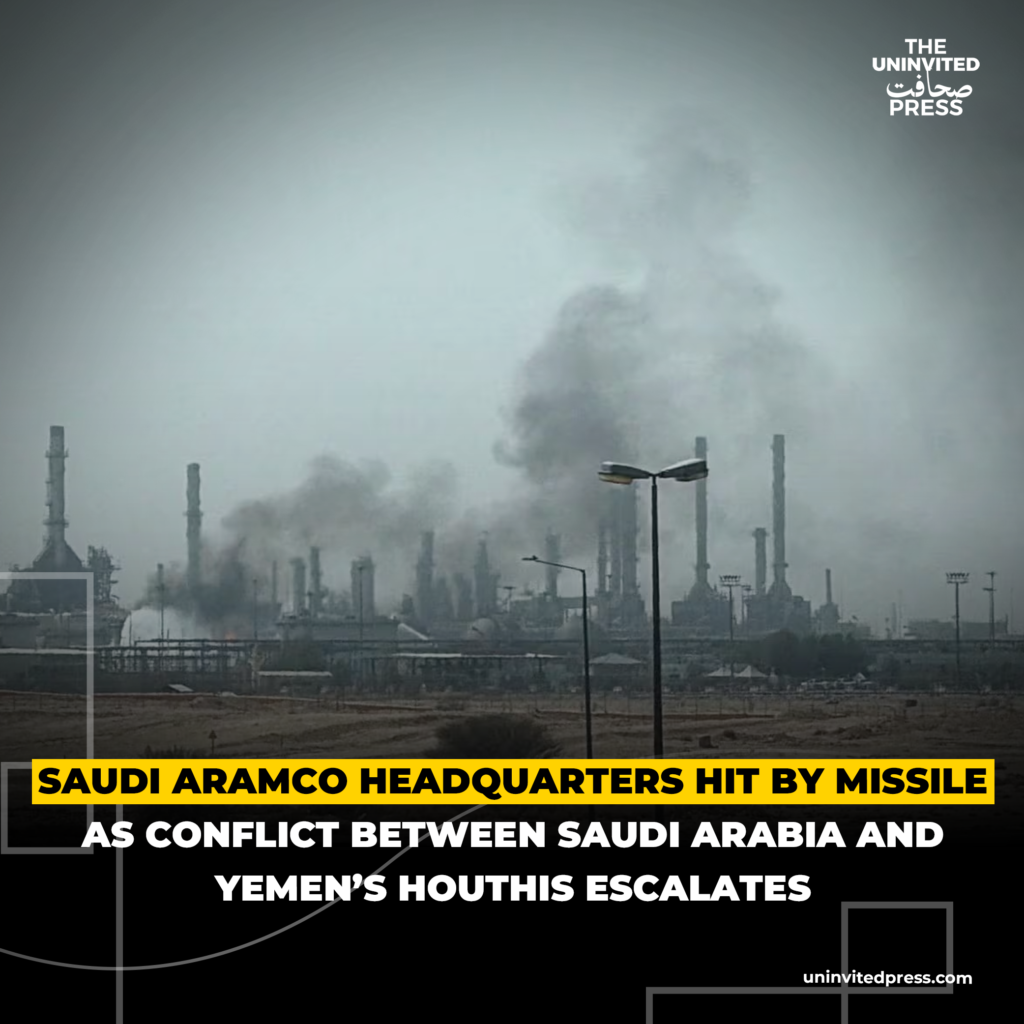
Limited fire reported at Dhahran complex with no casualties; four wounded in Riyadh by debris from intercepted projectiles amid tit-for-tat strikes on energy sites.
Yemen’s Houthi group has struck an administrative building belonging to Saudi Arabia’s state oil giant Aramco in the eastern city of Dhahran, causing a limited fire, as the long-running conflict between the kingdom and the Iran-backed movement intensifies with mutual attacks on energy infrastructure.
Saudi Arabia’s Ministry of Energy confirmed that the building in Dhahran, home to Aramco’s headquarters complex, was targeted on Tuesday evening. Authorities responded to the resulting fire and said there were no injuries or fatalities. The ministry described the blaze as limited.
Sources familiar with the matter earlier reported that an office tower in the complex had been struck, with damage to upper floors and a fire that was later extinguished. Aramco employees were instructed to work from home the following day. The Saudi-led coalition fighting in Yemen said it had intercepted a ballistic missile directed towards Dhahran, with fragments falling in a nearby residential area.
Houthi Missiles Injure Four in Riyadh:
In the Saudi capital, Riyadh, debris from two intercepted Houthi cruise missiles injured four people-two women, a man and a child-and caused limited damage to 15 homes, according to the Civil Defence agency. The coalition reported intercepting three cruise missiles and two drones targeting the Riyadh region and southern areas of the kingdom.
The strike on the Aramco site came hours after the Saudi-led coalition launched attacks on oil facilities in Houthi-controlled territory, including the al-Sabah central station near the Yemeni capital Sanaa. Coalition forces had issued an evacuation warning for civilians near the facility, which they accused the Houthis of using to support missile and drone operations. Media correspondents in Sanaa reported hearing explosions shortly afterwards. Houthi-affiliated media said the strikes hit oil storage sites. The coalition also reported hits on facilities near the Ras Isa port and in Hodeidah province.
Houthi military spokesman Yahya Saree had warned earlier that any attack on Sanaa would trigger a “harsh and painful” response against targets in Riyadh. He designated Aramco facilities, including the headquarters in Dhahran, an affiliated refinery in Riyadh, and King Khalid International Airport as “legitimate targets” and urged civilians and employees to evacuate those areas. The group later claimed responsibility for strikes linked to the latest escalation.
The exchanges form part of a sharp intensification over the past week. Houthi missiles and drones have repeatedly targeted Riyadh’s main international airport, with one attack on Saturday killing at least 13 people and wounding more than 300. Multiple international airlines suspended flights to Saudi Arabia and neighbouring destinations in response. Saudi Arabia’s cabinet, chaired by Crown Prince Mohammed bin Salman, said the Houthis would face “consequences” for the attacks.
Yemen Conflict Escalates, Raising Civilian and Oil Security Risks:
The latest fighting occurs against the backdrop of a broader Yemeni government counteroffensive, known as “Dawn of Yemen,” backed by Saudi Arabia. Government forces have conducted air strikes on Houthi positions in Taiz governorate and reported advances elsewhere, following Houthi gains last month that included the strategic port of Mocha and territory near the Bab al-Mandeb Strait. Civilian casualties and displacement continue to rise, with the United Nations reporting more than 200,000 people displaced since September and dozens of civilian deaths in recent weeks.
Aramco, the world’s largest oil company and the backbone of Saudi Arabia’s economy, operates a vast network of production, refining and export facilities. While the Dhahran incident affected an administrative building rather than production or export infrastructure, the targeting of the company’s headquarters underscores the risks to energy security in a conflict that has repeatedly drawn in regional powers.
International calls for de-escalation have grown. The president of the International Committee of the Red Cross warned that civilians across the Middle East are bearing the brunt of escalating hostilities and urged all parties to show restraint. The International Monetary Fund has also flagged potential economic spillover effects from the disruptions.
As both sides trade strikes on symbolic and strategic energy targets, the risk of further escalation remains high, with ordinary people on both sides of the border continuing to pay the heaviest price.