

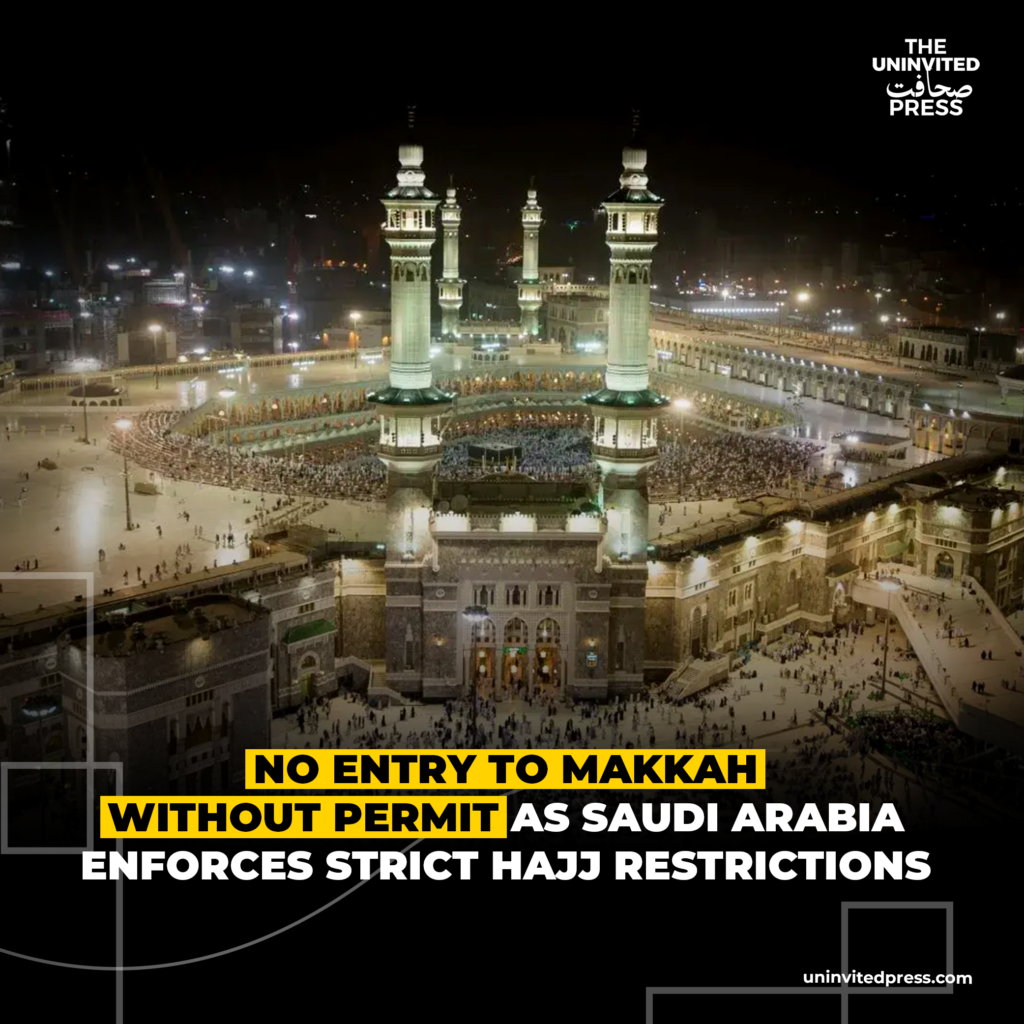
Authorities implement ‘No Hajj without a permit’ policy to enhance crowd management and pilgrim safety ahead of the annual pilgrimage.
Saudi authorities have begun enforcing rigorous restrictions on entry into the holy city of Makkah, barring anyone without a valid Hajj permit, Makkah-issued residency ID, or approved work authorisation for the holy sites.
The measures have been implemented as part of preparations for Hajj 2026, which is expected to take place in late May. Authorities say the decision is necessary to ensure the safety, security, and smooth management of one of the world’s largest religious gatherings.
Public Security, in coordination with the Ministries of Interior and Hajj and Umrah, has activated checkpoints around Makkah. Individuals without the required documentation are being turned away, with violators facing fines and potential legal penalties, including a reported SR10,000 ($2,666) fine for those caught inside the holy sites without authorisation.
Permit system:
Under the new rules, entry is limited to:
- Pilgrims holding official Hajj permits
- Residents with a Makkah-issued ID (Iqama)
- Workers with valid permits for the holy sites
Applications for entry permits for eligible resident workers can now be submitted electronically through the Absher Individuals and Muqeem portals, eliminating the need for in-person visits to passport offices. The system is integrated with the Tasreeh platform for streamlined processing.
From April 18, 2026, the restrictions tighten further: holders of all visa types except Hajj visas will be prohibited from entering or remaining in Makkah. Umrah visa holders must depart the Kingdom by this date, and the issuance of new Umrah permits via the Nusuk platform will be suspended until May 31, 2026.
Tourist and visit visa holders have also been explicitly reminded that their visas do not permit them to perform Hajj or enter Makkah during this period.
Focus on safety and organisation:
Saudi officials emphasise that the “No Hajj without a permit” campaign aims to prevent overcrowding, unauthorised participation, and logistical challenges that have strained past seasons. The measures build on long-standing efforts to regulate access to the Grand Mosque and surrounding areas during the peak pilgrimage period.
Hajj 2026 is anticipated to draw millions of Muslims from around the world for the five-day rituals centred on Makkah, Arafat, Muzdalifah, and Mina. Exact dates depend on the official sighting of the moon for Dhul Hijjah, but the main rites are projected around May 25-30, 2026.
The restrictions are part of broader preparations that include enhanced crowd-control technologies, expanded transportation infrastructure, and strict health and security protocols.
Impact on residents and visitors:
Expatriates and non-residents without approved permits are advised to avoid travelling to Makkah during this period. Employers in the holy sites are urged to use the digital permit system for their staff. The Saudi Press Agency (SPA) stated that rules are being enforced uniformly, with security checks carried out firmly but respectfully at entry points. This annual tightening of access is part of Hajj preparations to manage the large influx of pilgrims and ensure safety and order. Authorities have also urged pilgrims to register through official channels and obtain permits in advance, referring to platforms such as the Ministry of Hajj and Umrah and Nusuk for updates.