

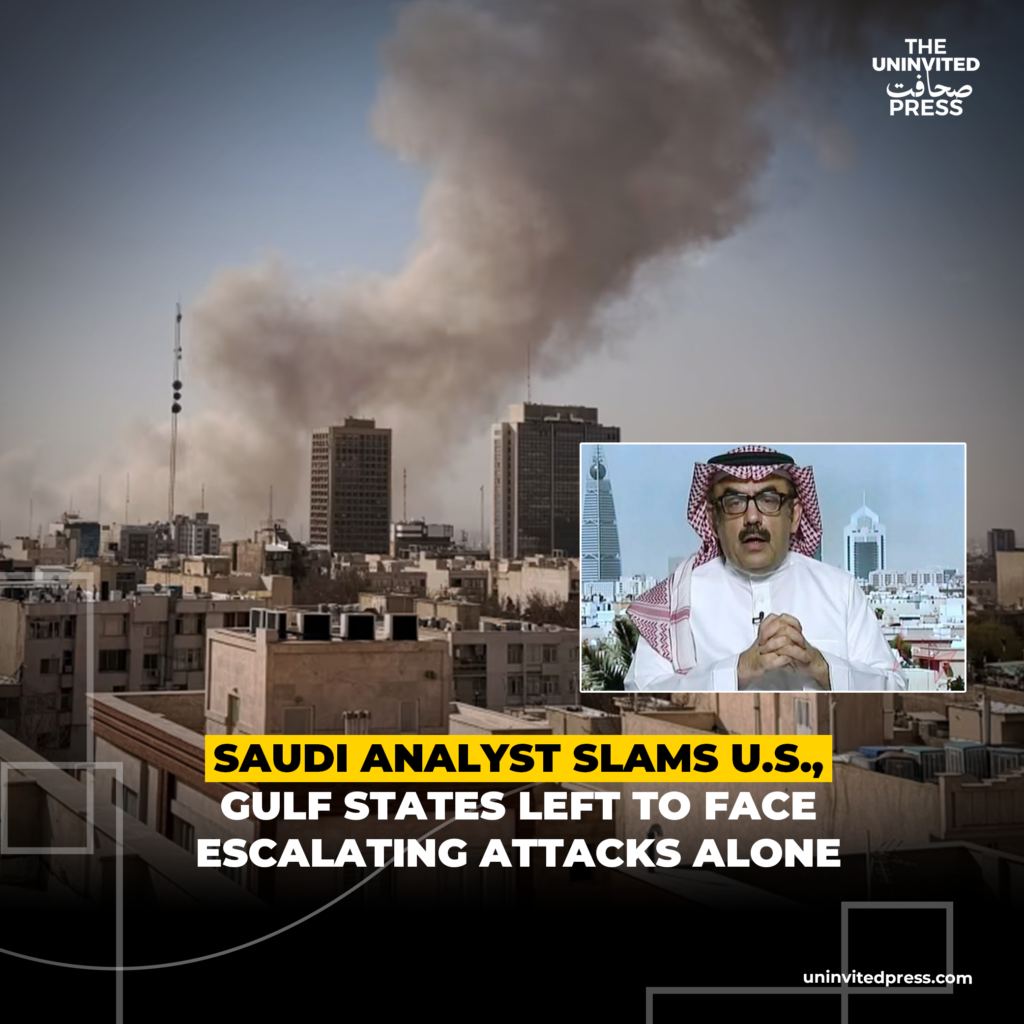
Saudi analyst Suleiman Al-Aqili accuses US of abandoning Gulf states to Iranian attacks by prioritizing Israel; regional tensions soar amid ongoing war.
Saudi Analyst Blasts US for Prioritizing Israel Over Allies Under Iranian Fire:
A leading Saudi political analyst has publicly lambasted the United States for redirecting its advanced air defenses to safeguard Israel, allegedly leaving Gulf states exposed to a barrage of Iranian missiles and drones. Suleiman Al-Aqili’s pointed criticism, aired on Al Jazeera, captures mounting resentment in the region as Iran’s retaliatory strikes hit multiple countries hosting US bases. This rift emerges just days into the US-Israeli assault on Iran, raising alarms about fractured alliances and the potential for a wider war that could devastate global energy supplies.
Iran's Retaliatory Barrage and the Analyst's Outburst:
The controversy ignited amid the chaos of Iran’s response to the joint US-Israeli Operation Epic Fury, which began on February 28, 2026, with strikes that killed Supreme Leader Ayatollah Ali Khamenei and targeted over 1,000 sites. By the next day, Iran unleashed missiles and drones on US bases in the Gulf, hitting targets in Saudi Arabia, UAE, Qatar, Kuwait, Bahrain, and Jordan within 24 hours.
Explosions rocked key sites, including near Aramco’s Ras Tanura refinery in Saudi Arabia and military installations in Abu Dhabi. Iranian state media justified the attacks as retaliation against “aggressors,” insisting they focused on military targets, though reports indicate civilian areas were affected. No confirmed casualty figures from Gulf states, but the strikes prompted evacuations and heightened alerts.
On March 1, during an Al Jazeera interview, Al-Aqili delivered his scathing assessment: “America has abandoned us, and focused its defense systems on protecting Israel, leaving the Gulf states that host its military bases at the mercy of Iranian missiles and drones.”
The remarks spread rapidly on social media, amplifying discontent. By March 2, GCC foreign ministers convened an emergency meeting to assess damage and coordinate responses. Strikes continued into March 3, with reports of intercepted missiles over Riyadh and further hits in the UAE.
Gulf States Caught Between US Security Umbrella and Iranian Retaliation:
US-Gulf relations have long been anchored in security pacts, with countries like Saudi Arabia and the UAE hosting thousands of American troops and buying billions in US arms. However, tensions simmered under Trump’s first term, particularly after the 2018 JCPOA withdrawal, which Gulf states supported but led to increased Iranian aggression, including 2019 drone attacks on Saudi oil facilities.
Post-2025 US-Israeli strikes on Iran’s nuclear sites, Gulf nations pushed for diplomacy, with Saudi Arabia denying involvement and refusing airspace for attacks. Riyadh even engaged Tehran in talks to normalize ties, brokered by China in 2023. But the 2026 operation, which Gulf leaders reportedly lobbied against, shattered this fragile detente.
Al-Aqili, a Riyadh-based commentator often featured in regional media, represents a hawkish view within Saudi circles, emphasizing self-reliance amid perceived US unreliability. His statement underscores broader anxieties: the Gulf’s oil-dependent economies are highly vulnerable, with strikes potentially disrupting 20% of global supply through the Strait of Hormuz. The human toll includes disrupted lives in cities now under threat, with schools closed and flights grounded.