

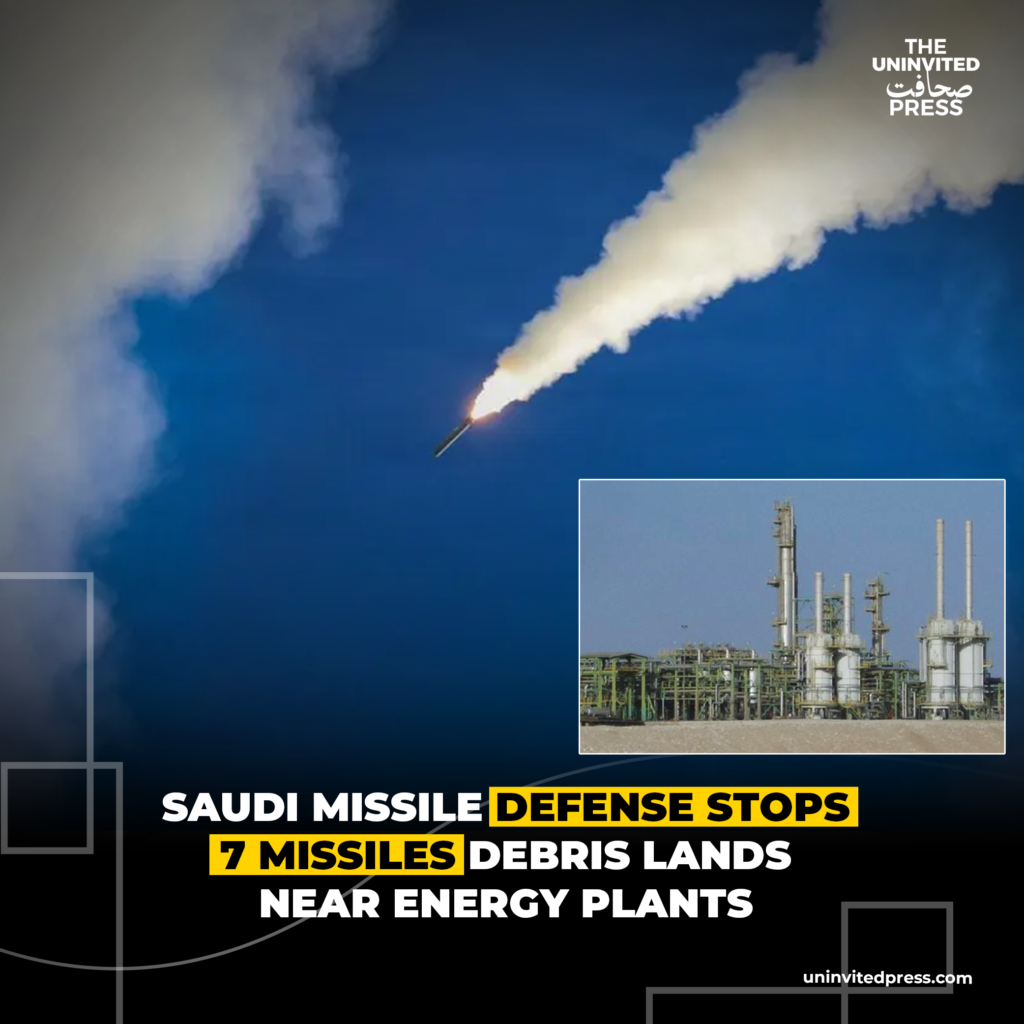
Kingdom reports successful downing of multiple ballistic missiles targeting Eastern Province, with damage assessment underway amid fears of wider regional escalation in the ongoing Iran war.
Saudi Arabia’s air defence systems intercepted and destroyed seven ballistic missiles launched towards the oil-rich Eastern Province early on Tuesday, with debris from the projectiles falling in the vicinity of key energy facilities, the Saudi Ministry of Defence has announced.
The ministry said damage assessment teams were working at the sites, though no immediate details on casualties or the extent of any impact were released. Some reports indicated additional interceptions, bringing the total to as many as 11 ballistic missiles and several drones.
The attack comes as tensions soar in the five-week-old war between Iran, the United States and Israel. Iran has increasingly targeted Gulf states perceived as supporting or hosting US and allied operations, using its missile and drone arsenal to stretch regional defences and disrupt energy infrastructure.
Iran escalates strikes on Gulf allies:
Iranian officials have not officially claimed responsibility for the latest barrage, but the timing aligns with Tehran’s pattern of retaliation against countries backing Washington’s campaign. The strikes follow repeated Iranian warnings that any support for US or Israeli actions would invite direct consequences.
Saudi Arabia temporarily closed the King Fahd Causeway-the only road link to Bahrain-as a precautionary measure amid fears of further attacks, before reopening it later in the day.
The Eastern Province, home to the bulk of Saudi Arabia’s vast oil reserves and processing plants, has been a repeated target since the conflict intensified. Analysts say Iran aims to raise the economic cost of the war by threatening Gulf energy exports, even as its own infrastructure faces heavy US and Israeli airstrikes.
Iran-Linked Attacks Escalate Across Gulf Amid Rising Tensions:
The incident underscores how the US-led campaign against Iran, which began in late February 2026, has spilled over into the wider Gulf region. Iran has launched dozens of missiles and hundreds of drones at Saudi Arabia, the UAE, Kuwait, Qatar and Bahrain in recent weeks, prompting defensive responses from US-patrolled skies and local air forces.
Saudi officials have so far avoided direct military involvement in strikes on Iran, focusing instead on protecting their territory. However, the repeated attacks are testing the Kingdom’s advanced Patriot and other missile defence systems, which have intercepted most incoming threats but allow occasional debris to reach the ground.
No group has claimed responsibility for the Tuesday attack, and the Saudi statement stopped short of naming Iran. But regional observers and multiple media reports pointed to Iranian forces as the source, consistent with Tehran’s strategy of horizontal escalation.
Energy markets on edge:
Any disruption to Saudi energy facilities could send oil prices even higher at a time when the closure of the Strait of Hormuz by Iran has already strained global supplies. The Eastern Province accounts for a significant portion of Saudi crude production and refining capacity.
International energy firms operating in the area have been monitoring the situation closely. Damage from debris or secondary fires could affect output, though Saudi Aramco has a history of rapid repairs following previous incidents.
As the war enters its sixth week, diplomats from Egypt, Pakistan, Turkey and other nations continue mediation efforts to secure a ceasefire. Iran has rejected short-term truces, demanding permanent guarantees and sanctions relief, while US President Donald Trump has issued fresh ultimatums tied to reopening the Strait of Hormuz.
For ordinary residents in Saudi Arabia’s Eastern Province, the sound of interceptions and distant explosions has become increasingly familiar, raising concerns about long-term security and the risk of a wider confrontation that could engulf more of the Gulf.