

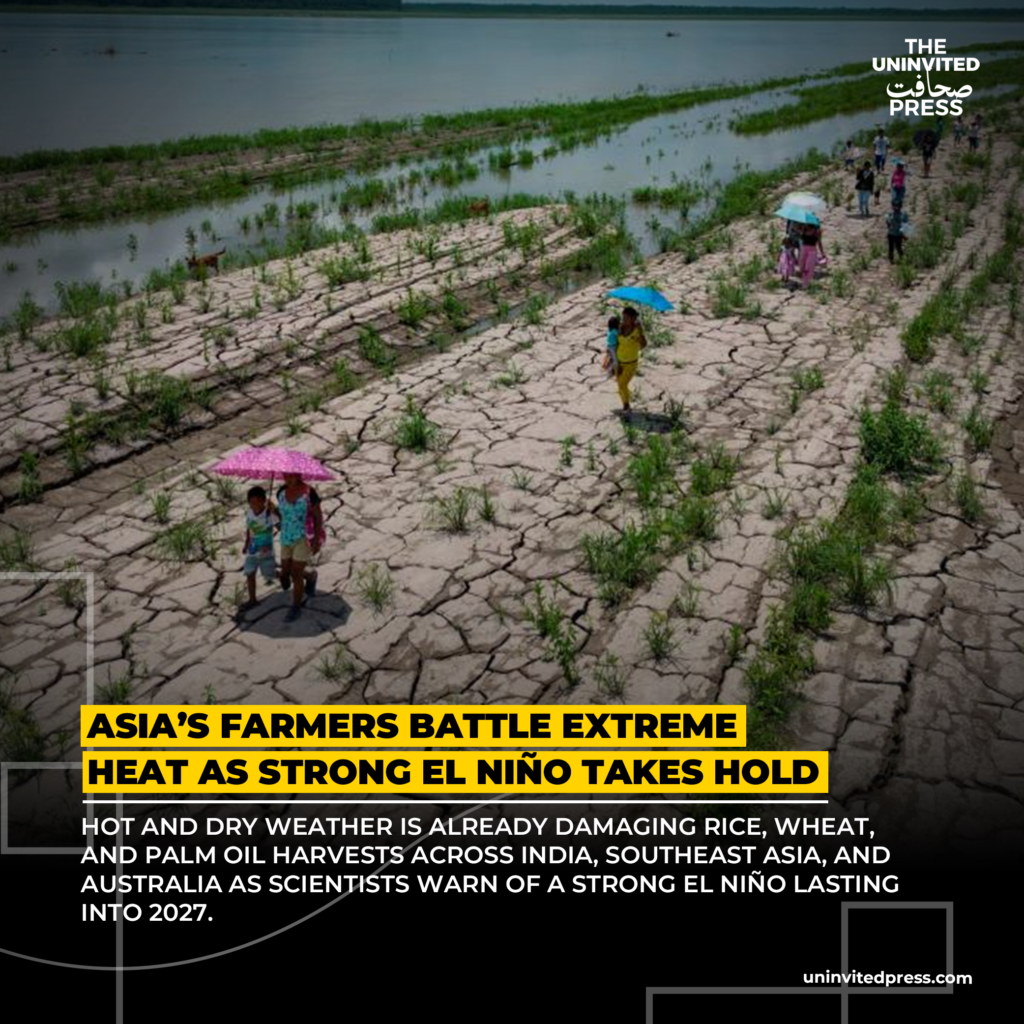
Hot and dry conditions devastate rice, wheat and palm oil harvests across India, Southeast Asia and Australia, with scientists warning of prolonged impacts into 2027.
Severe drought and record-high temperatures linked to a powerful El Niño event are hammering agricultural communities across Asia, threatening food security for hundreds of millions of people and driving up global commodity prices.
Farmers in India, Thailand, Indonesia, Vietnam, the Philippines and parts of Australia are reporting significant crop losses as rivers run low, reservoirs dry up, and soil cracks under prolonged heat and insufficient rainfall. Rice paddies-a staple for billions-are particularly hard hit, while wheat yields in northern India and palm oil production in Southeast Asia face sharp declines.
What is El Niño?
El Niño is a naturally occurring climate phenomenon characterised by the unusual warming of sea surface temperatures in the central and eastern tropical Pacific Ocean. It typically occurs every two to seven years and can last from nine months to two years.
The term “El Niño,” meaning “The Boy” in Spanish, refers to the Christ Child, as the warming often peaks around Christmas. It forms part of the larger El Niño-Southern Oscillation (ENSO) cycle, which alternates with its cooler counterpart, La Niña.
El Niño has no human “purpose.” It is a natural part of Earth’s climate system driven by interactions between the ocean and atmosphere. However, scientists note that human-induced climate change is intensifying these events, making them more frequent, stronger, and longer-lasting.
Impact on Asian agriculture:
In India, the world’s largest rice exporter, erratic monsoon patterns and extreme heat have already damaged vast areas of farmland. Similar conditions in Southeast Asia are disrupting palm oil and rice production, key export commodities for countries like Indonesia and Malaysia.
Australia, a major wheat exporter, is also experiencing drier-than-normal conditions, raising fears of reduced harvests. Smallholder farmers, who form the backbone of rural economies across the region, are among the hardest hit, with many forced to sell livestock at distress prices or abandon fields altogether.
Women and children in affected rural areas are walking longer distances to fetch water, while health authorities warn of rising cases of heatstroke and waterborne diseases.
Warnings of prolonged effects:
Meteorologists and climate experts have cautioned that this El Niño could persist well into 2027, extending the period of extreme weather. The World Meteorological Organization and regional bodies have called for urgent adaptation measures, including better irrigation systems, drought-resistant crops, and financial support for vulnerable farming communities.
Environmental groups argue that the crisis highlights the disproportionate burden placed on the Global South by a warming planet largely driven by historical emissions from wealthy nations.
Governments across Asia are implementing emergency water management plans and considering food import increases to stabilise markets, but analysts warn that prolonged El Niño conditions could exacerbate inflation and hunger risks in already vulnerable populations.
Impact of El Niño in Pakistan:
The ongoing strong El Niño event is severely affecting Pakistan by weakening the summer monsoon, resulting in below-average rainfall and prolonged drought conditions across key agricultural regions including Punjab, Sindh, and Balochistan.
This has led to significant water shortages in the Indus River basin, reduced river flows, and dropping reservoir levels, threatening irrigation for millions of farmers. Combined with record-breaking heatwaves amplified by the phenomenon, the dry conditions are causing widespread crop failures in wheat, rice, and cotton-staples of Pakistan’s economy-while increasing livestock losses and pushing food prices higher.
Rural communities are bearing the heaviest burden, with women and children walking longer distances for scarce water, and health risks rising due to extreme temperatures and potential disease outbreaks.
Although El Niño is a natural climate pattern, experts warn that climate change is making its impacts more intense and unpredictable in Pakistan, a country already ranked among the most vulnerable to global warming. The effects could persist into 2027, further straining the economy and food security if timely adaptation measures are not taken.