

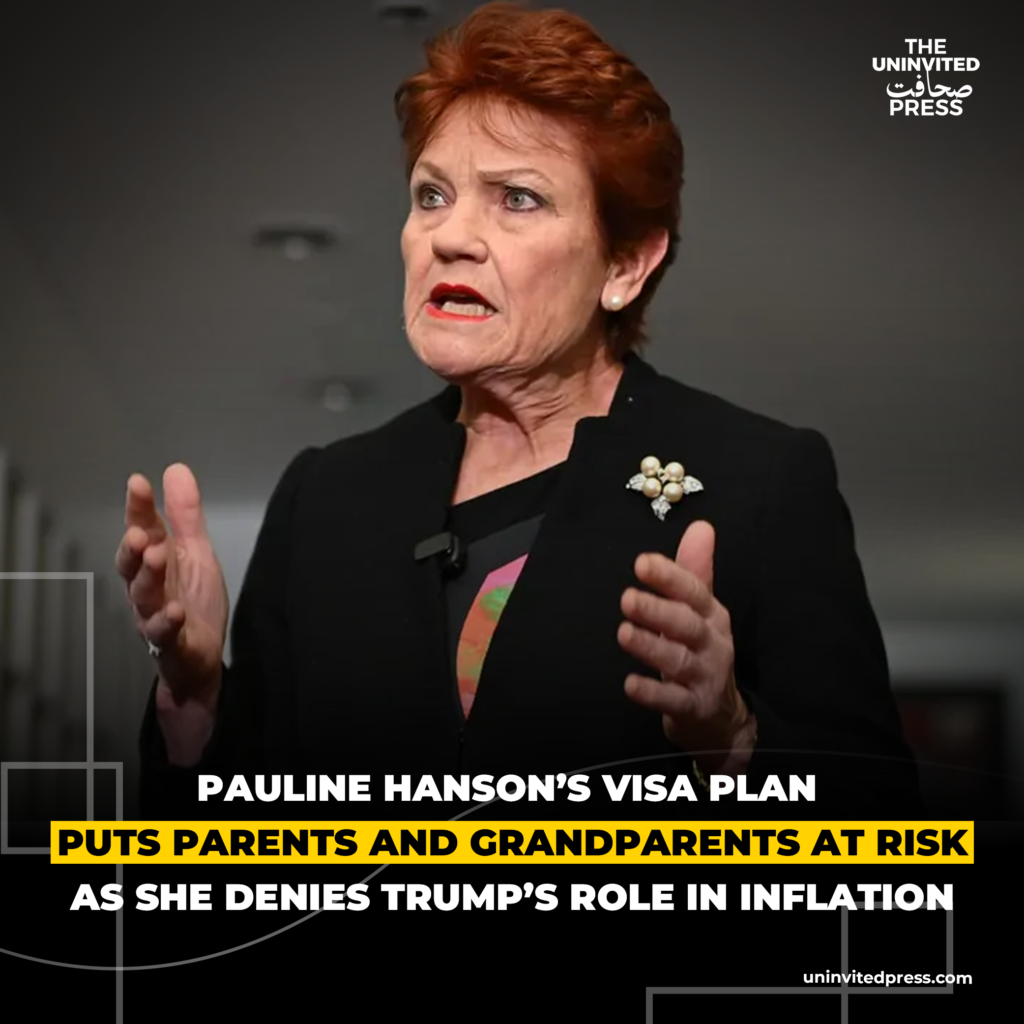
One Nation leader doubles down on scrapping permanent family visas while rejecting links between US-Iran conflict and rising Australian costs.
Australian far-right politician Pauline Hanson has confirmed that her party’s latest immigration overhaul could force thousands of parents and grandparents of migrants to leave the country, while simultaneously dismissing any connection between US President Donald Trump’s military involvement in Iran and Australia’s inflation pressures.
Speaking in Canberra on Wednesday, the One Nation leader outlined a policy that would abolish permanent parent and grandparent visas, which currently allow roughly 7,000 people to settle in Australia each year. Under the plan, existing applicants-estimated at around 150,000 in the queue, with at least 13,000 already living in Australia on bridging visas-would receive refunds of their substantial application fees (around A$50,000) but would not be permitted to remain. They could only return on temporary sponsored visitor visas paid for by their families, without access to permanent residency, work rights or Medicare.
Hanson Proposes Scrapping Parent Visas and Slashing Refugee Intake:
“They can’t (stay),” Hanson said when asked about those already onshore. She described the approach as “tough love,” insisting the priority was protecting Australian taxpayers from the lifetime costs of supporting ageing relatives of migrants, which One Nation estimates at more than A$500,000 per person based on Treasury figures. The party claims the combined cuts to parent visas and a 90 percent reduction in the annual refugee intake-from 20,000 to 2,000 places-could save federal and state budgets around A$140 billion over decades.
Parents and grandparents would still be able to visit on shorter temporary visas of three, six or 12 months, but only if sponsored by family members rather than the public purse. Hanson framed the changes as necessary amid cost-of-living pressures, arguing Australia “can’t afford” the current settings while citizens struggle with housing, healthcare and aged care.
The announcement has drawn sharp criticism from the Labor government, the opposition Coalition and migrant advocacy groups. Foreign Minister Penny Wong called the parent visa abolition “very harsh” on multicultural families. Immigration experts and analysts have warned of potential disruption to skilled migrant communities and workforce shortages in key sectors, noting that many of those affected are already integrated or supporting working children.
At the same news conference, Hanson rejected suggestions that Trump’s conflict with Iran-which has driven up global oil prices-was contributing to Australia’s inflation. The Reserve Bank of Australia has repeatedly cited energy price spikes linked to the Middle East tensions as a factor exacerbating domestic cost pressures. Hanson instead blamed “bad management by an absolutely incompetent government” and excessive public spending, declining to comment on whether Trump should de-escalate the war.
Hanson Defends Tough Migration Cuts:
“Cost of living was not due to the war in Iran,” she said. “That’s been bad management… It’s out of control spending by the current government.”
The dual messages-a hardline stance on family migration paired with reluctance to criticise Trump-highlight One Nation’s positioning in Australia’s polarised political landscape. Hanson has long been described by critics within the conservative side as prioritising alignment with Trump’s “Make America Great Again” movement. The policy also includes bans on onshore asylum claims and continued travel restrictions from certain countries.
Australia has long maintained one of the more generous refugee resettlement programmes among developed nations outside Canada. The proposed 90 percent cut would align it more closely with tighter policies emerging in parts of Europe and the United States. Critics argue the parent visa changes risk separating families and undermining the social cohesion that skilled migration is intended to support, while supporters see it as a necessary recalibration of fiscal priorities.
As Australia navigates ongoing debates over housing affordability, infrastructure strain and net migration levels, Hanson’s proposals inject a stark choice into the national conversation: whether the costs of family reunification and humanitarian intake outweigh the long-term social and economic contributions of those programmes. The full practical and legal implications of forcing thousands of already-present applicants to depart remain untested, but the political signal is clear.