

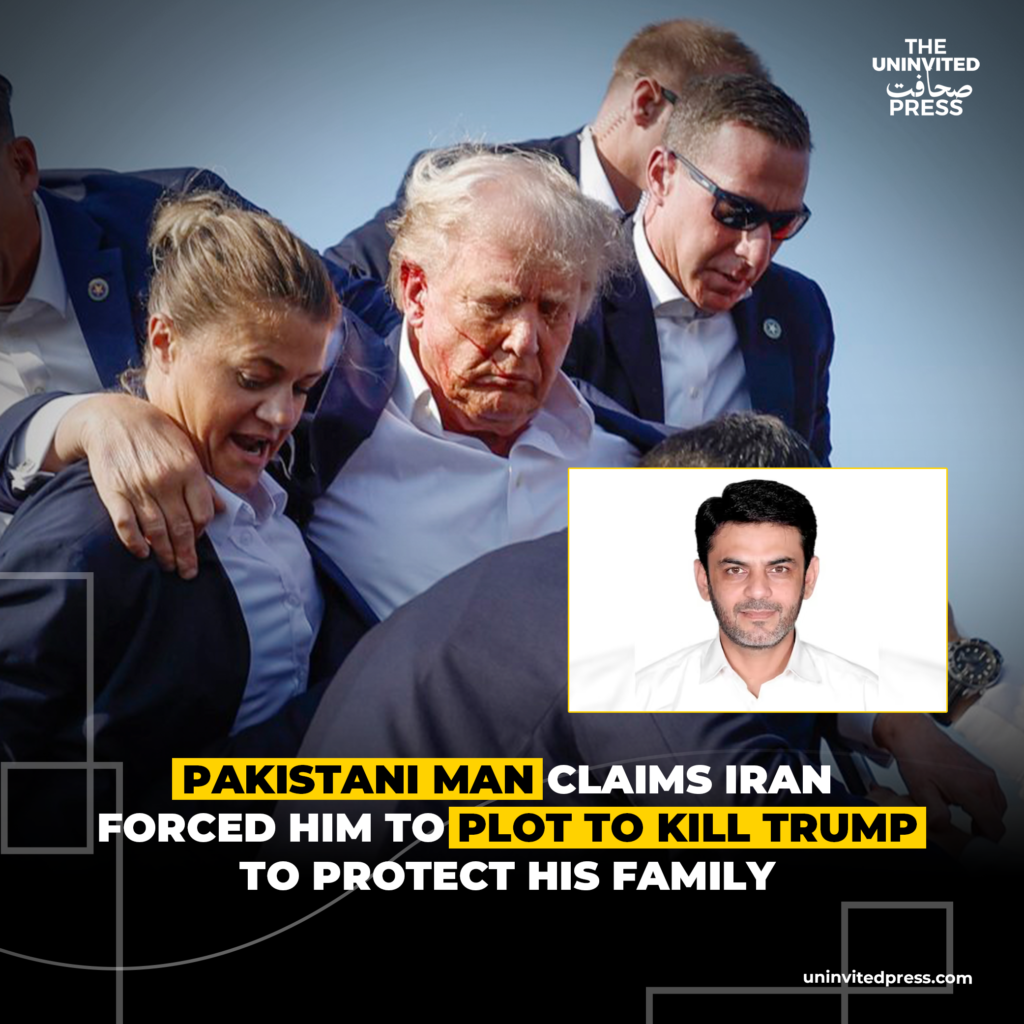
A Pakistani man was convicted in a U.S. court for plotting to kill President Trump, claiming Iran forced him to protect his family. The case highlights ongoing Iran-U.S. tensions.
Conviction in Alleged Iran-Backed Trump Assassination Plot:
A Pakistani national was found guilty Friday of orchestrating a murder-for-hire plot targeting U.S. President Donald Trump and other high-profile politicians, in what prosecutors described as an Iranian-backed act of terrorism on American soil. The conviction underscores escalating tensions between the U.S. and Iran amid ongoing conflicts in the Middle East. Asif Merchant, 47, now faces life imprisonment for his role in the foiled 2024 scheme, which authorities say was motivated by revenge for the 2020 killing of Iranian General Qasem Soleimani.
Timeline of the Alleged Plot and Arrest:
The case against Asif Merchant began unraveling in April 2024 when he arrived in the United States from Pakistan. According to court documents and trial evidence, Merchant, who described himself as a former banker with business interests in banana exports, was no ordinary visitor. Prosecutors presented evidence that he had been recruited by the IRGC in late 2022 or early 2023, receiving training in surveillance and espionage techniques in Pakistan.
By 2023, Merchant was allegedly tasked with scouting potential recruits in the U.S. for the IRGC, a group designated as a foreign terrorist organization by the U.S. government. His missions reportedly involved multiple trips to Iran to meet with a handler. In 2024, the stakes escalated: Merchant was instructed to orchestrate a multi-pronged operation, including stealing sensitive documents, organizing protests, and arranging the assassination of specific U.S. officials.
Merchant contacted an acquaintance in New York, who tipped off law enforcement and became a confidential informant. In June 2024, Merchant met with individuals he believed were hitmen-actually undercover FBI agents-in New York. He outlined the plot, using a “finger gun” gesture to signal the lethal intent, and discussed scenarios involving heavy security around targets. He paid them $5,000 as an advance, confirming the deal with phrases like “now we’re bonded” and “yes, absolutely.”
During this time, Merchant conducted online searches for political rally locations and security details, relaying information back to his IRGC contact. He planned to flee the U.S. on July 12, 2024, but was arrested that day at John F. Kennedy International Airport. The next day, an unrelated assassination attempt occurred at a Trump rally in Butler, Pennsylvania-Merchant later told an FBI agent he suspected Iran was behind it, viewing it as aligned with his mission.
The trial in Brooklyn lasted less than a week, with the jury deliberating for under two hours before returning guilty verdicts on all counts. Merchant took the stand in his defense, an uncommon move, speaking through an Urdu interpreter.
Iran-Linked Plots Targeting U.S. Officials Amid Rising Tensions:
This plot fits into a broader pattern of alleged Iranian retaliation efforts following the January 3, 2020, U.S. drone strike that killed Qasem Soleimani, the head of the IRGC’s Quds Force, on orders from then-President Trump. Soleimani was a key architect of Iran’s proxy wars in the Middle East, and his death prompted vows of vengeance from Iranian leaders.
Since then, U.S. authorities have thwarted multiple Iran-linked plots against American officials. For instance, in 2022, an IRGC member was charged with attempting to assassinate former National Security Advisor John Bolton. Merchant’s case is the latest, highlighting Iran’s alleged use of proxies and operatives to target U.S. interests abroad and at home.
The conviction comes amid heightened U.S.-Iran hostilities, including ongoing military exchanges in the Middle East. As of March 2026, the U.S. remains engaged in conflicts with Iranian-backed groups, amplifying the significance of this domestic terrorism case. It raises alarms about foreign interference in U.S. politics and the vulnerability of high-profile figures.