

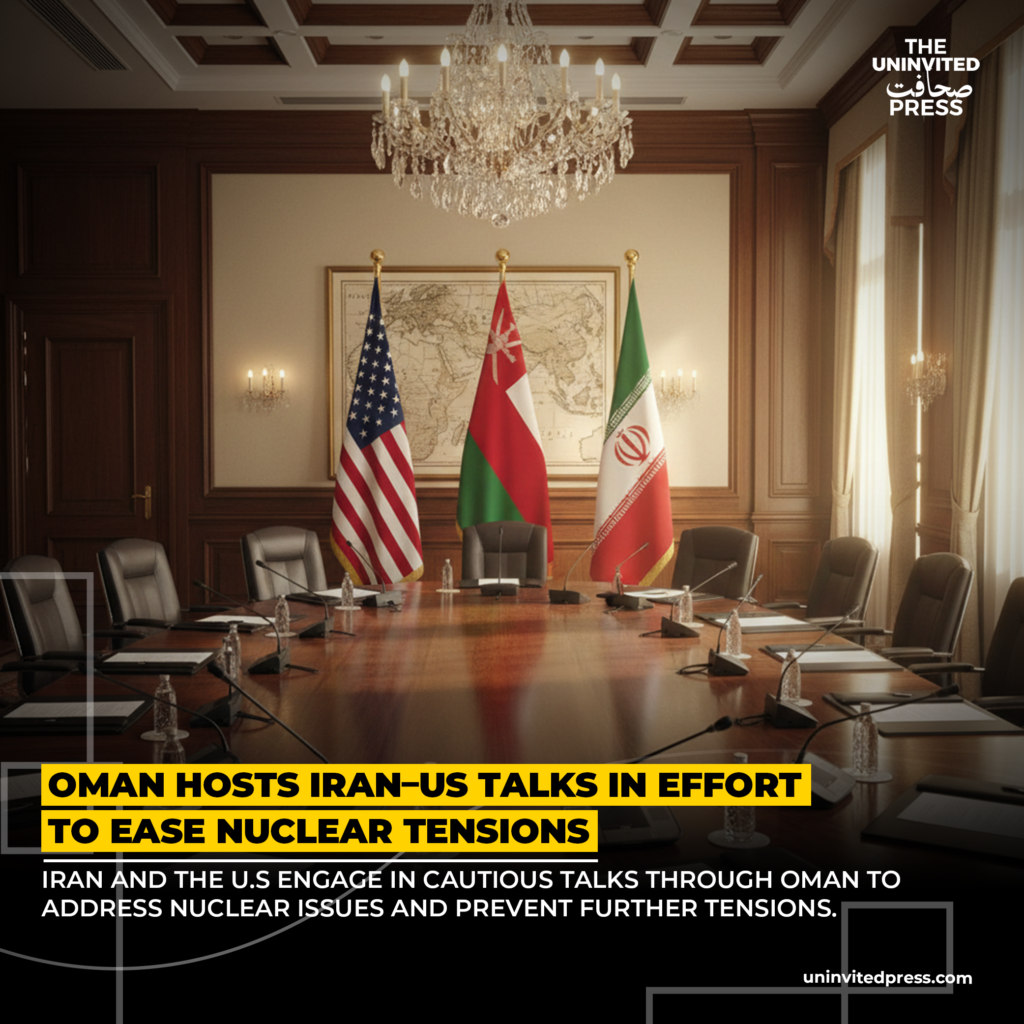
Oman hosted indirect US-Iran nuclear talks on Feb. 6, 2026, amid war fears after US strikes and protests. Both sides call it a ‘good start,’ with more negotiations ahead.
US and Iran Edge Toward Nuclear Talks in Oman Amid Regional Tensions:
In a diplomatic push that could avert a slide toward broader conflict, US and Iranian officials held indirect talks in Oman on February 6, 2026, focusing on Tehran’s nuclear program. The mediated discussions, hosted by the Gulf sultanate, come months after US airstrikes on Iranian sites and amid Iran’s brutal suppression of domestic protests, raising the specter of military escalation. With American warships positioned off Iran’s coast, the stakes couldn’t be higher; failure here might tip the Middle East into open war.
Behind Closed Doors in Muscat: Shuttle Diplomacy, Military Brass, and Clashing Red Lines:
The talks unfolded in Muscat’s discreet diplomatic corridors, a familiar setting for back-channel US-Iran communications. Iranian officials arrived first at the palace, followed by the American delegation, which notably included Adm. Brad Cooper in full dress uniform-a first for such negotiations, underscoring the military shadow over diplomacy. No face-to-face encounters took place; instead, Omani mediators shuttled between the groups, facilitating exchanges on nuclear frameworks.
Araghchi, speaking to Omani media post-meeting, called the session “positive” and “exclusively nuclear,” emphasizing Tehran’s flexibility on enrichment levels but insisting on sanctions removal. He stressed that further progress depends on “discussions in capitals,” signaling internal Iranian deliberations ahead. On the US side, Trump publicly hailed the talks as productive, claiming Iran “wants to make a deal very badly” and affirming there’s “enough time” to negotiate, while reiterating his demand for zero nuclear capability from Tehran.
The inclusion of Cooper, head of US Central Command, served as a stark reminder of Washington’s military posture. The USS Abraham Lincoln carrier group and other assets remain deployed in the Arabian Sea, poised amid Trump’s warnings of “consequences” without a deal. Iranian state media echoed Araghchi’s optimism but framed the talks as a response to US “threats and pressure,” rejecting broader discussions on missiles or regional influence.
Oman Mediates US-Iran Talks Amid Nuclear Tensions and Regional Risks:
Oman’s role as mediator is no surprise-the sultanate has long bridged divides between Washington and Tehran, facilitating secret talks that led to the 2015 Joint Comprehensive Plan of Action (JCPOA) under President Obama. That deal curbed Iran’s nuclear program in exchange for sanctions relief, but Trump withdrew in 2018, reimposing “maximum pressure” penalties that crippled Iran’s economy.
Tensions escalated dramatically in 2025. US airstrikes in June targeted Iranian uranium enrichment facilities following alleged violations of IAEA thresholds, ending a brief Israel-Iran war. This was compounded by nationwide protests in Iran, sparked by economic woes and government crackdowns, which Tehran blames on foreign interference. Iran’s uranium stockpile has since grown to near-weapons-grade levels, per IAEA reports, heightening global alarms.
The 2026 talks represent a reset under Trump’s second term, but with added urgency. Failed prior attempts by Qatar and Turkey to broker wider regional dialogues left Oman as the go-to neutral ground. For Iran, facing internal unrest and economic isolation, dialogue offers a lifeline; for the US, it’s a chance to contain proliferation without full-scale war. The human toll is already mounting: protests have claimed hundreds of lives, while US sanctions exacerbate shortages in medicine and food for ordinary Iranians.
This isn’t just about nukes-it’s a proxy for broader rivalries. Iran’s support for groups like Hezbollah and the Houthis fuels regional instability, while US alliances with Israel and Gulf states counterbalance Tehran’s influence. A deal could stabilize oil markets, ease global inflation, and prevent a nuclear arms race in the Middle East.