

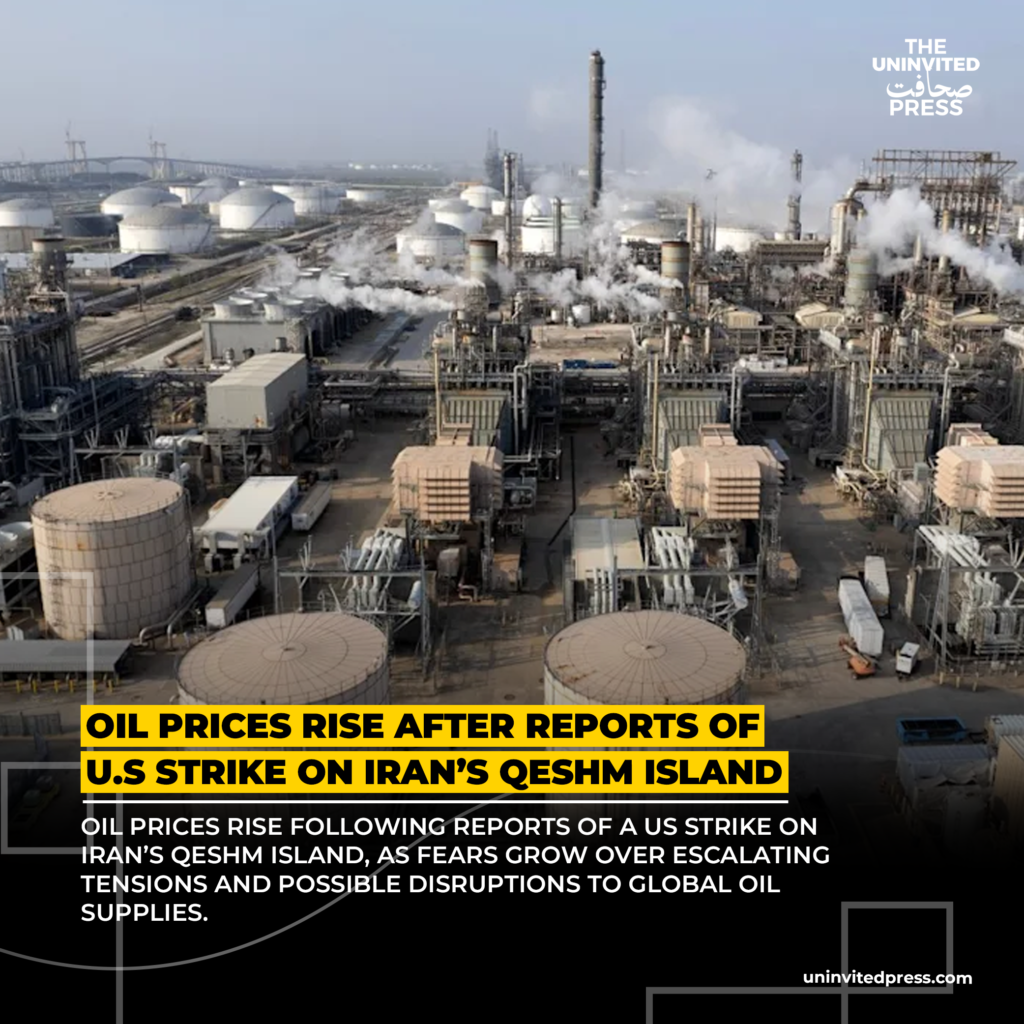
Markets regain a risk premium as limited American attacks near the Strait of Hormuz revive fears of escalation and prolonged disruption to global energy supplies.
Oil prices edged higher on Tuesday after reports that United States forces had carried out limited strikes on Iran’s strategically located Qeshm Island, injecting fresh uncertainty into energy markets just one day after a sharp decline driven by hopes of diplomatic progress.
Brent crude, the international benchmark, rose about 0.5 percent in early Asian trading to around $105.25 a barrel, while US West Texas Intermediate climbed a similar amount to approximately $96.93. The rebound followed Monday’s steep losses, when Brent settled more than 7 percent lower amid optimism that Qatari-mediated contacts between Iranian and American officials could help end the eight-month conflict.
US Strikes Reported on Iran’s Qeshm Island:
Media reported the strikes, citing US officials who described them as defensive operations. According to those accounts, the attacks targeted Iranian capabilities that could threaten commercial shipping in the Strait of Hormuz or involve the use of surface-to-air missiles against American assets. Iranian state media, including the official IRNA news agency, reported several explosions heard in rapid succession on the island late Monday, with some residents saying they saw aircraft overhead. US Central Command did not immediately respond to requests for comment.
Qeshm Island, the largest in the Persian Gulf and positioned near the entrance to the Strait of Hormuz, hosts military infrastructure including an underground missile facility and a naval base. The strait normally carries roughly one-fifth of the world’s crude oil and liquefied natural gas. Since the conflict began in late February, attacks and threats have sharply reduced shipping traffic through the waterway, contributing to elevated global energy prices and higher costs for consumers worldwide.
Market analysts said the reports restored a geopolitical risk premium that had briefly faded. “The report added a degree of risk premium back into the oil price. Just when markets were starting to price in a more diplomatic path, this reminder of ongoing military activity has flipped the tone,” said Tim Waterer, chief market analyst at KCM Trade.
US-Iran Tensions Rise Despite Peace Talks:
The strikes came on the eve of US midterm elections and against a backdrop of mixed signals from Washington. President Donald Trump had publicly downplayed the prospect of major new fighting and pointed to progress in talks, stating that a deal with Tehran “could happen” and linking the previous day’s drop in oil prices to reduced war fears. Vice President JD Vance also expressed optimism about negotiations. At the same time, officials indicated the Qeshm operation formed part of a series of limited, previously undisclosed defensive actions conducted in recent weeks.
Iran has maintained that contacts aimed at ending the war continue. Tehran has also indicated readiness to facilitate the reopening of the Strait of Hormuz under certain conditions, though no concrete breakthrough has been announced. Iranian media earlier claimed the downing of US drones near the island, a claim American officials disputed.
The modest recovery in prices underscores the market’s acute sensitivity to any military activity near this critical chokepoint. While the reported strikes appear limited rather than a return to large-scale combat, they highlight the fragile nature of recent diplomatic overtures and the persistent threat of further disruption to global oil supplies. For energy-importing nations and households already strained by high fuel costs, the developments serve as a reminder that the underlying risks in the region remain unresolved.