

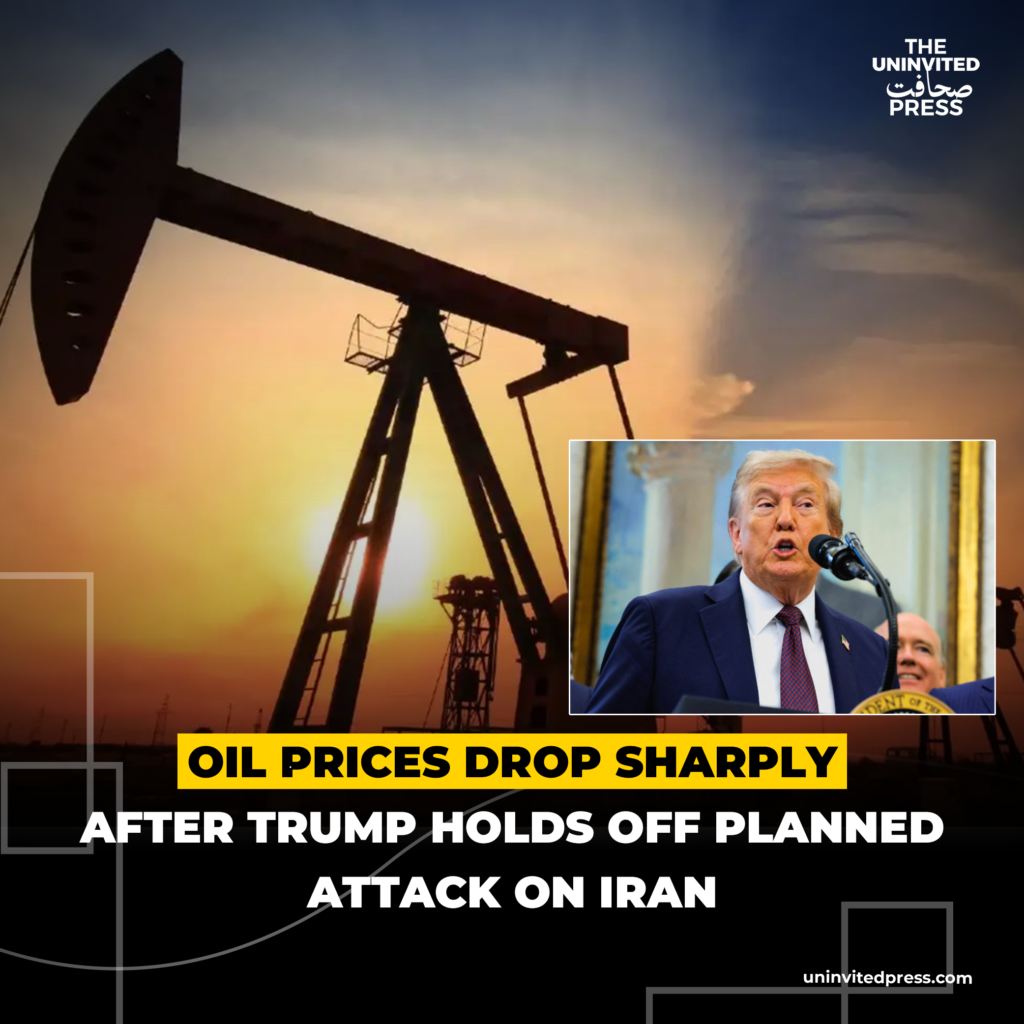
De-escalation in US-Iran tensions triggers sharp drop in global crude benchmarks, easing immediate fears of supply disruption in the world’s most critical energy chokepoint.
Global oil prices dropped sharply on Tuesday after US President Donald Trump decided to hold off on a planned military strike against Iran, according to multiple reports citing administration officials and market reactions.
Brent crude fell more than 4 percent in early trading, while West Texas Intermediate (WTI) plunged nearly 5 percent, as investors breathed a sigh of relief over reduced risk of a major conflict that could threaten oil flows through the Strait of Hormuz.
Oil Prices Drop on Easing Iran Tensions:
The sharp decline comes amid heightened tensions in the Middle East following recent exchanges between Israel and Iran. Trump had reportedly been considering limited strikes on Iranian targets but ultimately chose to step back, sources familiar with the discussions told media outlets.
“The President has decided against immediate military action to allow diplomatic efforts more time,” a senior US official was quoted as saying. The decision appears to have significantly lowered the geopolitical risk premium that had been supporting oil prices in recent weeks.
Iran, a major OPEC+ producer, has repeatedly warned that any attack on its territory or nuclear facilities would trigger a strong response, including potential disruption of oil shipments through the Strait of Hormuz-through which nearly 20 percent of global oil trade passes.
Tehran has maintained that its nuclear programme is peaceful, while the United States and Israel have expressed deep concerns over Iran’s uranium enrichment activities and regional proxy networks.
Oil Prices Slip Amid US-Iran Tensions and Diplomatic Pause:
Since returning to the White House, Trump has revived elements of his “maximum pressure” campaign against Iran, reimposing sanctions and warning of severe consequences if Tehran advances its nuclear ambitions. However, the latest decision suggests a more measured approach aimed at avoiding a broader regional warr. Market analysts noted that while the immediate threat has receded, underlying tensions remain high.
“Geopolitical risk hasn’t disappeared-it’s just been postponed,” said one Singapore-based oil trader. “Any renewed escalation could send prices rocketing back above $90 per barrel.”
The drop in oil prices provides temporary relief to energy-importing economies but raises concerns for oil-exporting nations already struggling with OPEC+ production cuts. Lower prices could also impact US shale producers if the decline continues.
As diplomatic channels remain active-with indirect talks reportedly involving European mediators-all eyes are on whether this pause leads to a more sustained de-escalation or merely delays an inevitable confrontation.