

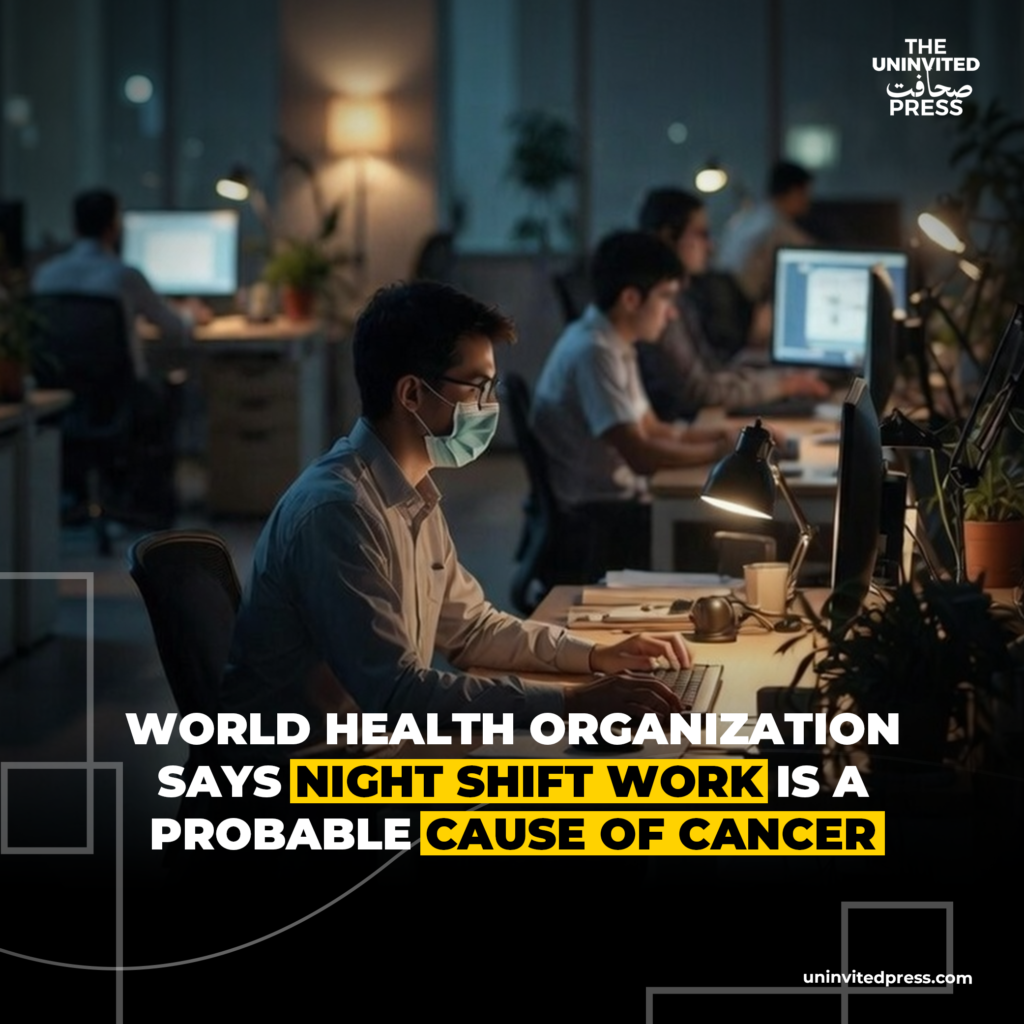
WHO’s IARC classifies night shift work as a probable carcinogen, linking it to increased risks of breast and other cancers due to circadian disruptions.
Night Shifts Under Scrutiny as Cancer Risk Concern Grows:
The International Agency for Research on Cancer (IARC), a specialized arm of the World Health Organization, has long labeled night shift work as “probably carcinogenic to humans,” a classification reaffirmed in 2019 based on evidence linking it to breast, prostate, and colorectal cancers. This warning affects an estimated 15-20% of the global workforce, including nurses, factory workers, and pilots, who face heightened risks from circadian rhythm disruptions. As new 2025 research highlights inconsistent but concerning associations, experts call for better protections and further studies to safeguard vulnerable employees.
Night Shift Work and Cancer: Growing Scientific Concern:
The IARC first classified night shift work as a probable human carcinogen in 2007. This was based on emerging evidence from epidemiological studies suggesting links to breast and prostate cancers among shift workers.
The classification was updated and strengthened in June 2019 with the release of IARC Monographs Volume 124. An expert working group reviewed over 100 studies, defining night shift work as employment during typical sleeping hours, including rotating shifts and transmeridian travel. They concluded it poses a Group 2A risk, supported by limited human data on breast, prostate, colon, and rectal cancers, robust animal experiments showing tumor growth under disrupted light-dark cycles, and mechanistic insights into how night work suppresses melatonin-a hormone that regulates sleep and inhibits cancer cell growth.
Recent developments include a 2025 meta-analysis of healthcare workers, finding a 25% increased breast cancer risk for those with 20+ years of night shifts, though results weakened after adjusting for biases. A January 2026 study echoed this, reporting higher breast cancer incidence among night workers, with risks rising 3.3% per five years of exposure. Another 2025 review linked night shifts to gastrointestinal cancers in nurses, attributing it to chronic inflammation and immune suppression.
These findings build on a timeline of growing concern. By 2010, Denmark compensated women with breast cancer after long-term night work, setting a precedent for occupational claims. In 2022, Australian researchers detailed how shift work accelerates tumor growth via disrupted clocks, prompting global health bodies to advocate for screening.
Night Shift Work: Health Risks and Debate:
Night shift work has roots in industrialization, enabling 24/7 operations in factories and hospitals. Today, it sustains economies but at a cost: About 700 million people worldwide work nights, facing not just cancer risks but also heart disease, diabetes, and mental health issues from circadian misalignment.
The IARC’s 2007 classification stemmed from studies like the Nurses’ Health Study, which tracked over 78,000 nurses and found a 36% higher breast cancer risk for 30+ years of rotating shifts. Mechanisms include light-induced melatonin drop, which normally peaks at night to repair DNA; without it, cells accumulate mutations. Animal models confirm: Mice exposed to inverted light cycles develop more tumors.
Significance is profound for women, who dominate night-shift roles in healthcare (e.g., 80% of nurses). A 2018 meta-analysis showed a 19% overall cancer hike, with 32% for breast cancer. Yet, a 2016 review found no breast cancer link, highlighting study variances in shift definitions and confounders like obesity.