

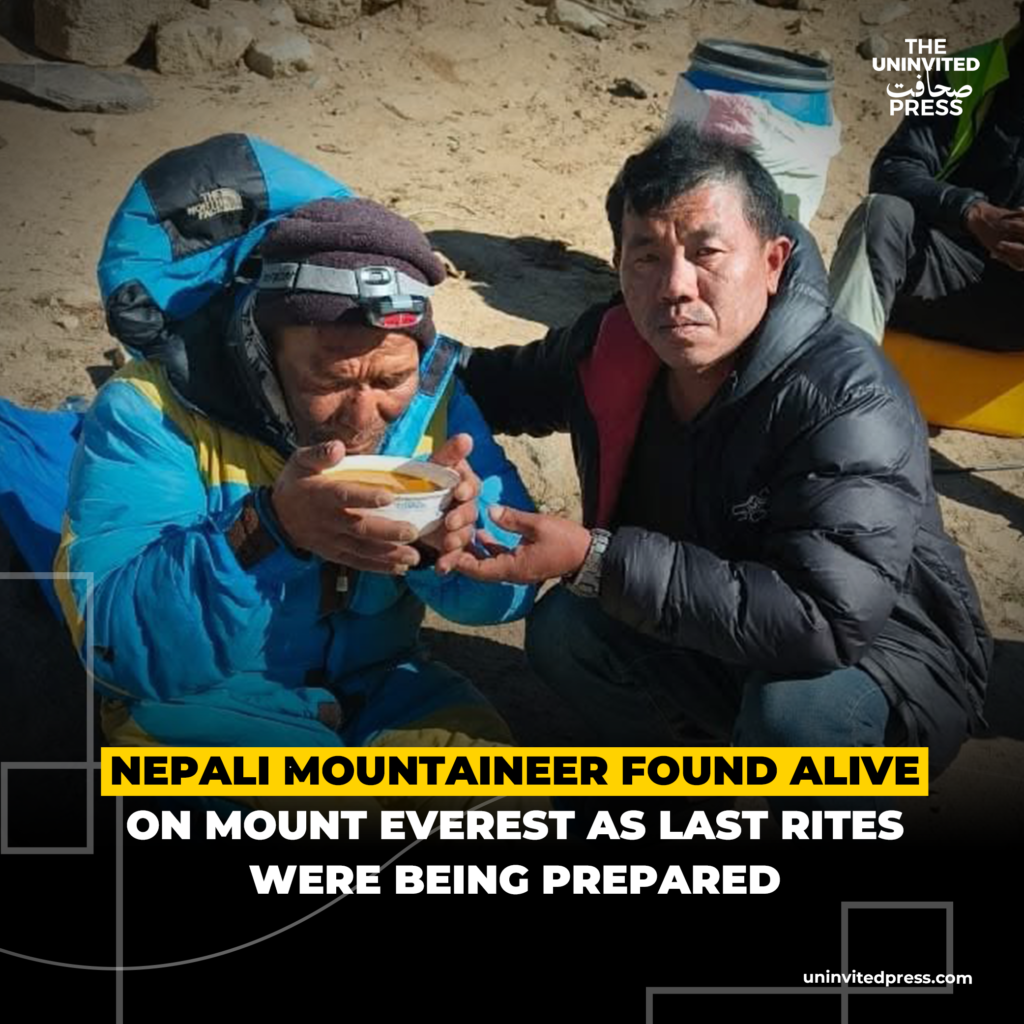
Climber rescued as rescue teams and family prepared last rites near summit zone.
A Nepali mountaineer who went missing on Mount Everest has been found alive in critical condition, just as his family and fellow climbers had begun preparing last rites, officials and expedition sources said.
The dramatic rescue, which unfolded high on the world’s highest peak, has stunned the mountaineering community and offered a rare story of survival amid the deadly conditions that claim dozens of lives on Everest each season.
Nepali Climber Rescued on Everest:
According to rescue coordinators, the climber was discovered severely exhausted and suffering from frostbite and altitude-related illness in the upper sections of the mountain. He was quickly stabilised by a joint Nepali and international rescue team before being brought down to base camp.
“He was found conscious but very weak. He is now receiving medical attention,” a spokesperson for Nepal’s Tourism Department told Media.
The mountaineer had lost contact with his team several days earlier during the descent from the summit. With no signs of life and harsh weather conditions preventing immediate searches, expedition members and his family had begun the grim process of preparing final rites in accordance with Nepali traditions.
This year’s climbing season on Everest has once again highlighted the extreme risks faced by mountaineers. Harsh winds, sudden storms, and the effects of high altitude continue to challenge even the most experienced climbers, many of whom rely on Nepali Sherpa guides.
Nepal issued a record number of permits this season, with hundreds of climbers and support staff attempting the ascent. While commercial expeditions have made the mountain more accessible, overcrowding and unpredictable weather remain significant hazards.
The survival of the Nepali climber has drawn renewed attention to the critical role played by local guides and porters, who often take the greatest risks to ensure the safety of international clients.
Everest Rescue Highlights Climbing Risks:
Everest has claimed more than 300 lives since the first successful summit in 1953, with bodies of many climbers still lying on the slopes. Search and rescue operations are extremely difficult and costly, often depending on weather windows and the availability of helicopters capable of operating at extreme altitudes.
Nepalese authorities have faced growing criticism over the commercialisation of Everest and the strain placed on local communities and the fragile mountain environment. Efforts are underway to improve safety regulations, including stricter permit criteria and better coordination of rescue resources.
The rescued climber’s family expressed immense relief and gratitude to the rescue teams. “Miracles still happen on the mountain,” one relative said.