

INCIDENT:
FULL STORY:
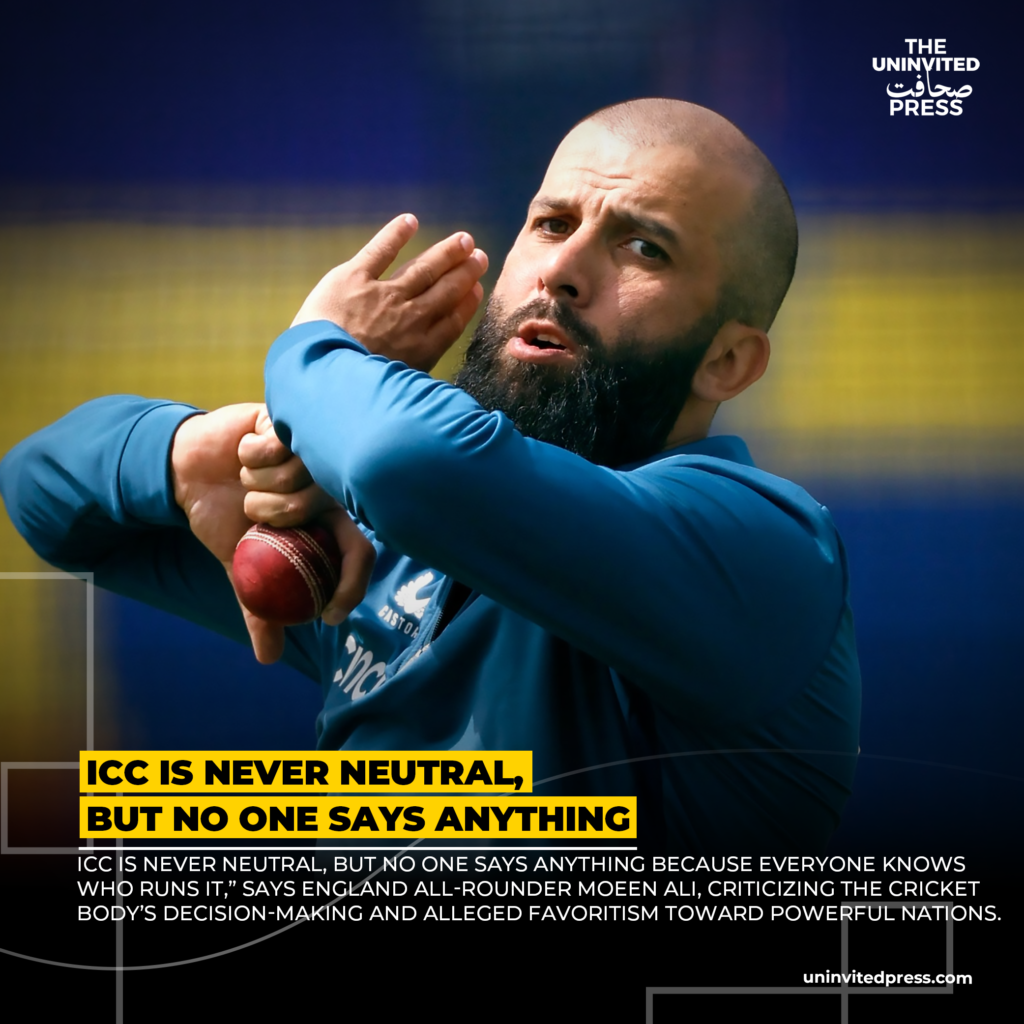
Moeen Ali’s pointed remarks surfaced in a BDNews24 interview on January 7, 2026, where he addressed the ICC’s handling of international cricket affairs. “The ICC is never neutral, but no one says anything about it. Because everyone knows who runs it,” Ali stated, according to the report. He went further, questioning why powerhouses like England and Australia remain silent: “Shouldn’t countries like Australia and England play a role here? They don’t say anything either.”
The comments were prompted by the ongoing saga involving Bangladeshi pacer Mustafizur Rahman. On December 15, 2025, the BCB announced it would not grant Rahman an NOC to participate in the Indian Premier League (IPL) 2026, citing his need for rest ahead of national commitments, including the Asia Cup and a home series against Sri Lanka. Rahman, who had been retained by Kolkata Knight Riders (KKR) for INR 2 crore, was subsequently released. Ali, without directly blaming Bangladesh, suggested the decision stemmed from broader “politics in cricket,” implying external influences from powerful boards.
Ali’s critique extended to the ICC’s role as a guardian of the game. “The ICC has never really behaved as a proper guardian body,” he said, per multiple reports. He accused the organization of prioritizing individual agendas over fairness, particularly favoring “one cricket nation”-widely interpreted as India, given the BCCI’s financial dominance.
The BCB’s NOC denial came amid Rahman’s injury concerns from a shoulder issue sustained during the Bangladesh Premier League in November 2025. KKR’s release followed on December 20, 2025. Ali’s interview, conducted shortly after, was published amid escalating online discussions. By January 8, 2026, the story had gone viral on social media, with X posts amplifying the quote.
CONTEXT & BACKGROUND:
Cricket’s global governance has long been plagued by accusations of inequality, with the “Big Three”-India, England, and Australia-controlling a disproportionate share of revenue and influence. The ICC, founded in 1909 as the Imperial Cricket Conference, restructured in 2014 to give these nations more power, a move criticized for marginalizing associate and smaller full-member countries like Bangladesh, Pakistan, and Sri Lanka.
Jay Shah, son of Indian Home Minister Amit Shah, became ICC Chairman in December 2024, succeeding Greg Barclay. Under Shah’s leadership, the ICC has pushed for expanded T20 leagues and revenue models favoring high-value markets, but critics argue this exacerbates biases. The BCCI, which generates over 80% of the ICC’s revenue through media rights, has been accused of wielding undue influence, such as in scheduling and rule enforcement.
Moeen Ali, 38, retired from international cricket in September 2024 after a storied career. Born in Birmingham to Pakistani heritage, he played 68 Tests, 138 ODIs, and 92 T20Is for England, amassing over 8,000 runs and 300 wickets. Known for his outspokenness on social issues-like wearing pro-Palestine wristbands in 2014, which led to an ICC warning-Ali has previously called out racism and inequality in the sport. In a 2023 documentary, he urged former captain Michael Vaughan to address racism, showing his willingness to challenge establishments.
Cricket’s global appeal risks erosion if smaller nations feel perpetually disadvantaged, potentially affecting player mobility, talent development, and fan engagement in regions like South Asia and the Caribbean.