

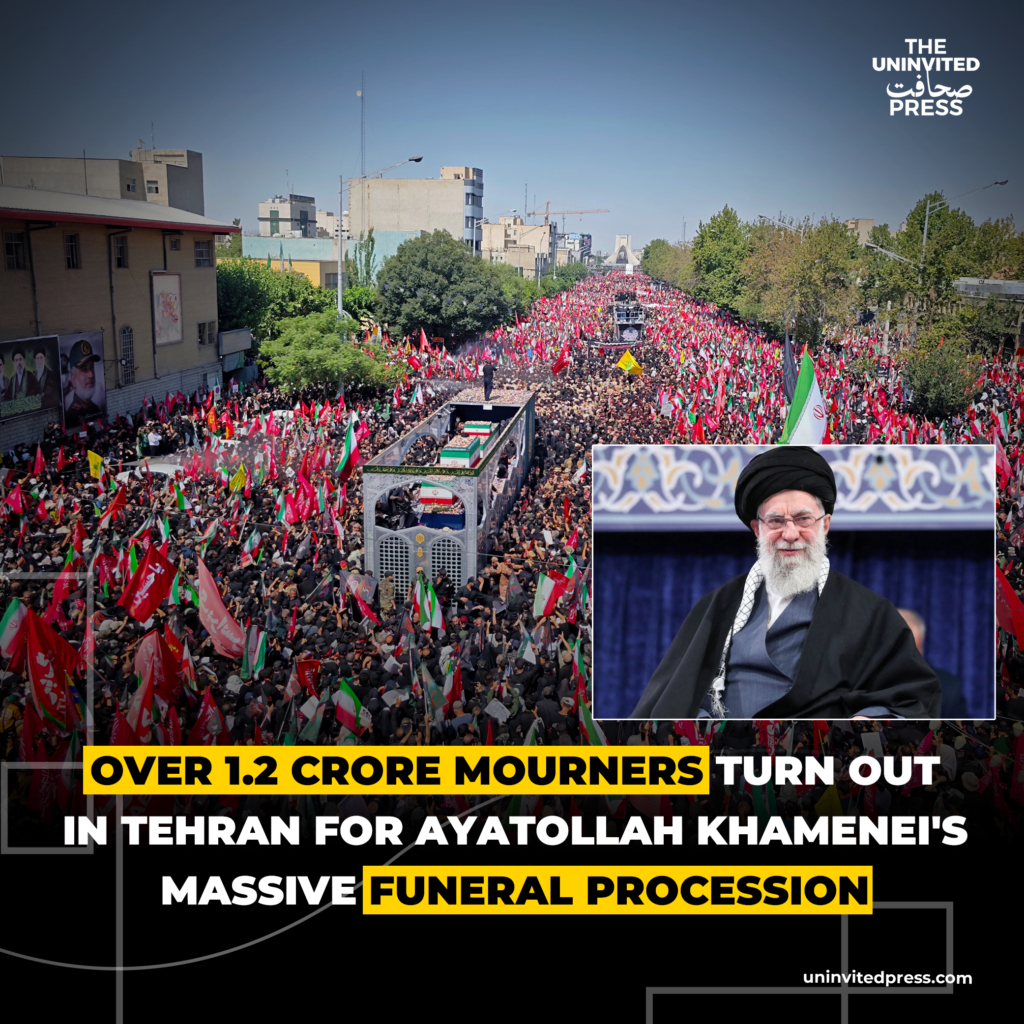
Funeral processions draw millions amid calls for revenge against the US and Israel, four months after his assassination in joint strikes.
Hundreds of thousands, if not millions, of mourners have filled the streets of Tehran for the funeral procession of Iran’s late Supreme Leader Ayatollah Ali Khamenei, who was killed in a US-Israeli airstrike in late February.
The multi-day state funeral, one of the largest public gatherings in Iran’s modern history, has seen black-clad crowds waving flags, chanting slogans, and carrying portraits of the cleric who shaped the Islamic Republic for nearly four decades. State media and independent estimates suggest vast participation, with some claims circulating of over 1.2 crore (12 million) mourners across ceremonies.
Khamenei's Death and the Shadow of War:
Khamenei, 86, was assassinated on February 28, 2026, during the opening stage of the brief but intense US-Israeli military campaign against Iran. Israeli strikes targeted his compound in Tehran, leading to his death alongside other senior figures.
The assault, part of broader efforts to degrade Iran’s nuclear programme and military capabilities, triggered a short war that has since de-escalated into a fragile diplomatic phase. US President Donald Trump and Israeli officials claimed success, while Iran vowed retaliation.
Khamenei’s body has been lying in state, with processions planned across multiple cities, including Qom and his hometown of Mashhad, where he will be buried. Foreign dignitaries from over 100 countries are attending, underscoring Iran’s enduring alliances despite international isolation.
Anti-US and Anti-Israel Sentiments Dominate:
At the Tehran procession, mourners openly displayed anger toward the United States and Israel. Chants of “Death to America” echoed through the crowds, alongside calls for vengeance. Placards targeting Trump and other figures have been prominent, with some banners offering rewards for attacks on US officials.
The funeral has become a platform not only for grief but also for projecting regime resilience. Analysts note that while Khamenei’s death was intended to weaken Iran’s hardline leadership, the massive turnout may instead bolster national unity under his successor, his son Ayatollah Mojtaba Khamenei.
Iran’s new leadership faces immediate challenges: managing succession, navigating stalled nuclear talks with the West, and addressing domestic economic woes exacerbated by sanctions and conflict.
The End of a Remarkable Era:
Khamenei succeeded Ayatollah Ruhollah Khomeini in 1989 and became one of the most influential figures in the Middle East. He oversaw Iran’s nuclear ambitions, support for regional proxies, and a firm stance against Western influence, while suppressing internal dissent.
His death marks the end of an era for the Islamic Republic. As ceremonies continue, questions linger about the future trajectory of Iranian politics-whether hardliners will consolidate power or if the trauma of war and loss will open space for reform.
The scale of the mourning reflects deep divisions in Iranian society: fervent support among the base juxtaposed with quiet criticism from those weary of confrontation and isolation. For now, the streets of Tehran belong to those bidding farewell to a leader whose legacy continues to define the nation.