

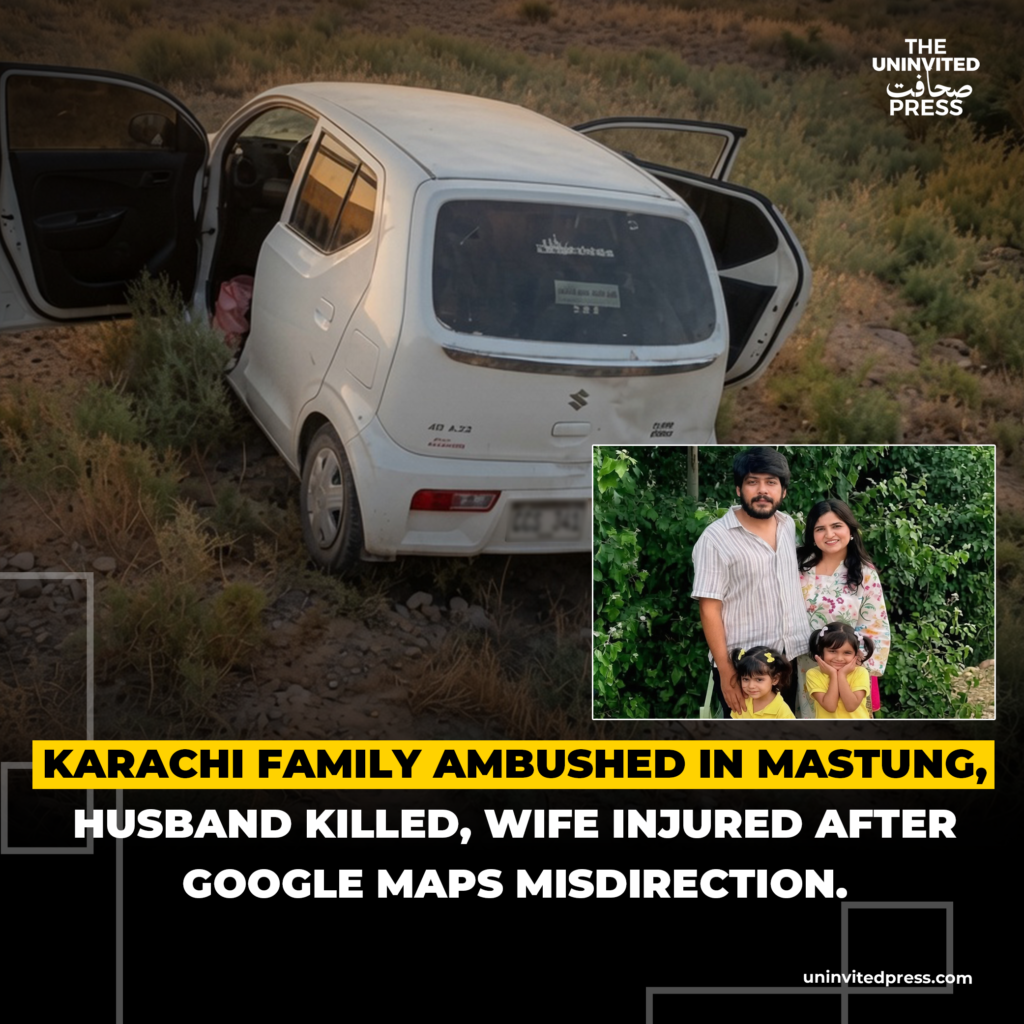
Tragic incident highlights dangers of remote Balochistan routes and reliance on navigation apps amid ongoing security concerns.
A family from Karachi was ambushed in Mastung district of Balochistan province, leaving the husband dead and his wife injured in what authorities are investigating as a targeted attack, after their vehicle was allegedly led astray by Google Maps into a dangerous area.
The incident has sent shockwaves through Pakistan, underscoring the persistent security challenges in parts of Balochistan and raising questions about the use of digital navigation tools in regions with complex terrain and security risks. A family photograph shows the victims-a couple with their two young daughters-smiling together before the tragedy struck.
According to preliminary reports, the family was travelling from Karachi when Google Maps directed them onto an alternate route that diverted them into a vulnerable stretch near Mastung. Armed assailants ambushed their white Suzuki Alto car, which was later found abandoned with doors open in a remote, arid landscape. The husband was killed on the spot, while the wife sustained injuries and the children were reportedly unharmed physically but traumatised.
Security lapse or navigation failure?
Mastung, located in central Balochistan, has long been affected by militancy, tribal disputes, and occasional banditry. Baloch separatist groups and other armed elements have carried out attacks on civilians and security forces in the province for years.
Local police and Levies forces reached the scene after receiving reports of the ambush. The white hatchback was photographed with its doors flung open, belongings scattered, in a desolate area dotted with sparse vegetation-a stark image of the sudden violence that unfolded.
Survivors and family members have questioned how a routine trip could turn deadly due to misleading navigation. Google Maps and similar apps often suggest shorter routes through less-policed areas to avoid main highways, but critics argue these tools do not adequately account for real-time security advisories in conflict-prone regions like Balochistan.
Mastung Ambush Renews Security Concerns:
This tragedy is not the first time digital mapping services have been blamed for leading motorists into harm’s way in Pakistan or elsewhere. In remote and insurgent-affected areas, main highways like the National Highway (N-5) or the Coastal Highway are generally considered safer, yet many drivers rely heavily on apps for convenience.
Balochistan’s government and Pakistan’s interior ministry have faced renewed calls to improve security infrastructure, install better signage, and perhaps integrate official safety warnings into popular mapping platforms. Relatives of the victims have appealed for justice and a thorough investigation to apprehend those responsible.
The surviving wife is receiving medical treatment, while the two young girls are now under the care of extended family. The incident has sparked widespread grief on social media, with many Pakistanis sharing stories of cautious travel through Balochistan.
As investigations continue, this case serves as a painful reminder of the human cost of insecurity in Pakistan’s largest province-and the everyday risks faced by ordinary families navigating an increasingly digital world in a country still grappling with violence and underdevelopment.