

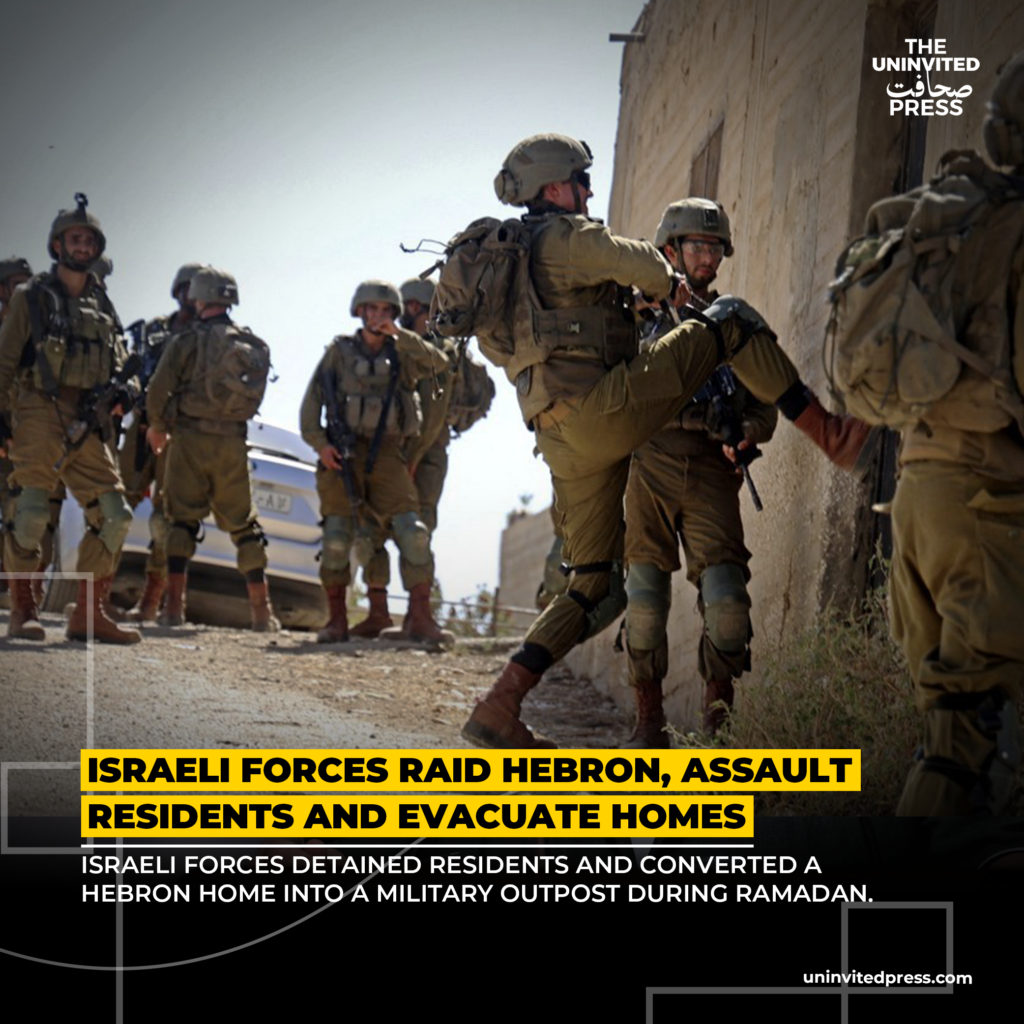
Israeli forces raided Hebron’s Jabal Jales on Ramadan’s first day, detaining dozens and seizing a home amid assault claims, as West Bank tensions rise.
Ramadan Raid Sparks Hebron Tensions: Military Seizes Homes, Palestinians Detained:
In a tense start to the holy month of Ramadan, Israeli forces launched a major raid in Hebron’s Jabal Jales neighborhood on February 18, 2026, detaining dozens of Palestinians and converting a residential building into a military outpost, according to multiple reports. Local Palestinian sources allege that soldiers physically assaulted residents, including women, and prevented them from breaking their fast at sunset-a key ritual during Ramadan when Muslims abstain from food and drink from dawn until dusk. The operation, described by the Israeli military as a response to gunfire reports, underscores the volatile security situation in the occupied West Bank, where such incursions have become increasingly frequent.
This incident comes amid broader regional unrest, raising fears of further escalation during a period traditionally marked by reflection and community. Human rights observers warn that disruptions to religious practices could inflame already high tensions between Israeli forces and Palestinian communities.
Hebron Raid: Detentions and Settler Seizures Heighten Tensions:
On February 18, at sunset during Ramadan, Israeli forces raided Hebron’s Jabal Jales neighborhood, imposing a curfew and blocking roads. According to WAFA, soldiers entered homes, conducted searches, and detained 20-37 residents, including women. Videos verified by Middle East Eye show blindfolded and handcuffed Palestinians, some reportedly beaten and denied iftar. One home was seized as a military outpost, forcing occupants to evacuate.
By February 19, IMEMC reported that Israeli settlers, under military protection, occupied two additional buildings, raising flags and symbols. Nearby Beit Ula saw one Palestinian injured by live fire. Overall, Palestinian advocacy groups estimate 37 detentions across the West Bank during the operation.
Troops blocked several roads and conducted widespread interrogations on-site. No weapons seizures or arrests of armed individuals were detailed in initial statements, and the focus appeared to be on gathering intelligence.
The area remains under heightened security, with curfews partially lifted but military patrols ongoing. No casualties were reported from the Jabal Jales raid itself, though the broader West Bank saw separate incidents, including a 19-year-old Palestinian succumbing to wounds from settler gunfire elsewhere.
Flashpoint Intensified by Recent Violence and Settlements:
Hebron, one of the largest cities in the occupied West Bank with a population of over 200,000 Palestinians, has long been a flashpoint in the Israeli-Palestinian conflict. The city is divided into zones under the 1997 Hebron Protocol: H1 (80% of the city) under Palestinian Authority control, and H2 (20%) under Israeli military administration, home to about 800 Jewish settlers protected by thousands of soldiers.
Since the October 7, 2023, Hamas attack on Israel and the ensuing war in Gaza, violence in the West Bank has surged. United Nations data shows over 600 Palestinians killed by Israeli forces or settlers in the West Bank since then, alongside hundreds of settler attacks on Palestinian communities. Israeli operations have intensified, with nearly 10,000 Palestinians detained, often in administrative detention without charge.
Ramadan 2026, running from February 18 to approximately March 19, adds a layer of sensitivity. Past years have seen clashes during the holy month, particularly around religious sites like Al-Aqsa Mosque in Jerusalem. The Jabal Jales area, a residential hilltop neighborhood, has faced repeated incursions, including home demolitions and land seizures justified by Israel as security measures or due to lack of building permits-permits rarely granted to Palestinians.
This raid fits a pattern: Israeli authorities cite security threats like gunfire or stone-throwing to justify operations, while Palestinians view them as collective punishment and efforts to expand settler presence. Hebron’s strategic location near major settlements like Kiryat Arba amplifies its significance, with critics arguing such actions aim to displace Palestinians and “Judaize” the area.