

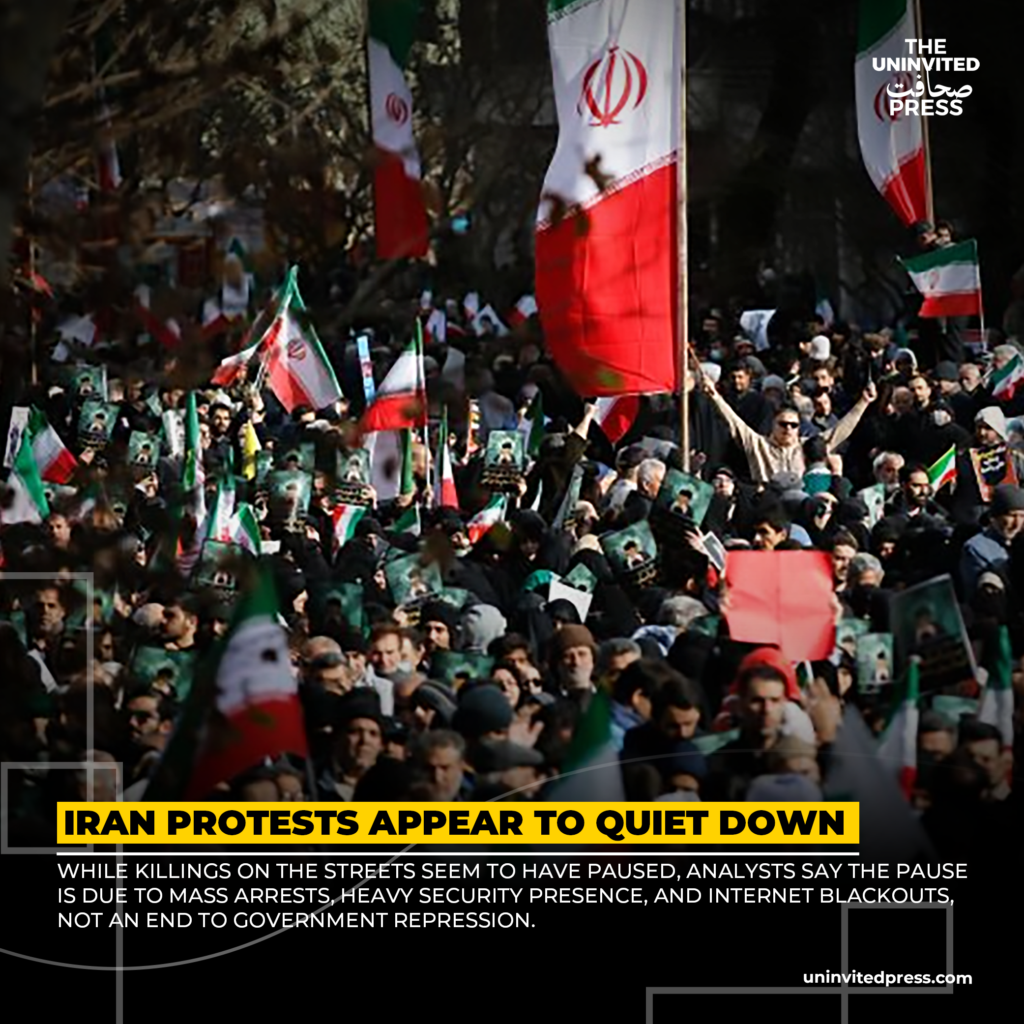
Analysts Say Pause Signals Regime’s Grip Tightening, Not Reform, as Death Toll Tops 2,600 Amid Fears of Executions. Iran’s protests quiet amid deadly crackdown and internet blackout Jan 2026.
Blood on Hold, Not Ended: Iran's Brutal Pause After 2,615 Confirmed Deaths:
As of January 16, 2026, the roaring protests that gripped Iran since late December 2025 have ebbed into an uneasy quiet, with killings on the streets reportedly paused after a brutal weeklong escalation. But experts warn this lull stems from mass arrests, overwhelming security deployments, and a nationwide internet blackout-not any concession from the theocratic regime. With at least 2,615 confirmed deaths and over 18,000 detentions, the suppression has drawn global condemnation, including threats from U.S. President Donald Trump, raising stakes in a nation teetering on economic collapse.
This apparent de-escalation masks a deepening crisis, where digital isolation hides ongoing abuses and stifles dissent, potentially paving the way for swift trials and executions. As Iranians grapple with fear and blackout-induced isolation, the world watches for signs of renewed unrest or international intervention in one of the Middle East’s most volatile flashpoints.
From Economic Spark to Suppressed Silence:
The unrest ignited on December 28, 2025, amid a catastrophic economic downturn: the Iranian rial plummeted to record lows, inflation soared above 40%, and food prices jumped 60-70%. Initial demonstrations in provinces like Sistan and Baluchestan quickly spread nationwide, evolving into calls for regime overthrow and chants of “Death to the Dictator.”
By early January 2026, protests engulfed over 200 cities, with millions taking to streets in Tehran, Esfahan, and Tabriz. Security forces responded with lethal force, firing indiscriminately-including machine guns-on unarmed crowds. Eyewitnesses reported bodies piling in morgues and hospitals overwhelmed, with some accounts of 700-1,000 dead in one Tehran facility alone.
The turning point came January 8: Authorities imposed a near-total internet and communications blackout, severing mobile data, landlines in some areas, and blocking satellite access by seizing Starlink dishes. This “digital darkness” coincided with intensified crackdowns, including mass arrests and reported assaults on hospitals to intimidate the injured. Protest activity dropped sharply-from 156 events on January 8 to just seven by January 13.
By January 15, state media touted “restored calm,” with killings reportedly halted. Yet, sporadic demonstrations continued in urban centers, and regime forces maintained heavy presence.
A Pattern of Repression Amid Economic Ruin:
Iran’s 2025-2026 protests echo prior waves: the 2022 “Woman, Life, Freedom” movement after Mahsa Amini’s death (500+ killed), and 2019 fuel price hikes (1,500 deaths).This round, triggered by currency collapse amid U.S. sanctions and regime spending on proxies like Hezbollah, has been the deadliest yet, surpassing 2019 tolls.
Supreme Leader Ali Khamenei, facing legitimacy crisis, ordered no leniency, labeling protesters “saboteurs.” The blackout-longest since 2019-aims to conceal abuses, per Amnesty, allowing “unprecedented” killings.
With youth under 30 comprising many victims, this risks radicalizing a generation. Economically, protests exacerbate shortages; geopolitically, they invite foreign pressure, especially from Trump, who warned against killings. Elon Musk’s Starlink offer provides a bypass, but regime raids target it.