

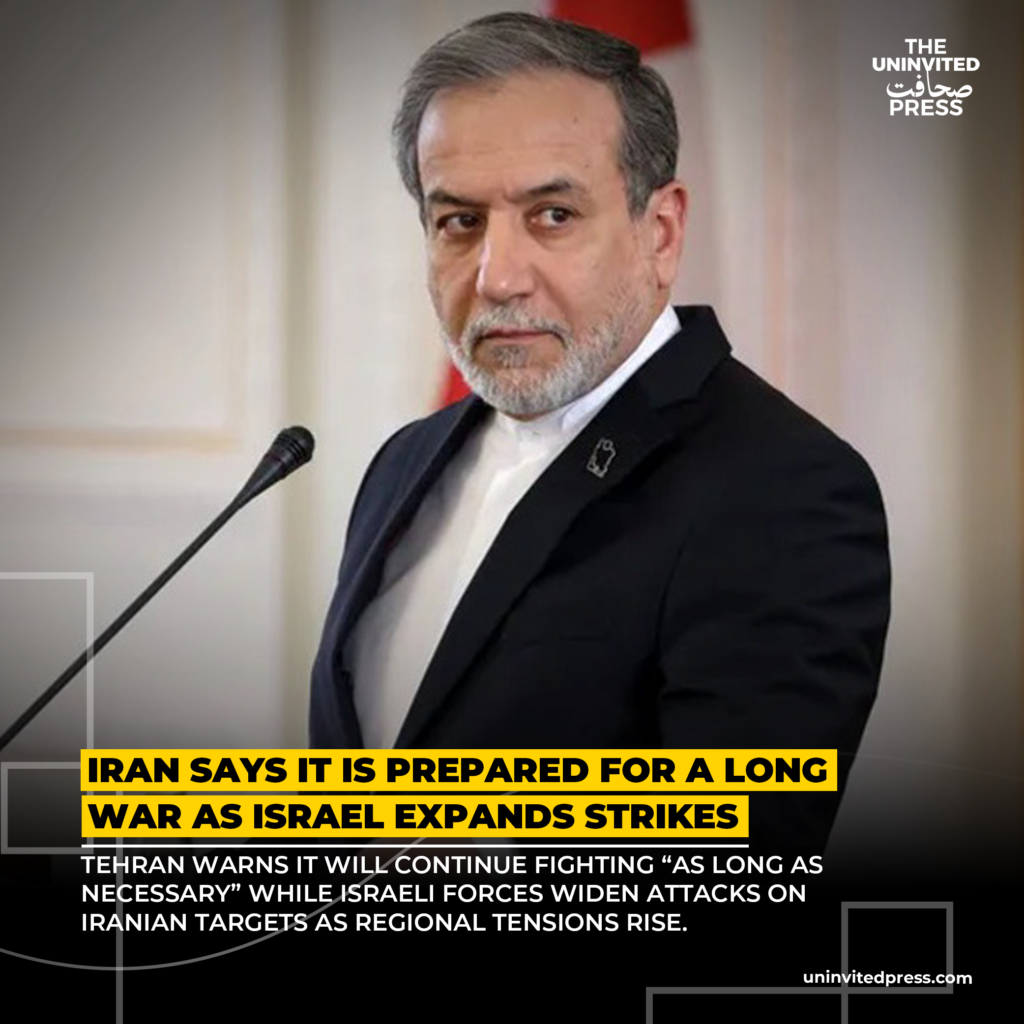
Iran vows to fight “as long as it takes” against U.S.-Israeli strikes in escalating 2026 war, as oil prices surge and regional tensions boil over in Tehran and beyond.
Iran Vows Long War as Strikes Expand:
In a stark escalation of the two-week-old conflict, Iran’s Foreign Minister Abbas Araghchi declared his country is ready for a prolonged war, rejecting U.S. claims of ceasefire talks as Israeli forces announced plans to expand strikes on Iranian infrastructure. The warning comes as the war, sparked by joint U.S.-Israeli airstrikes that killed Iran’s Supreme Leader, shows no signs of abating, with missiles flying across the Middle East and global energy markets in turmoil.
This development underscores the deepening entrenchment of both sides in a conflict that has already displaced hundreds of thousands, disrupted vital oil routes, and drawn in regional powers. As strikes intensify, the risk of a broader regional war looms larger, threatening stability from the Gulf to the Levant.
Iran Declares Endless Defense, Israel Targets Thousands More:
The war entered its third week on March 15, 2026, with no end in sight. Iranian Foreign Minister Abbas Araghchi told CBS News, “We never asked for a ceasefire… We are ready to defend ourselves as long as it takes.”
Hours earlier, Israeli military spokesperson Brig. Gen. Effie Defrin announced Israel has “thousands” of remaining targets in Iran, expanding strikes to critical infrastructure.
The conflict began on February 28, 2026, with coordinated U.S. and Israeli airstrikes on Iranian nuclear sites, missile facilities, and top officials, including Supreme Leader Ali Khamenei, killed in Tehran.
Iran retaliated with Operation True Promise, firing drones and ballistic missiles at Israel and U.S. bases, later targeting Bahrain, Jordan, Kuwait, Qatar, Saudi Arabia, Turkey, and the UAE.
By March 16, U.S. Defense Secretary Pete Hegseth reported over 15,000 Iranian targets destroyed, crippling missile production. Civilian casualties include at least 15 in Israel, with cluster bomb damage in Tel Aviv.
Iran’s strikes have hit fuel depots, air defenses, and Revolutionary Guard bases, drawing accusations of “ecocide” due to environmental damage. Tehran has shifted to “continuous strikes,” threatening U.S., Israeli, and allied assets, disrupting the Strait of Hormuz and pushing oil above $100 per barrel, prompting international evacuations in Dubai.
Roots of the Conflict and Escalation:
This war is rooted in decades of U.S.-Iran tensions, exacerbated by Iran’s nuclear program and support for proxy groups like Hezbollah and Houthis. The 2018 U.S. withdrawal from the Iran nuclear deal under Trump set the stage for renewed confrontations. Israel’s long-standing view of Iran as an existential threat, coupled with U.S. alignment under the second Trump administration, led to the February strikes.
The assassination of Khamenei marked a historic escalation-he first U.S. president to directly attack another country’s nuclear program. Iran’s response has drawn in the “Axis of Resistance,” with strikes expanding to Lebanon, where Israel is discussing ground operations up to the Litani River. The conflict has displaced over 230,000 people, with U.N. reports of humanitarian crises in Lebanon and Iran.