

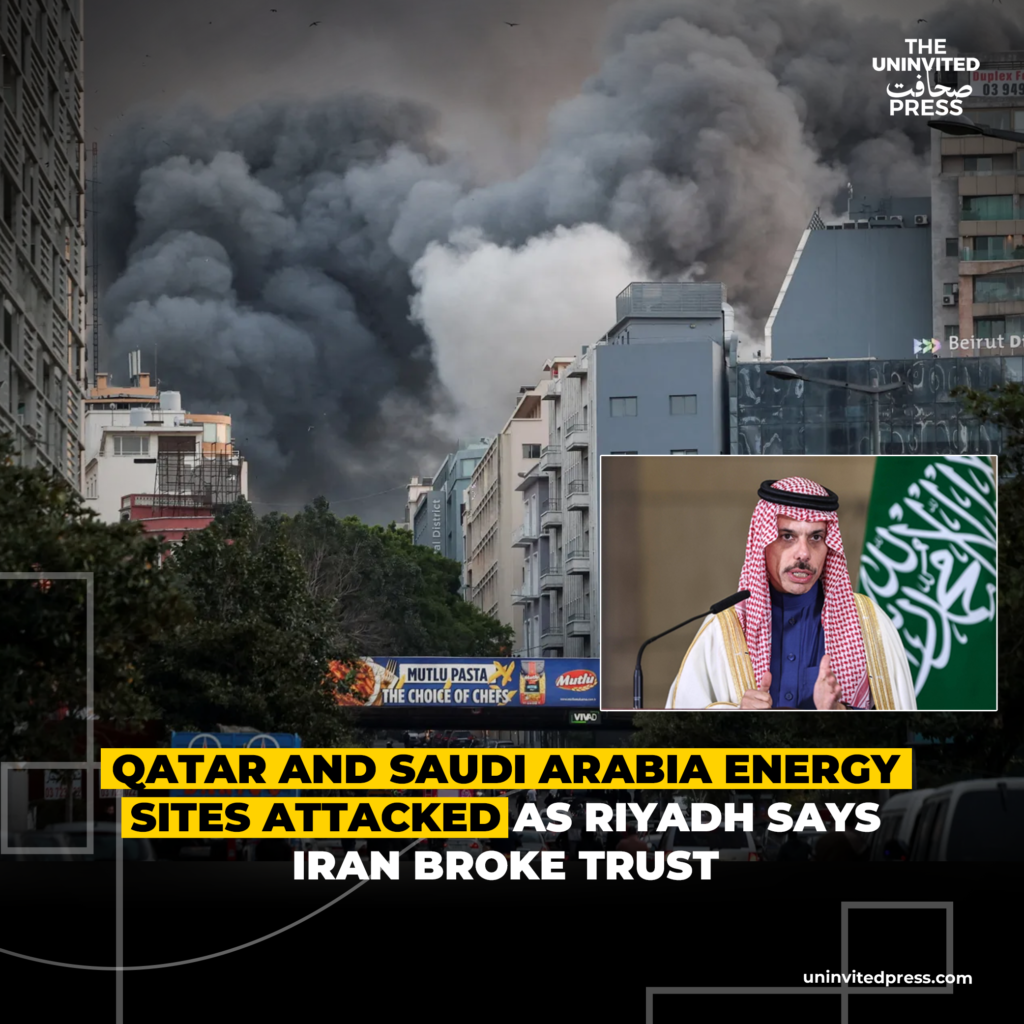
Iranian missiles have struck Qatar’s Ras Laffan LNG hub and Saudi energy sites in retaliation for an Israeli attack on South Pars. Riyadh says Iran has “shattered” all trust, sending oil prices soaring and raising fears of wider conflict.
Iran Strikes Gulf Energy Giants in Retaliation-Ras Laffan Hit Hard, Saudi Defences Activated:
Iran has launched a direct assault on two of the Gulf’s most critical energy powerhouses, dramatically widening a conflict that now threatens the world’s oil and gas supply. On March 18, 2026, Iranian missiles slammed into Qatar’s Ras Laffan Industrial City-home to the planet’s largest liquefied natural gas facility-causing “extensive damage” and fires. Saudi Arabia reported intercepting ballistic missiles aimed at Riyadh and drones targeting gas infrastructure in its Eastern Province, with falling debris injuring at least four people.
The attacks come hours after an Israeli strike on Iran’s South Pars gas field, the world’s largest natural gas reserve shared with Qatar. Riyadh’s furious reaction left no doubt: Iran has destroyed what little trust remained between the nations.
Devastating Blow to Global Energy:
The strikes mark a dangerous new chapter. QatarEnergy, the state-owned giant, confirmed “extensive damage” and sizable fires at its flagship Ras Laffan complex. Production at the world’s biggest LNG exporter has already been suspended amid the broader conflict, and this latest hit threatens even longer outages.
Saudi Arabia’s air defences destroyed four ballistic missiles over Riyadh-triggering emergency phone alerts to residents for the first time-and downed drones before they reached eastern gas plants. Debris from the interceptions wounded four people, according to Saudi officials.
This is not abstract geopolitics. Ras Laffan alone supplies a huge share of the planet’s LNG. Any sustained disruption risks blackouts in Asia and Europe, higher heating bills, and factory shutdowns. Brent crude prices jumped sharply on the news, underscoring how quickly Gulf energy facilities can jolt the global economy.
From 2023 Rapprochement to Direct Gulf Energy Strikes:
The attacks shatter years of fragile diplomacy. Saudi Arabia and Iran restored ties in a China-brokered deal in 2023, raising hopes of reduced tension after decades of proxy wars. That rapprochement now lies in ruins. The current escalation sits inside a wider U.S.-Israeli military campaign against Iran that has already seen strikes on Iranian territory and Iranian responses across the region.
Saudi Arabia has faced Iranian-linked attacks before-most notably the 2019 Aramco drone strikes that briefly halved its oil output. Those incidents prompted international condemnation and heightened security across Gulf energy sites. Today’s events echo that vulnerability but on a broader scale, with Qatar-traditionally more neutral-now directly hit.
Qatar shares the massive North Field/South Pars reservoir with Iran. The two countries have cooperated on gas extraction for decades despite political differences. That cooperation has been shattered overnight.