

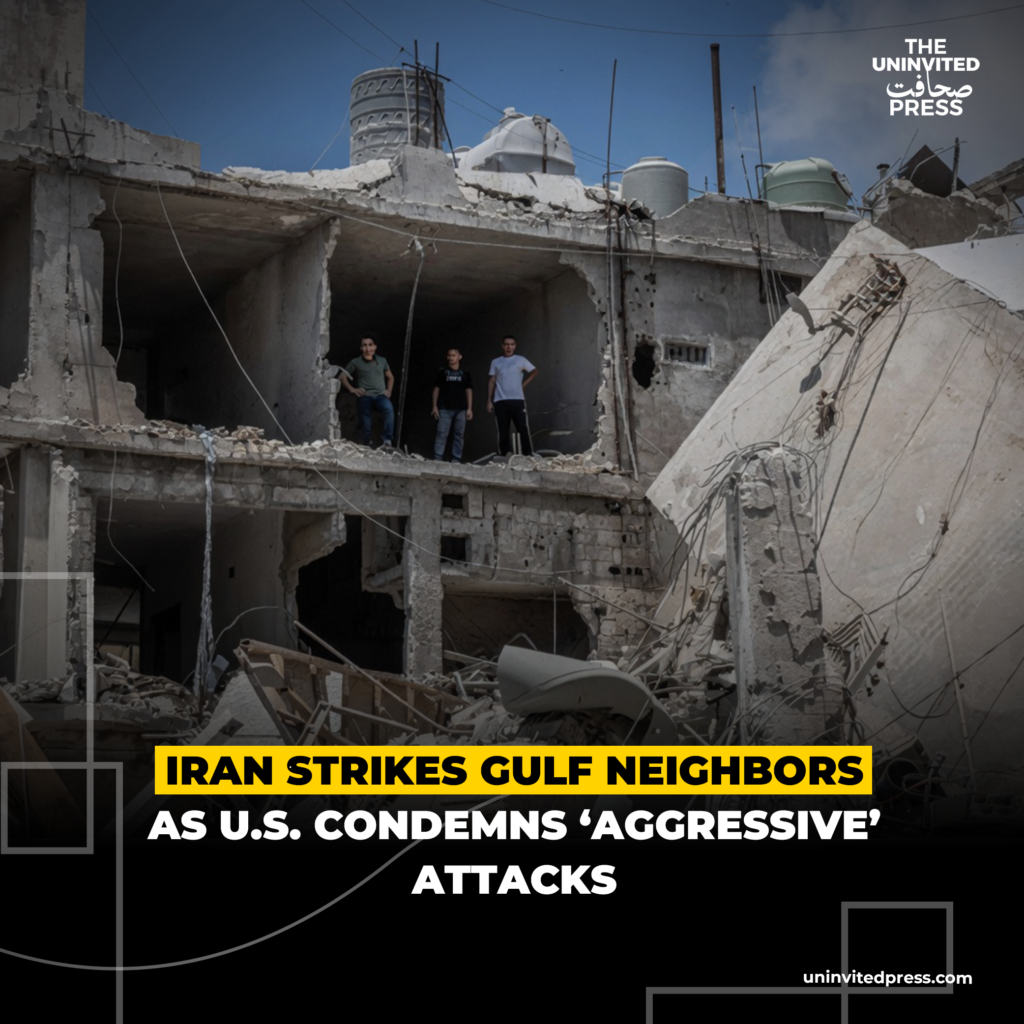
Missile and drone assaults reported on targets in UAE and Saudi Arabia amid escalating regional conflict.
Iran has launched a series of strikes against targets in Gulf neighbouring countries, marking a dangerous escalation in the already volatile Middle East crisis, according to officials and local reports.
The attacks, which occurred late on Tuesday, targeted military and infrastructure sites in the United Arab Emirates and Saudi Arabia, Iranian state media claimed, describing them as retaliation for alleged support of Israeli operations against Iranian interests.
The United States strongly condemned the Iranian actions, with the State Department calling them “aggressive and reckless attacks” that threaten regional stability and international shipping lanes. White House officials said they are coordinating with Gulf partners and considering further measures to deter Iranian aggression.
New Phase of Gulf Tensions Unfolds:
Witnesses in Abu Dhabi and Riyadh reported explosions and air defence systems activating in the early hours of Wednesday. While casualty figures remain unconfirmed, preliminary reports suggest limited damage to energy infrastructure and military facilities.
Iran’s Islamic Revolutionary Guard Corps (IRGC) issued a statement claiming the strikes were “precise and limited” responses to “hostile activities” by Gulf states aligned with the US and Israel. Tehran has repeatedly warned that any involvement by Gulf countries in actions against it would face consequences.
This marks the first direct Iranian strikes on Gulf soil in the current wave of conflict, raising fears of a wider regional war that could engulf major oil-producing nations.
Iran Strikes Spark International Concern:
US Secretary of State Marco Rubio described the Iranian moves as “unacceptable” and reaffirmed Washington’s commitment to the defence of its Gulf allies. “We stand shoulder to shoulder with our partners against Iranian aggression,” he said in a statement.
The United Nations Security Council is expected to convene an emergency meeting later on Wednesday at the request of the UAE and Saudi Arabia. Several European nations have also expressed concern over the potential disruption to global energy supplies.
The strikes come as the broader Middle East remains tense following months of conflict involving Israel, Iran, and various proxy groups. Shipping through the Strait of Hormuz had only recently shown signs of tentative recovery, and analysts warn that further escalation could send oil prices soaring and severely impact the global economy.
Gulf Cooperation Council (GCC) countries have condemned the Iranian attacks as a violation of sovereignty. Saudi Arabia and the UAE have vowed to defend themselves while calling for de-escalation through diplomatic channels. As of Wednesday afternoon, the situation remains fluid, with heightened alert levels across Gulf capitals and increased military activity reported in the region.