

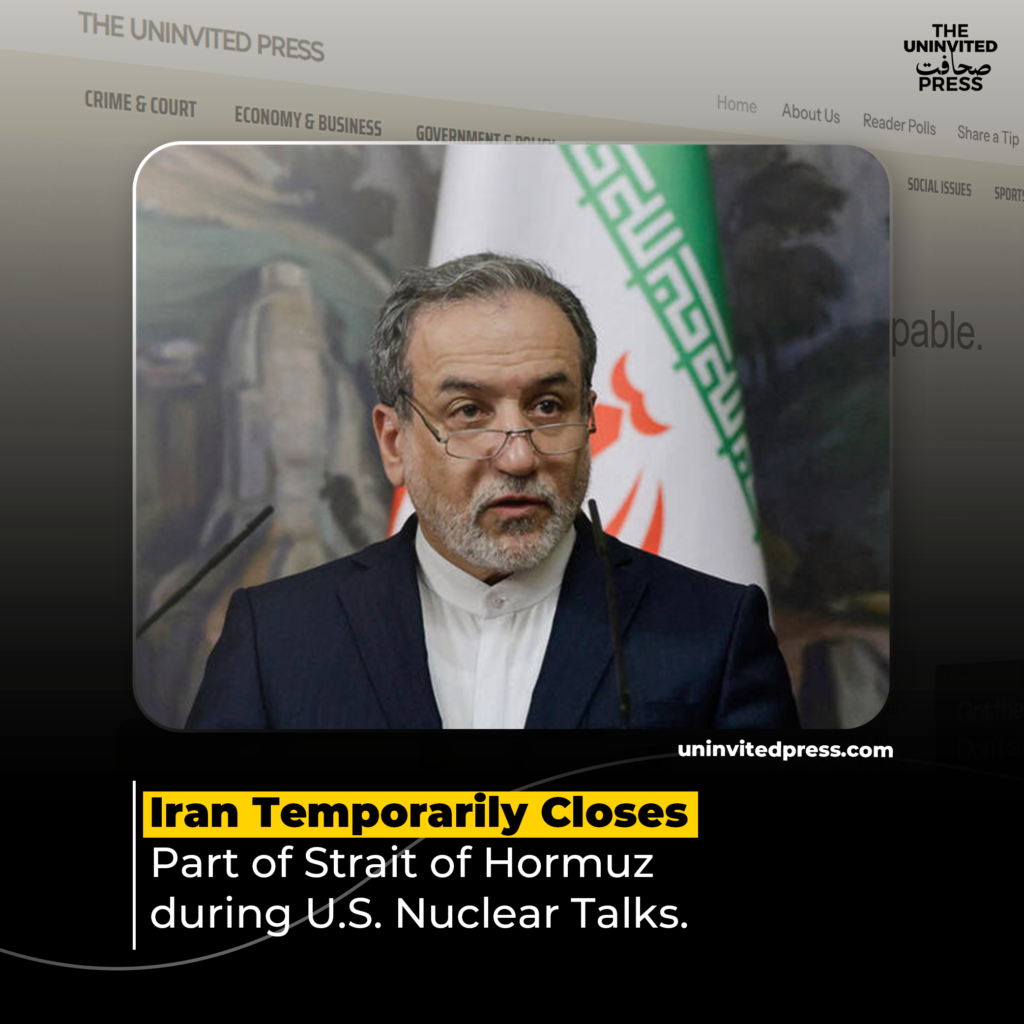
Iran temporarily closed the Strait of Hormuz during U.S. nuclear talks in Geneva, signaling tensions amid reported diplomatic progress. This move risks global oil disruptions and escalation in the Persian Gulf.
Iran Shows Force in Strait of Hormuz During High-Stakes Nuclear Talks:
Iran temporarily closed sections of the Strait of Hormuz, citing safety needs during live-fire military drills. This critical waterway, through which about 20% of the world’s oil flows, was partially shut for several hours as Iranian negotiators engaged in indirect talks with the U.S. in Geneva over Tehran’s nuclear program. The action underscores mounting tensions, even as both sides reported headway on “guiding principles” for a potential deal, but experts warn it could disrupt energy markets and provoke further confrontation.
Iran Balances Military Muscle with Geneva Diplomacy:
Iran’s decision to close parts of the Strait of Hormuz marked a rare and provocative step, the first such announced closure since the 1980s Iran-Iraq War. Media reported that the IRGC Navy conducted the “Smart Control of the Strait of Hormuz” exercise, involving fast-attack craft, missiles, and drones. IRGC Navy Commander Rear Admiral Alireza Tangsiri stated that new equipment, unused in prior conflicts like the 2025 Israel-Iran exchanges, was deployed. Shipping experts noted minimal disruptions, with delays rather than a full blockade, but the move sent oil prices fluctuating amid fears of broader interference.
The timing was no coincidence. As the drills unfolded, Iranian diplomats in Geneva wrapped up a second session of indirect negotiations with U.S. counterparts, mediated by Oman. Foreign Minister Araghchi described the discussions as “constructive,” announcing an agreement on broad “guiding principles” for resolving disputes over Iran’s nuclear activities. However, he acknowledged remaining gaps, with Iran insisting talks focus solely on nuclear issues and sanctions lifting.
On the same day, Supreme Leader Khamenei delivered a fiery speech rejecting U.S. demands to halt uranium enrichment and curb ballistic missiles, calling them Iran’s “right” and “essential.” He warned that Iran’s forces could “sink” U.S. warships and deliver a “slap” to the world’s strongest army.
Strait of Hormuz: Energy Artery Amid Rising Tensions:
The Strait of Hormuz, a 21-mile-wide chokepoint between Iran and Oman, is pivotal for global energy. It handles roughly 20 million barrels of oil daily-30% of seaborne crude and 20% of LNG trade-making any disruption a threat to economies worldwide.
Tensions trace back to the 2015 JCPOA nuclear deal, which the U.S. exited in 2018 under President Trump, reimposing sanctions. Iran responded by advancing its nuclear program, enriching uranium to near-weapons-grade levels. Recent escalations include Iran’s threats following U.S. military reinforcements after the 2025 Israel-Iran conflict, where Tehran launched missiles at Israeli targets. The current talks, initiated post-Trump’s 2024 reelection, aim to avert war, but Iran’s drills echo past threats to close the strait in retaliation for sanctions or attacks.