

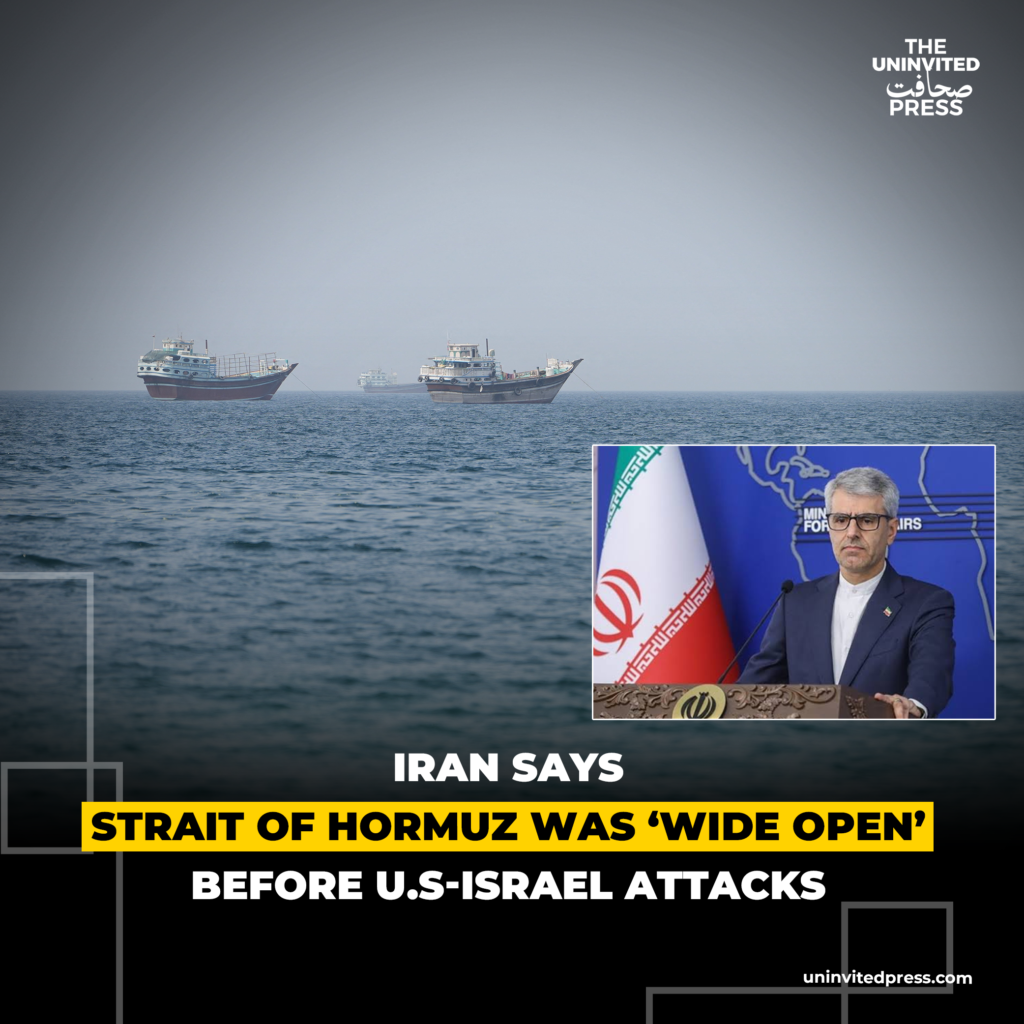
Tehran frames later restrictions on the vital waterway as lawful self-defence amid ongoing regional conflict and competing claims over navigation.
Iran has stated that the Strait of Hormuz was fully open to international shipping before US and Israeli military strikes began, presenting subsequent restrictions as a necessary response to what it describes as aggression against the country.
Iran Restricts Access for Hostile Vessels in Hormuz:
Iranian officials have emphasised that the strategic waterway-through which a significant share of global oil and gas supplies normally passes-operated without wartime limitations prior to the outbreak of hostilities in late February. Foreign Ministry spokesperson Esmaeil Baghaei has noted that Iran has long regarded itself as a guardian of the strait due to its dependence on the route for exports, and that measures taken after the attacks were consistent with rights under international law during a state of war.
“Strait of Hormuz was open before 28th February,” Baghaei said in one interview, explaining that Iran could not permit adversaries to use the passage to undermine its security once conflict had started. Officials have repeatedly argued that vessels linked to the United States, Israel or other parties involved in military operations against Iran were restricted, while insisting the waterway itself was never permanently sealed to all traffic.
The statements come against the backdrop of sharply reduced commercial shipping through the strait since the conflict escalated. Iranian authorities have at times described the waterway as remaining open under specific conditions or closed only to “hostile” vessels, while more recent remarks from senior security figures have been starker. On Sunday, Supreme National Security Council Secretary Mohsen Rezaei dismissed US claims that the strait was open as a “big lie,” asserting that it was “completely closed and under the control of the armed forces.” He said daily traffic had fallen from more than 100 vessels carrying over 100 million tonnes of cargo to just seven or eight ships carrying essential goods for Iran.
Iran Links Strait of Hormuz Access to End of US Hostilities:
Rezaei added that Iran planned to declare a new restricted zone extending beyond the strait in the coming days and linked any future commitment to keeping the passage open to an end to US threats or attacks. Tehran has also discussed arrangements with Oman for managed corridors through the waterway.
The Strait of Hormuz remains one of the world’s most critical energy chokepoints. Disruptions since the start of the conflict have affected global markets and prompted competing narratives from Washington, Tehran and regional actors about the status of navigation, safety for commercial vessels and responsibility for the restrictions. Iran continues to portray its actions as defensive and temporary, while insisting that full restoration of unimpeded traffic depends on the cessation of hostilities directed against it.
As diplomatic and military developments continue, the status of the strait remains a central point of contention with far-reaching implications for energy security and regional stability.