

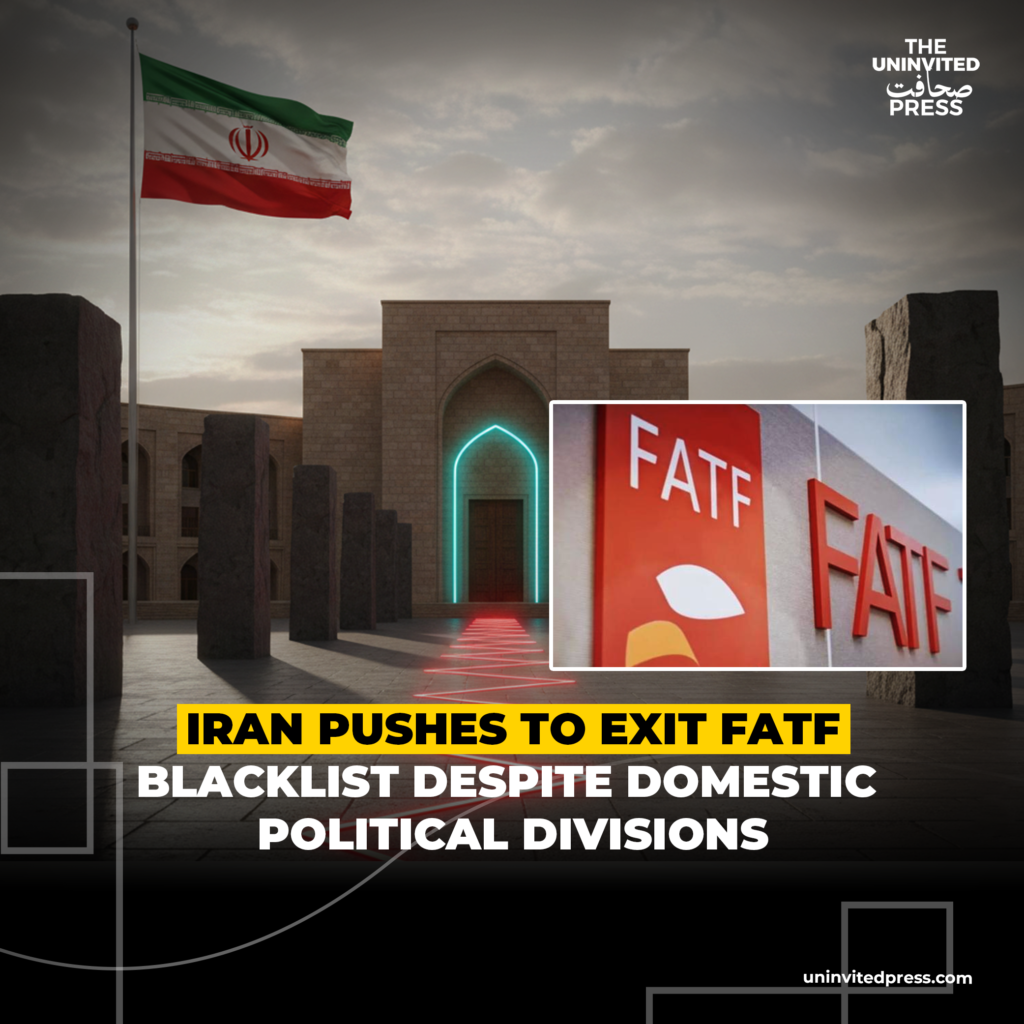
Tehran vows to press ahead with reforms to escape global financial isolation, even as hardliners at home warn that full compliance could undermine support for regional allies and national sovereignty.
Iran Defies FATF Blacklist Amid Domestic Political Struggles:
Iran has signalled it will not back down in its long-running battle to escape the Financial Action Task Force blacklist, issuing a defiant statement just days after the global watchdog renewed the designation and called for tougher countermeasures against the Islamic Republic.
The Financial Intelligence Unit within Iran’s Ministry of Economic Affairs declared on February 15 that the country would continue its efforts despite what it described as “20 years of obstruction” from domestic opponents. The move comes after the FATF’s plenary meeting in Mexico City from February 11 to 13 upheld Iran’s status on the high-risk list-a designation it shares with only North Korea and Myanmar.
The decision has thrown fresh light on the intense internal tug-of-war in Tehran over how far the country is willing to bend to international financial standards, even as its economy groans under the weight of isolation.
FATF Deadlock Reflects Iran’s Long Compliance Struggle:
The FATF first flagged serious deficiencies in Iran’s anti-money laundering and counter-terrorist financing framework in the late 2000s, coinciding with heightened international scrutiny of Tehran’s nuclear programme.
In 2016, under then-President Hassan Rouhani, Iran made a high-level political commitment to an action plan and began legislative reforms. Progress stalled after the United States withdrew from the 2015 nuclear deal in 2018 and reimposed “maximum pressure” sanctions. Hardliners in Tehran blocked further bills, arguing they would expose the country’s financial networks and limit support for allied groups across the Middle East.
The FATF suspended some countermeasures in 2016 but reinstated them fully in February 2020 after Iran missed key deadlines. Iran has remained on the blacklist ever since, with periodic updates showing little material progress until recently.
In 2025, a shift occurred. The Expediency Council approved accession to the Palermo Convention in May, and President Pezeshkian signed conditional accession to the Terrorist Financing Convention in October. Both included reservations designed to protect Iran’s constitutional priorities and its stated right to support “peoples under occupation.
”Iran provided an update to the FATF in January 2026, highlighting these steps. During more than 20 hours of negotiations at the Mexico City plenary, Iranian delegates secured recognition for some of their arguments. But the FATF ultimately ruled that the reservations were “overly broad” and that domestic compliance did not meet its standards. The action plan, which expired in 2018, remains largely unfulfilled.
FATF Blacklist Strains Iran’s Economy and Daily Life:
Staying on the blacklist carries real-world consequences. FATF members and other jurisdictions are urged to
- Refuse new branches or representative offices of Iranian financial institutions and virtual asset service providers.
- Prohibit their own institutions from opening offices in Iran.
- Limit or review business relationships and transactions, including those involving cryptocurrencies.
- Apply enhanced due diligence to all dealings with Iranian entities.
Even humanitarian transfers, remittances and diplomatic funds must be handled “on a risk basis.” The result has been a near-total freeze on normal banking channels. Iranian banks rely on costly shadow networks, oil is sold at discounts through dark fleets, and the rial has suffered repeated collapses.For ordinary Iranians, this translates into higher inflation, chronic shortages of imported goods and a black-market economy that thrives on circumvention.