

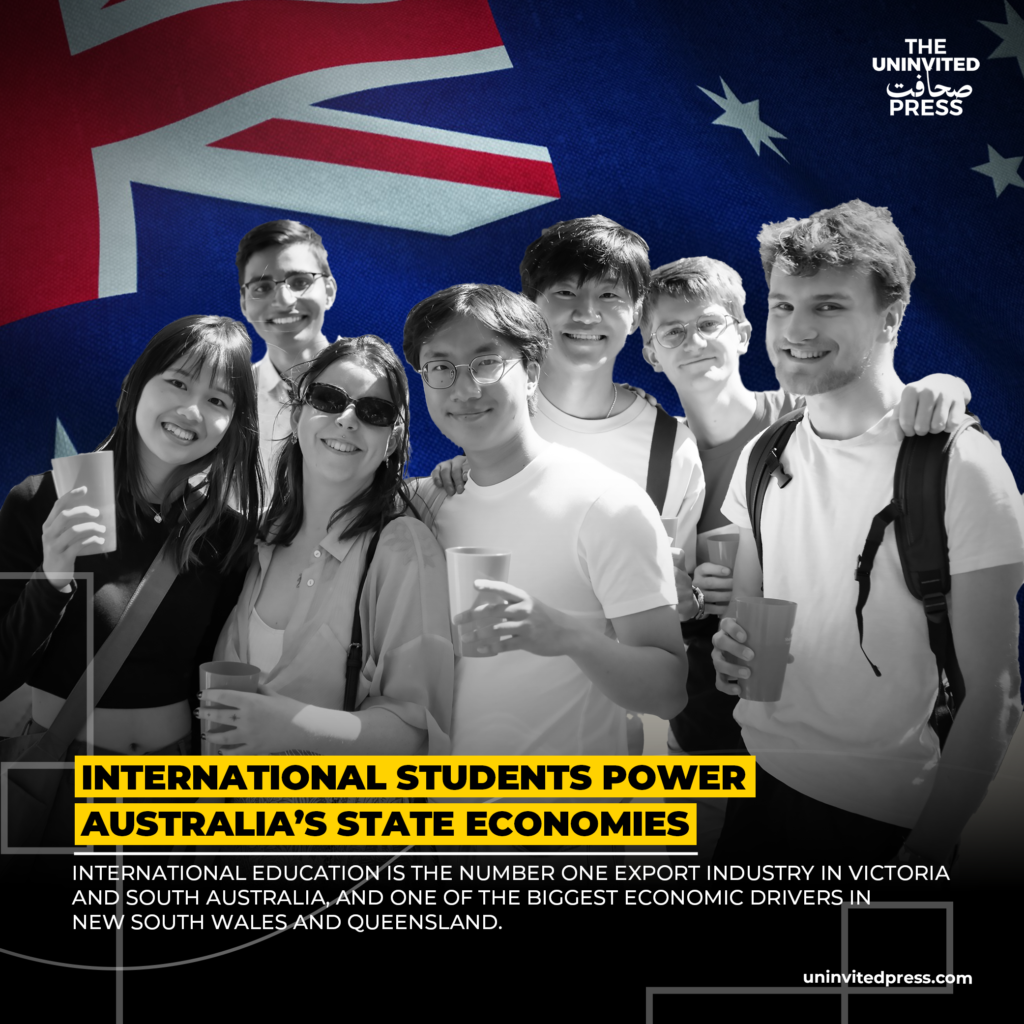
From Victoria to South Australia, international education reigns as the top export, injecting billions and sustaining jobs amid policy tightening.
Australia's Secret Economic Superpower-Now Dominating State Exports:
International students are quietly fueling Australia’s regional economies, emerging as the number one export industry in Victoria and South Australia, while ranking among the top drivers in New South Wales and Queensland. With the sector generating a record $51.5 billion nationally in 2024-fourth only to iron ore, coal, and natural gas-these young learners from across the globe pump money into housing, retail, hospitality, and education itself. Yet as visa caps and migration controls bite in 2025, states face a high-stakes question: can they protect this golden goose without choking growth?
$51.5 Billion Powerhouse How Overseas Students Became Victoria & South Australia's #1 Export Industry?
Australia’s international education sector roared back after pandemic lockdowns, reaching an all-time high of $51.5 billion in export value for calendar year 2024, according to Australian Bureau of Statistics (ABS) data processed through the Department of Education. This figure ranks education as the nation’s fourth-largest export overall, behind only iron ore, coal, and natural gas.
State breakdowns reveal stark reliance: Victoria claims international education as its largest services export, with around 330,000 enrolments in 2024 driving billions in economic activity. South Australia crossed a historic threshold, becoming the first state export sector to exceed $3 billion, solidifying its position as the top export. In New South Wales, the sector ranks second-largest, valued at approximately $19.3 billion in 2023/24 financial year estimates. Queensland follows as third-largest, contributing around $6.8 billion in the same period.
These contributions stem from student spending on tuition fees, accommodation, retail, hospitality, and transport-creating a multiplier effect that supports local jobs and businesses. The Reserve Bank of Australia (RBA) notes international students add more to demand than supply in the short term, boosting GDP while filling labor gaps in key sectors.
Captures the dramatic timeline and high-stakes tension:
International education has grown into one of Australia’s most resilient export industries since the 1990s, evolving from niche programs to a global powerhouse. Pre-COVID peaks saw values around $40 billion in 2019, before borders slammed shut and revenues halved. The 2022-2024 rebound-fueled by pent-up demand and labor shortages-pushed numbers to record levels, with over 800,000 students onshore by mid-2025.
The sector’s state-level dominance reflects Australia’s federal structure: Victoria and NSW host the bulk of prestigious universities, drawing high-fee-paying students from China, India, Nepal, and Vietnam. South Australia and Queensland leverage affordability and lifestyle to punch above their weight. Economically, it supports over 250,000 jobs nationally and enriches cultural diversity.
Significance is twofold: it drives regional prosperity beyond mining, while linking Australia to future global talent pipelines. Yet rapid post-pandemic growth strained housing and infrastructure, sparking public and political backlash.