

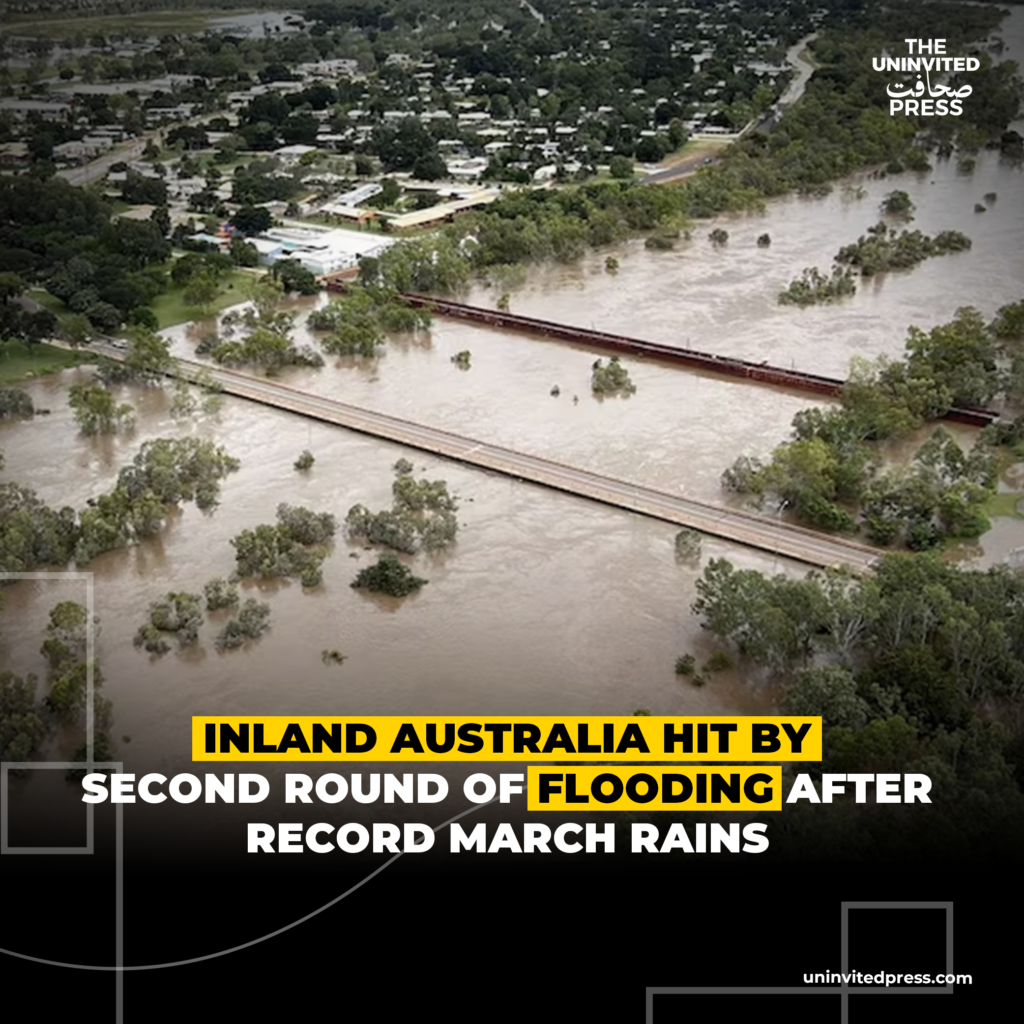
Inland Australia faces a second wave of floods in March 2026 after record rains saturate the outback, isolating towns and threatening farms.
Second Deluge Strikes Saturated Outback:
Just weeks after a once-in-a-generation downpour soaked Australia’s arid interior, a second wave of heavy rains is pounding inland regions, triggering widespread flooding and road closures. With soils already waterlogged from earlier record-breaking falls, this latest event is amplifying risks to remote towns, farms, and vital transport links. The Bureau of Meteorology warns of prolonged isolation for outback residents, highlighting the stark “weather whiplash” from recent extreme heat to relentless monsoon-driven rains.
Outback Braces for Second Flood Wave:
Australia’s outback is facing a second wave of flooding in March 2026 after record rainfall from a slow-moving tropical system drenched regions of South Australia, Victoria, New South Wales, Queensland, and the Northern Territory. Areas such as Marree and Yunta recorded rainfall that broke daily records, with some locations receiving more rain in a week than they did during all of 2025.
The first flooding event filled normally dry creeks, trapped vehicles, and led to the death of a motorcyclist near Eurelia. Emergency services responded to hundreds of calls, particularly around Mildura.
Now, a new tropical low near the NT-Kimberley border is bringing another 50-100 mm of rain, with isolated areas expecting up to 200 mm. Rivers including the Georgina River and Diamantina River are rising again, threatening more flooding.
Many remote communities remain isolated as damaged roads become impassable. In towns like Coober Pedy and Alice Springs, rainfall totals have already far exceeded normal March averages, raising concerns that this could become one of the wettest periods in decades.
Rare Weather Whiplash and Historic Lake Filling:
This flooding marks a dramatic shift from the extreme heatwaves that scorched inland Australia earlier in the summer, with temperatures hitting 50°C in some areas. The Bureau of Meteorology (BoM) attributes the “weather whiplash” to a humid airmass from Indonesian oceans, intensified by an upper trough intersecting with the tropical low. Such events are rare in the arid outback, where annual rainfall often hovers below 200mm, but climate patterns like a lingering monsoon have amplified them.
Historically, major inland floods, like those in 1974, filled Kati Thanda-Lake Eyre to depths of 6 meters. This year, the lake-Australia’s largest-is on track for its second consecutive filling, a first in recorded history, with depths possibly reaching 2.1-2.2 meters from local rains alone. The Lake Eyre Basin, spanning multiple states, saw its third-wettest February on record, saturating catchments and setting the stage for prolonged inundation.