

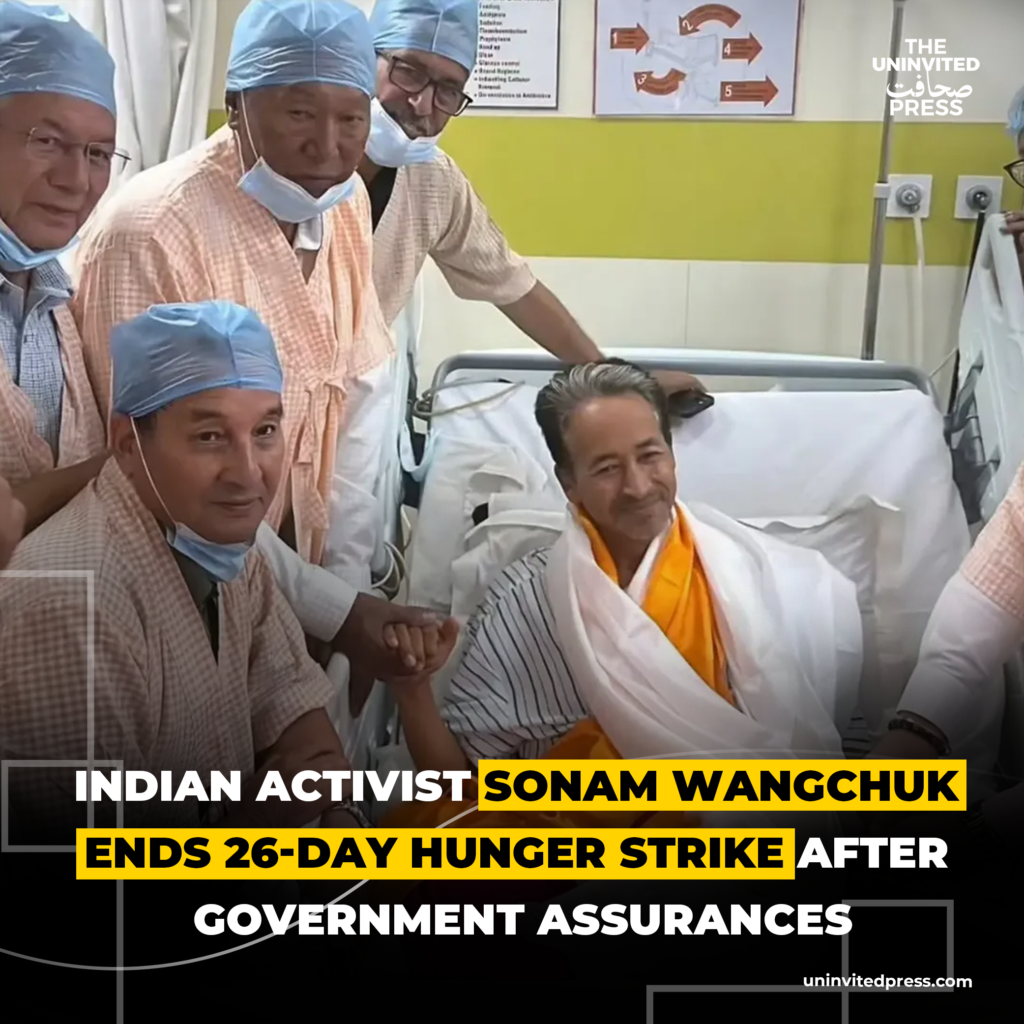
Education reformer breaks fast in hospital following pledges on exam accountability, protester protection and compensation for families.
Prominent Indian activist and educationist Sonam Wangchuk has ended his 26-day hunger strike after receiving written assurances from the central government on key demands related to examination system failures and the protection of peaceful protesters.
Wangchuk, widely known for his work in education reform and environmental advocacy in Ladakh, broke his fast early on July 24 at Medanta Hospital in Gurugram, near New Delhi. He did so in the presence of Union Ministers JP Nadda and Jitendra Singh following nearly two days of negotiations.
Sonam Wangchuk Ends 26-Day Fast:
In a video message, Wangchuk said the decision came “after a long negotiation on various conditions” and in order to avert potential violence. He listed three main assurances: that the issue of accountability in India’s failing public examination system would be discussed in Parliament during the monsoon session; that families of students who died by suicide following recent NEET paper leaks would receive adequate compensation; and that no legal cases would be registered against those who protested peacefully at Delhi’s Jantar Mantar or participated in a related march to Parliament.
The hunger strike began in late June amid a growing youth-led movement protesting repeated paper leaks in national entrance exams, particularly the National Eligibility cum Entrance Test (NEET) for medical colleges. The scandals have sparked widespread anger, with demonstrators accusing authorities of systemic failures that have ruined careers and, in some cases, driven students to suicide. Wangchuk’s participation helped draw national attention to the protests, which have been among the largest student mobilisations in recent years.
Police had earlier forcibly shifted the activist from the protest site to hospital as his health deteriorated. Images released after he ended the fast showed him seated on a hospital bed, surrounded by supporters and medical staff, wearing traditional attire and appearing weakened but smiling.
Focus Shifts to Government Promises:
Wangchuk, often called “Sonam sir,” has previously used hunger strikes to highlight issues facing Ladakh, including demands for greater autonomy and environmental protections. This latest protest, however, centred on national education concerns. He has urged continued vigilance, saying the struggle for accountability is not over.
Opposition parties have criticised the government for delays in addressing the exam scandals, while the ruling Bharatiya Janata Party has pointed to steps already taken, including investigations and promises of stricter oversight. Education Minister Dharmendra Pradhan has faced particular pressure, with some protesters still demanding his resignation.
The ending of the fast shifts focus to whether the government’s commitments will translate into concrete parliamentary debate and relief for affected families. Student groups have indicated they will monitor implementation closely and continue their campaign for systemic reforms in India’s high-stakes examination system.