

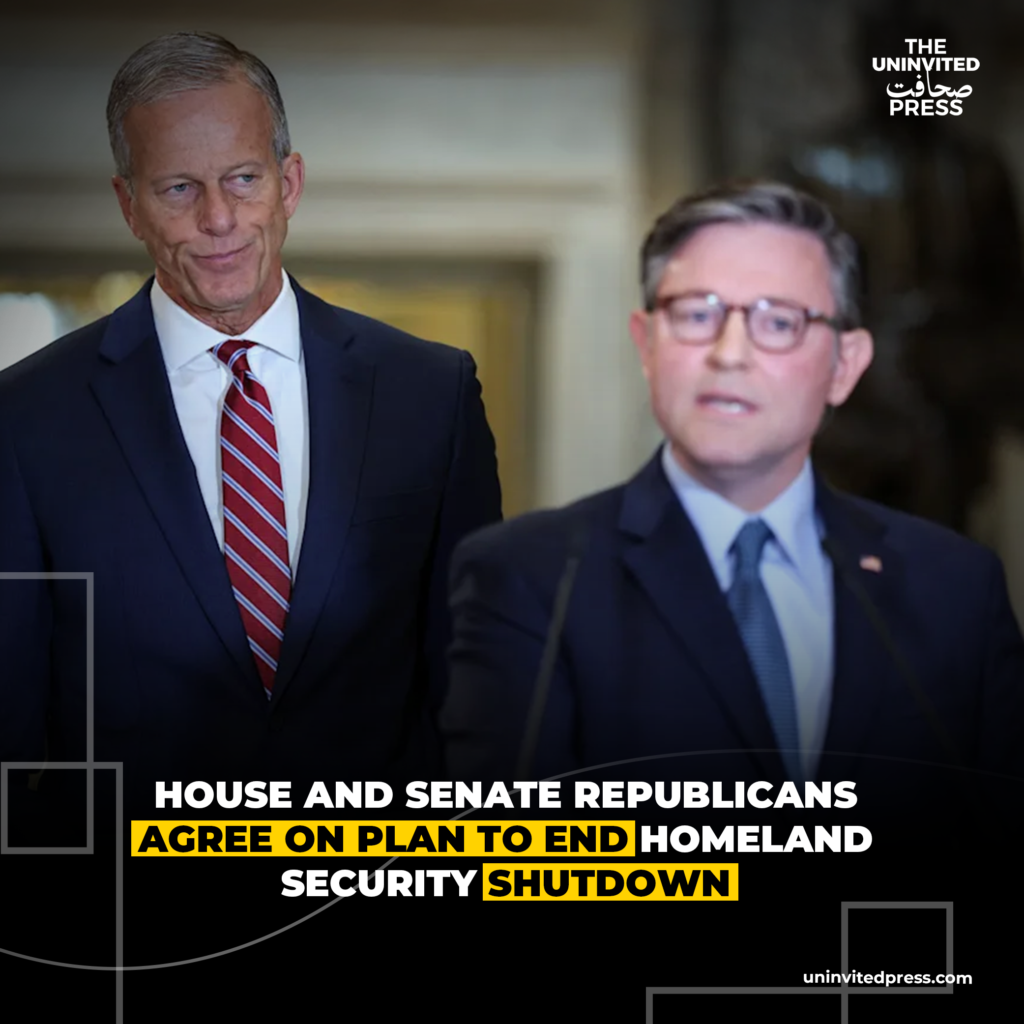
GOP leaders announce two-track approach to reopen most of DHS while planning separate funding for immigration enforcement, after record 47-day funding lapse.
Republican leaders in the US Congress have announced an agreement to end a record-breaking partial shutdown of the Department of Homeland Security (DHS), which has disrupted airport security, immigration processing and other critical operations for more than six weeks.
House Speaker Mike Johnson and Senate Majority Leader John Thune said on Wednesday that Republicans would pursue a two-track strategy to fully fund the department. The first track involves the House taking up a Senate-passed bill that would reopen most of DHS-including the Transportation Security Administration (TSA), Coast Guard, Federal Emergency Management Agency (FEMA) and other components-while excluding funding for Immigration and Customs Enforcement (ICE) and parts of Customs and Border Protection (CBP).
The second track would seek longer-term funding for immigration enforcement agencies through a separate party-line process, potentially using budget reconciliation to bypass Democratic opposition.
The announcement marks a reversal after House Republicans previously rejected the Senate compromise last week, prolonging the shutdown that began on February 14, 2026. The impasse stemmed from deep disagreements over immigration enforcement reforms and funding levels for border security agencies.
Political Standoff Over DHS Shutdown and Immigration Funding:
The partial shutdown, now the longest on record for any single federal department, has led to unpaid TSA officers, long security lines at airports, delayed disaster response capabilities and furloughs affecting thousands of DHS employees. Critics have pointed to the human and economic costs, with travellers facing hours-long waits during the busy spring travel season.
President Donald Trump has pushed for full funding of immigration-related operations, describing the shutdown as a “Democrat DHS shutdown” and setting a June 1 deadline for legislation to secure border enforcement funding. The new plan appears to align with Trump’s directive while providing an immediate off-ramp to reopen core DHS functions.
Democrats have accused Republicans of caving after weeks of internal GOP divisions, with Senate Minority Leader Chuck Schumer stating that House Republicans had ultimately accepted the earlier Senate framework.
The deal comes amid ongoing debates over US immigration policy, including calls for stricter enforcement and reforms to agencies like ICE and CBP following high-profile incidents earlier in the year.
Ongoing Political Negotiations and Funding Uncertainty:
While the Senate bill could be taken up by the House as early as this week, full implementation is not guaranteed. Democrats may demand concessions, and the second-track reconciliation process for immigration funding is expected to face strong opposition and procedural hurdles.
Analysts say the agreement reflects political pressure to resolve the crisis before it further damages public confidence in government operations and the economy. However, the underlying disputes over border security and immigration enforcement are likely to resurface in future spending battles.
The shutdown has highlighted the fragility of the appropriations process in a divided Congress, where partisan priorities on immigration continue to stall routine government funding.