

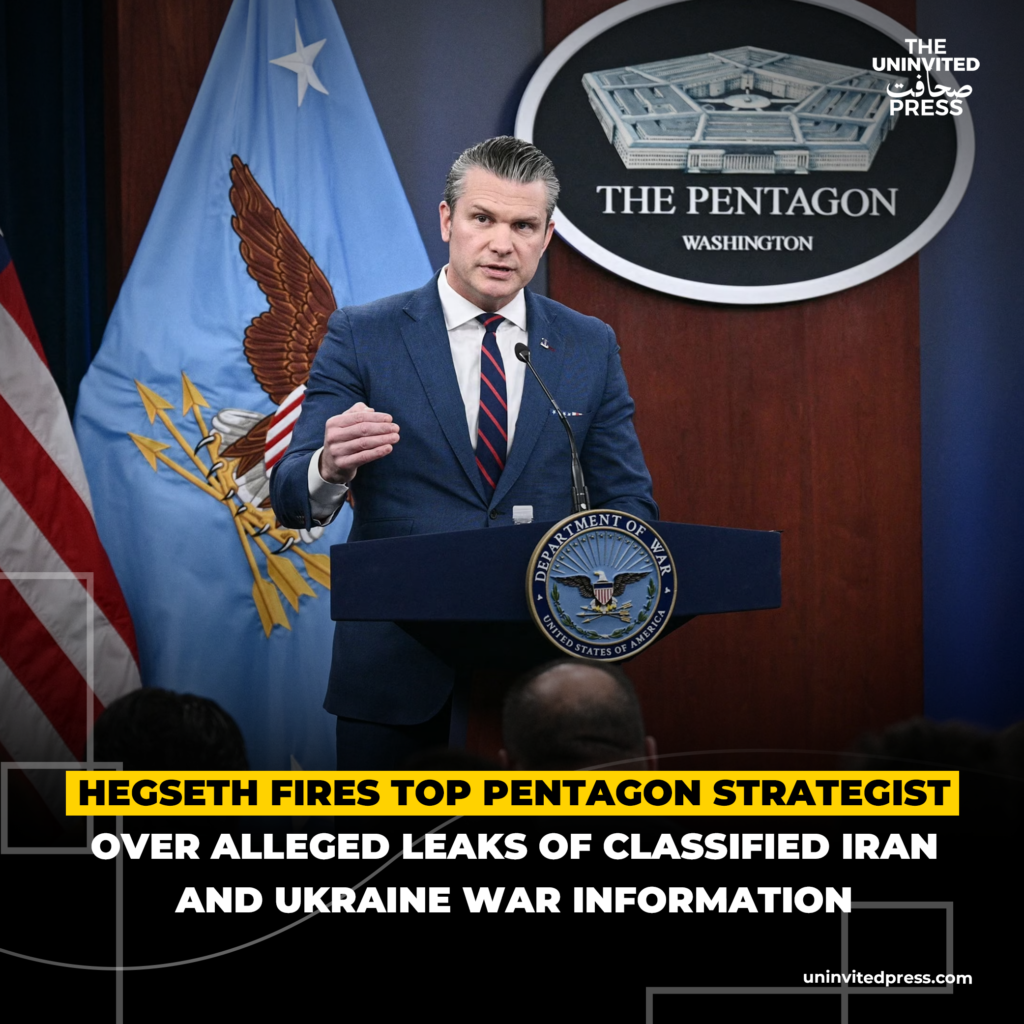
Army Lt Gen Brett Sylvia removed as Joint Staff director of strategy, plans and policy; case referred to Justice Department amid ongoing crackdown on disclosures.
US Defence Secretary Pete Hegseth has dismissed Army Lieutenant General Brett Sylvia, the Pentagon’s top military planner, following allegations that he leaked classified information about the war in Iran and Russia’s war in Ukraine to journalists.
Sylvia, who served as director of the Directorate for Strategy, Plans and Policy on the Joint Staff (known as the J5), was removed this week. Pentagon officials said he is the subject of an investigation into unauthorised disclosures of sensitive material. The matter has been referred to the Department of Justice for potential further legal action.
Pentagon Fires Senior Official Over Classified Leaks Allegations:
A senior Pentagon official, speaking on condition of anonymity, said Sylvia failed three polygraph examinations related to the alleged sharing of classified information with the press. Officials further claimed that after the Pentagon imposed stricter media access rules requiring reporters to be escorted inside the building, Sylvia began meeting journalists outside the facility to pass on information.
“The extent of his leaking became so critical that Secretary Hegseth took immediate action and fired Sylvia in order to protect national security. Urgent action was needed and could not wait another second,” the official said.
Chief Pentagon spokesman Sean Parnell confirmed the personnel action in a statement, saying the Department of War (the administration’s preferred name for the Pentagon) has “zero tolerance for the intentional, unauthorized disclosure of classified information.” He added that anyone who compromises sensitive national security information “puts the lives of our Warriors at risk and undermines every military operation that keeps our country safe.”
Sylvia’s role involved coordinating long-term military strategy and planning between the Joint Chiefs of Staff and senior civilian leadership. Officials stressed that while he held a senior planning post, he was not a central operational planner for the Iran campaign, which falls under US Central Command. He previously commanded the 101st Airborne Division and had more than three decades of service.
Pentagon Leak Crackdown Intensifies Amid Iran War:
The dismissal is the latest in a series of high-level personnel changes under Hegseth, who has made identifying and removing suspected leakers a priority. Senior officers have faced polygraph tests, and earlier this year Hegseth removed several aides from his inner circle amid a similar investigation. Sylvia is the second general to be removed from the J5 post during Hegseth’s tenure; his predecessor was forced to retire in 2025.
The move comes as the US-led war with Iran enters its ninth month and President Donald Trump weighs the possibility of resuming intensive strikes after the November 3 midterm elections. The Pentagon has previously expressed frustration over leaks concerning operational planning and munitions expenditures in the conflict.
Some reports, citing an internal investigation reviewed by media outlets, have claimed Sylvia admitted to sharing classified details with two journalists from separate organisations over roughly a year, including information on US assistance to Ukraine. Those accounts have not been independently confirmed by the Pentagon in public statements. Two other Pentagon sources told CBS News that the firing was linked to the polygraph results but disputed the underlying accusations against Sylvia.
Sylvia has not publicly commented. Attempts to reach him for a response were unsuccessful. The Justice Department has confirmed it maintains ongoing investigations into possible leaks of classified information and works with the Defence Department on such matters.
The ouster underscores the Trump administration’s intensifying efforts to control the flow of information from the Pentagon during a period of heightened military activity in the Middle East and continued support for Ukraine. Critics within military and congressional circles have questioned whether the aggressive approach to leak investigations risks damaging institutional trust and operational continuity at a critical time.